

Antique Spoon Chair
An antique spoon chair brings unmistakable nineteenth-century curves and deep-sprung comfort to a modern interior.
Antique Spoon Chair
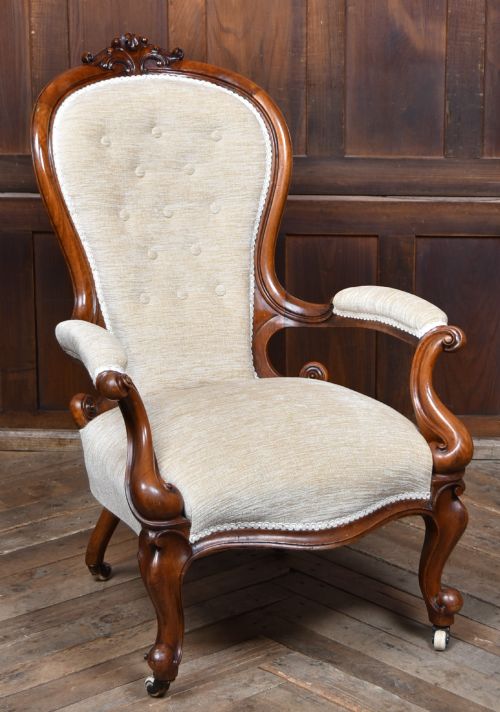
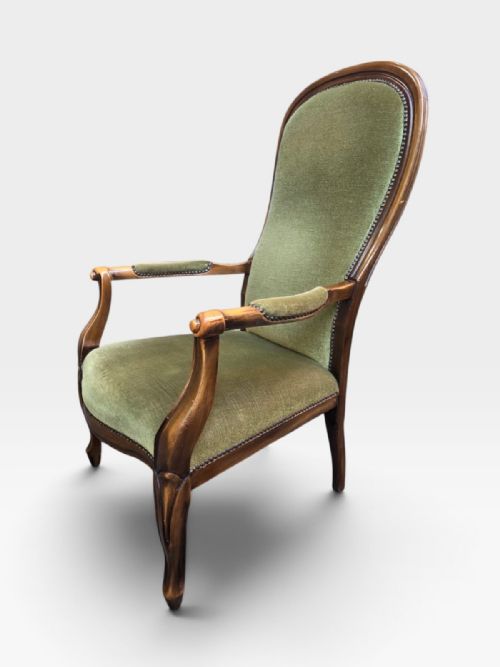
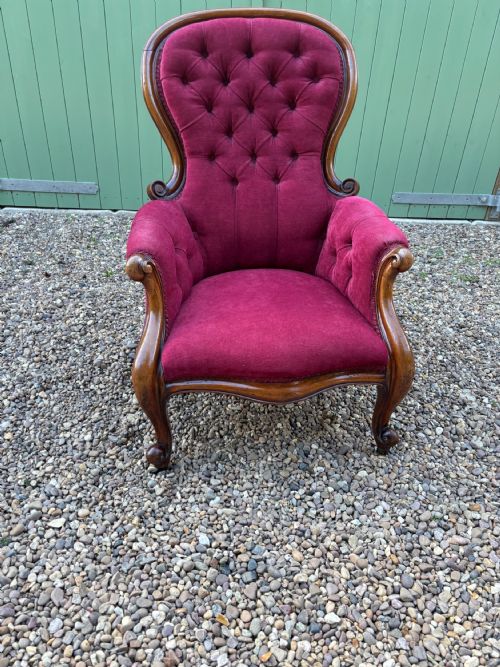
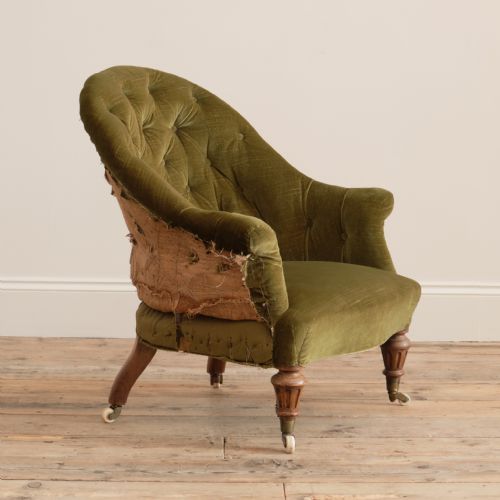
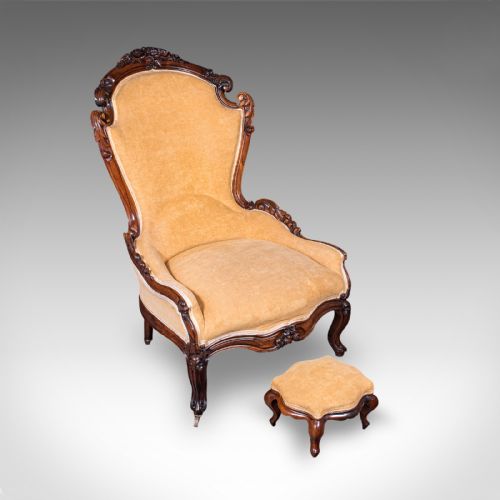
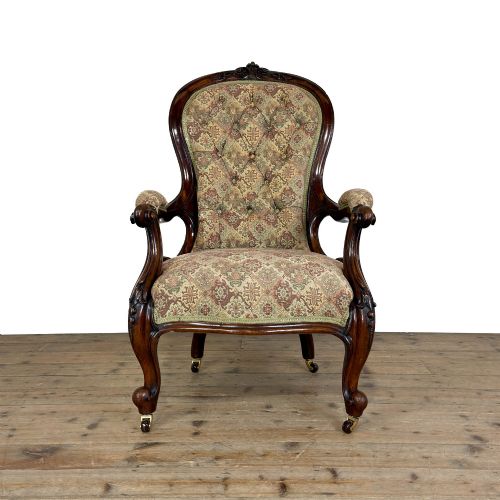
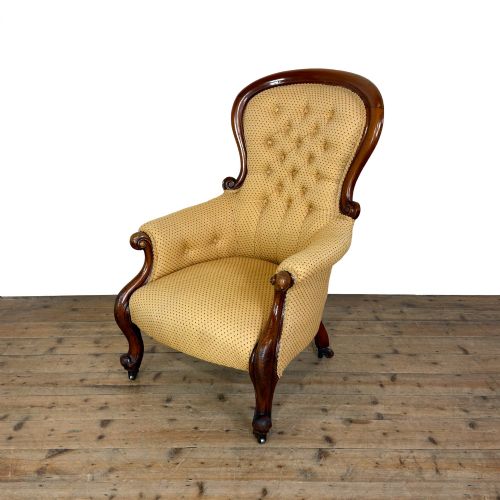
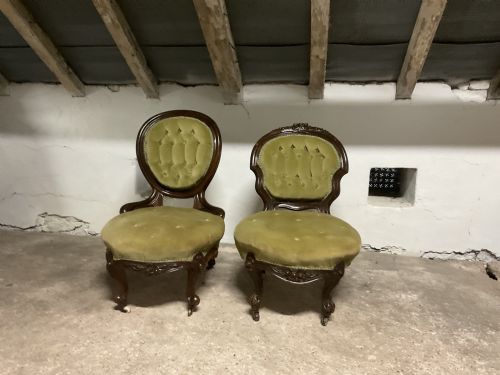
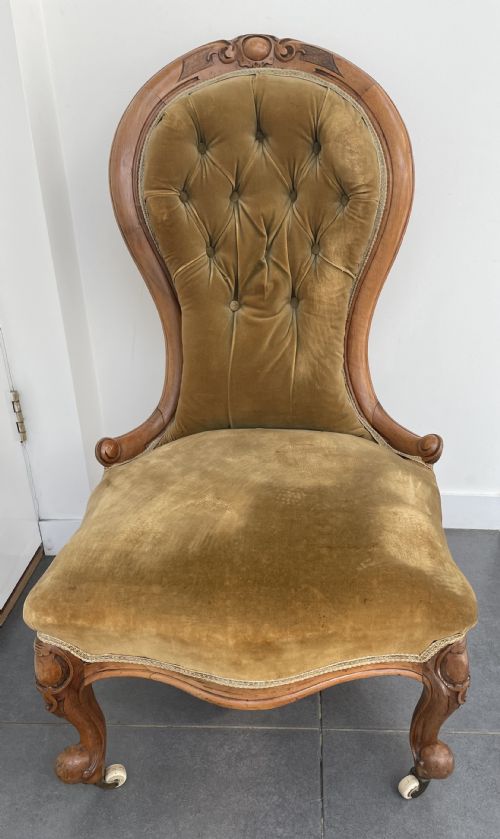
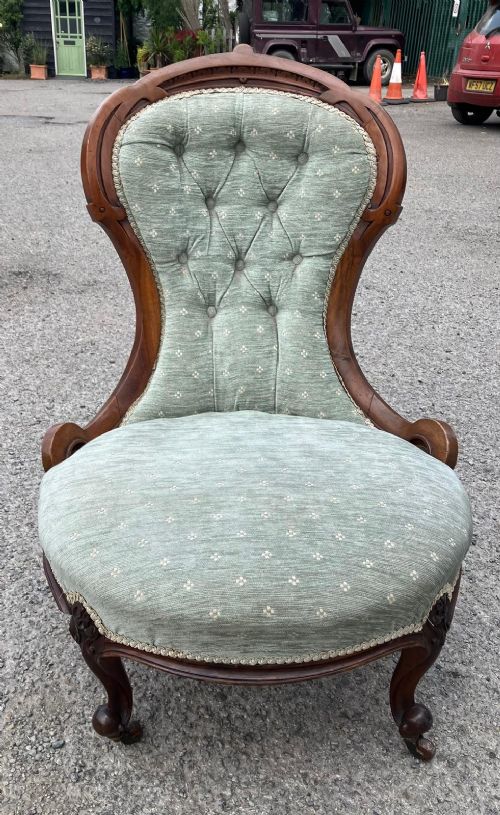
An antique spoon chair takes its name from the characteristic concave, oval backrest that echoes the bowl of a spoon. These seating forms emerge primarily across the Victorian period, including early Victorian and Napoleon III iterations.
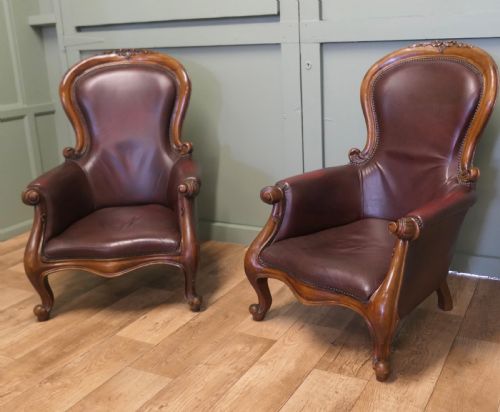
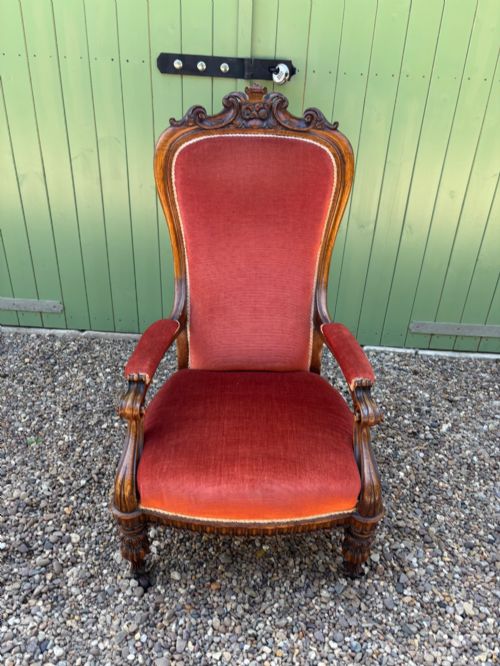
Buyers encounter various timber frames, most frequently walnut and mahogany alongside oak, shaped into open armchairs, gentleman's chairs, ladies' chairs, and nursing chairs. The upholstery ranges from plain fabric and textile to velvet, damask, and leather.
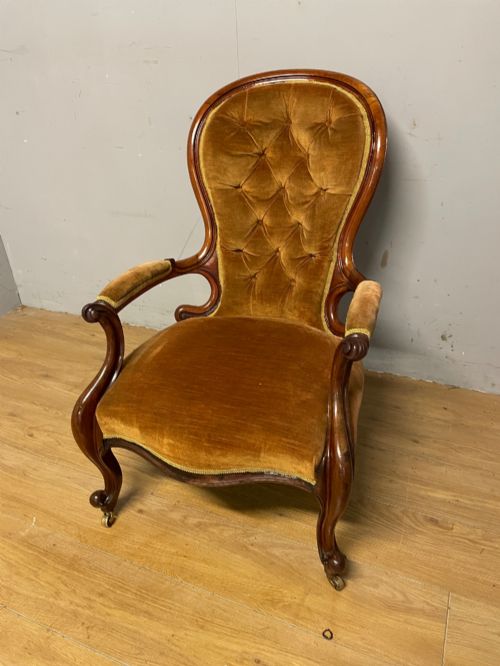
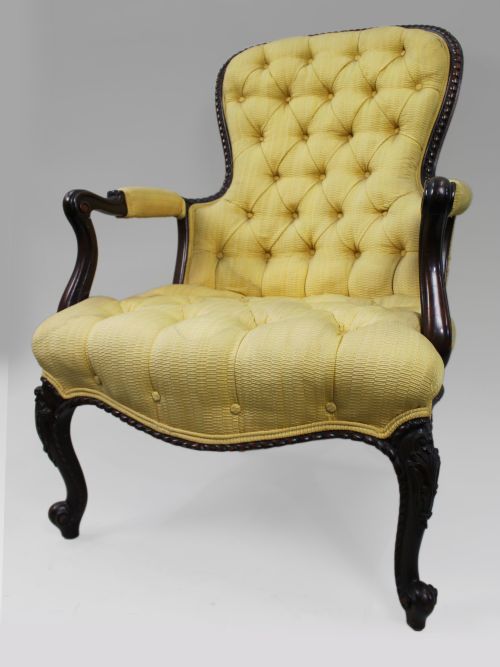
The version most likely to meet a buyer on this page is the Victorian walnut or mahogany spoon back armchair, often featuring carved details and button-backed padding.
Materials and construction
Cabinetmakers constructed the characteristic curved back frames from solid timbers such as walnut, mahogany, and oak, often shaping the wood with hand-carved ornamentation. These dense hardwoods provided the structural strength required to support the deep rake of the backrest.
Upholsterers built up the seat and back using traditional stuffing techniques, securing horsehair and webbing over iron or steel springs. The final layer utilised textiles including velvet, damask, leather, and plain fabric, frequently finished with buttoning and brass detailing.
Antique Spoon Chair Retail Price Guide 2026
Typical asking prices for spoon chair among the pieces listed under this phrase on Sellingantiques today, from the lower quarter to the upper quarter. They describe what is for sale here now, not the wider market.
Assessing quality
Quality rests significantly in the crispness of the timber carving and the architectural integrity of the curved frame. Superior examples demonstrate fluid hand-shaping along the crest rail and arms, whereas lesser pieces display stiffer, machine-milled lines.
The sophistication of the internal upholstery stuffing and the choice of surface textile dictate the refinement of the piece. Well-preserved original frames and tight joinery separate high-grade nineteenth-century seating from standard utilitarian alternatives.
Holland & Sons·C. Hindley & Sons·Gillows
The Antique Spoon Chair Glossary
- Spoon back
- A padded chair back shaped with a concave, oval indentation resembling the bowl of a spoon. This distinctive silhouette defines nineteenth-century nursing and gentleman's chairs.
- Gentleman's chair
- A large, robust Victorian armchair featuring an open frame, generous proportions, and low seat for relaxed sitting. These pieces frequently incorporate padded armrests and scroll arms.
- Ladies chair
- A compact Victorian seat designed without arms or with low arms to accommodate voluminous nineteenth-century dresses. They typically feature a low profile and a sprung oval back.
- Napoleon III
- A mid-nineteenth-century French style characterised by eclectic revivalism, ebonised or walnut frames, and sumptuous upholstery. Pieces from this aesthetic often display refined carving and gilt accents.
- Button-back
- An upholstery method where tufting pulls the fabric deep into the stuffing at regular intervals, creating a diamond pattern of soft indentations. This technique secures internal padding while adding decorative texture.
Antique Spoon Chair: Frequently Asked Questions
What is an antique spoon chair?
An antique spoon chair is a nineteenth-century seat featuring a concave, oval wooden backrest designed to cradle the sitter's spine. These pieces date predominantly from the Victorian era and include open armchairs, nursing chairs, and salon seats.
Cabinetmakers shaped the frames from hardwoods like mahogany and walnut, while upholsterers added sprung seats and button-backed padding.
How do I style a spoon chair today?
A spoon chair works effectively as an accent piece in a modern living room, bedroom, or reading corner. The curved timber frame and upholstered back introduce nineteenth-century texture and a distinct silhouette to contemporary spaces.
Pare the chair with minimalist surroundings to let the traditional wood grain and carved details stand out as a focal point.
How do I tell an early Victorian spoon chair apart?
Early Victorian examples generally exhibit dense mahogany or walnut frames with restrained, hand-carved floral motifs along the crest rail. The joinery tends to be heavier, and the proportions favour formal parlour use.
Later Victorian pieces often incorporate more elaborate carving, barley twist turnings, or lighter walnut frames associated with the 1870s and 1880s.
What is the difference between a gentleman's and a lady's chair?
A gentleman's chair is built with wider proportions, open arms, and a sturdier frame designed for men's nineteenth-century attire. These seats offer a commanding presence in a study or library.
A lady's chair is narrower and typically constructed without restrictive armrests to accommodate the wide crinoline dresses of the period.