


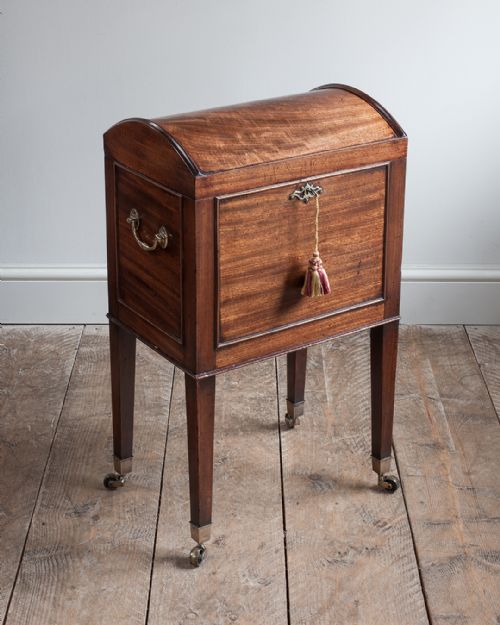


Antique Spirit Caddy
An antique spirit caddy secures fine liquor under lock or in decorative frames, combining craftsmanship and hospitality in one robust container.
Antique Spirit Caddy
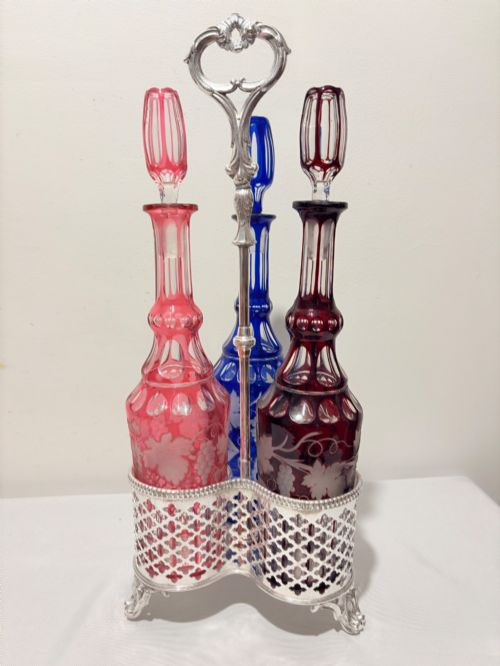
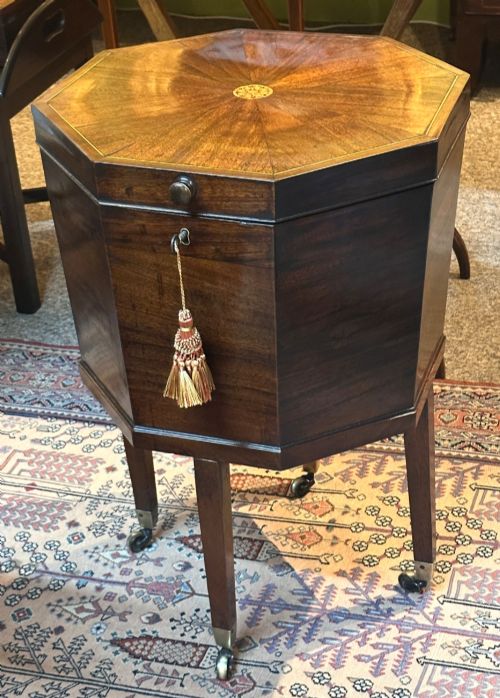
An antique spirit caddy encompasses tantaluses, decanter stands, cellarettes, and liqueur sets designed to hold and display potable spirits securely. These pieces range from Georgian mahogany cellarettes and George III containers to Victorian and Edwardian oak frames fitted with locks and keys.
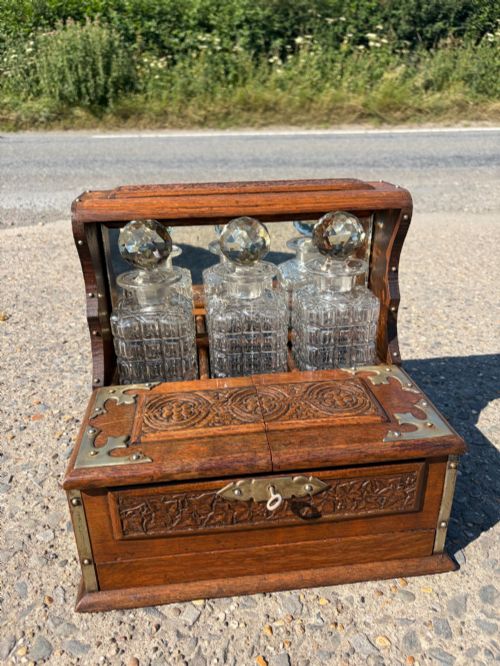
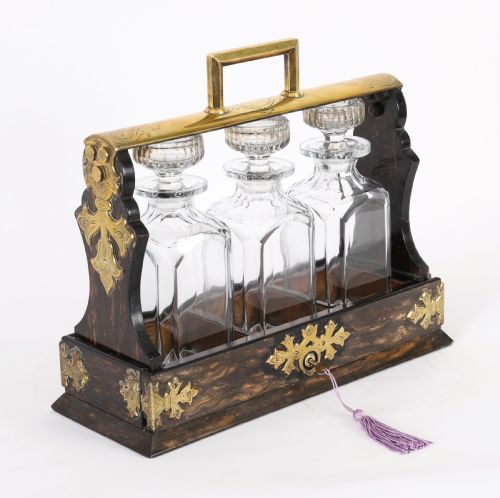
The version most commonly met on this page is the Victorian or Edwardian oak tantalus housing two or three cut crystal decanters beneath a silver plated locking mechanism. Alongside these, buyers find standalone decanter stands, silver plated barrel dispensers, and occasional mahogany or burr maple cellarets.
These vessels served a central role in formal dining and entertaining rooms, holding whisky, brandy, and liqueurs ready for guests while restricting unauthorized access by servants. Their forms reflect the changing domestic habits of the eighteenth, nineteenth, and early twentieth centuries.
How they were made
Cabinetmakers utilised dense timbers such as oak, mahogany, walnut, coromandel, and burr maple to construct the main bodies and stands, often adding brass mounts, locks, and hinges. These woods provided the structural rigidity necessary to support heavy glass decanters and withstand regular handling.
Glassmakers shaped heavy-walled decanters and carafes through cutting and moulding, producing faceted crystal and frosted barrel bodies that caught the light. Metalworkers combined silver plating with base metals to form the locking frames, stands, and tot pails that secured the glass vessels.
One nineteenth-century set pairs a locking decanter frame with an integrated games compendium, ensuring guests could gamble only after a drink.
What varies in quality
The refinement of the woodwork distinguishes standard production items from finer workshop pieces, seen in the choice of figured veneers, precise dovetailing, and sturdy brass mounts. Superior examples integrate mechanical locking mechanisms that operate smoothly and lock securely into the bottle collars.
The clarity and weight of the glass components also separate the tiers of manufacture, with deeply cut crystal decanters and matching stoppers marking out better productions. Complete sets retaining their original locking keys, matching glassware, and integrated games compendiums command greater interest.
Maison Barra
The Antique Spirit Caddy Glossary
- Tantalus
- A locking drink container that holds decanters within a metal frame so they cannot be removed without a key. The design teases thirsty guests by displaying the contents while keeping them out of reach.
- Liqueur set
- A collection of small decanters or carafes accompanied by matching glasses, mounted in a portable silver plated or wood frame. They were utilised for serving after-dinner cordials.
- Tup pail
- A small bucket or container designed to hold ice or water, often found alongside barrel dispensers in nineteenth-century serving sets. They complete the barware ensemble.
Antique Spirit Caddy: Frequently Asked Questions
What is an antique spirit caddy?
An antique spirit caddy is a secure container, frame, or cabinet designed to hold decanters and bottles of liquor. These items include tantaluses, cellarettes, and decanter stands produced during the Georgian, Victorian, and Edwardian periods.
They allowed hosts to display expensive spirits in the dining room or parlour while keeping the contents locked away from household staff.
What is the difference between a tantalus and a cellarette?
A tantalus exposes the decanters within a visible locking frame, usually designed to sit atop a sideboard or table. A cellarette is typically a larger enclosed cabinet or box, often fitted with interior dividers for bottles.
Cellarettes date predominantly from the Georgian era, whereas tantaluses emerged later in the Victorian period.
What woods were used for these pieces?
Cabinetmakers utilised sturdy hardwoods such as oak and mahogany for the majority of nineteenth-century frames and cellarettes. Finer examples incorporated exotic or decorative veneers including coromandel, burr maple, and walnut.
These timbers were selected for their durability and attractive grain patterns under polish.
Are the decanters usually original?
Many surviving pieces retain their matching cut crystal or glass decanters, particularly those fitted with locking bars that require specific bottle sizes. Because decanters were fragile, some pieces encountered today may feature period-appropriate replacements.
Checking that the stoppers and bottle bases fit the frame profiles helps determine originality.