

Antique Spindle Chairs
These antique spindle chairs combine turned wooden uprights with traditional forms, offering enduring seating for country houses and town interiors alike.
Antique Spindle Chairs
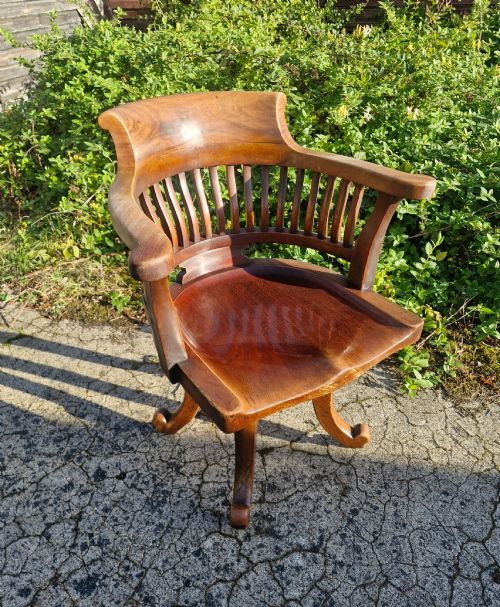
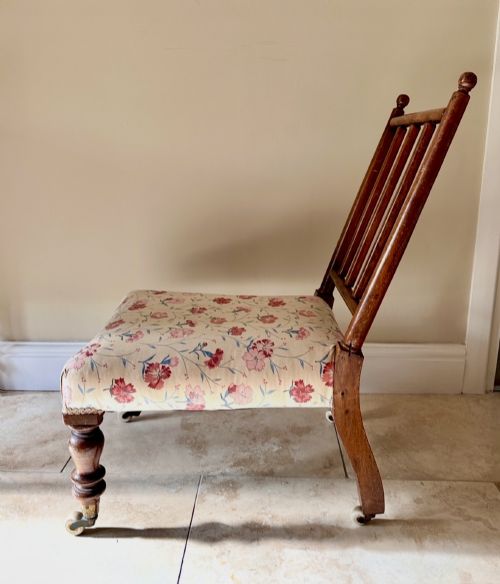
When you search for antique spindle chairs, you encounter a diverse range of seating originating primarily from the nineteenth century, including Victorian and Edwardian examples. The selection spans dining chairs, armchairs, desk chairs, and rocking chairs built in regional vernacular styles.
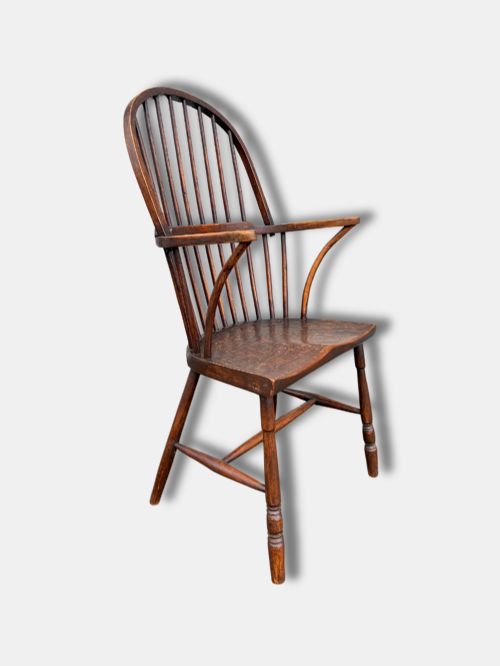
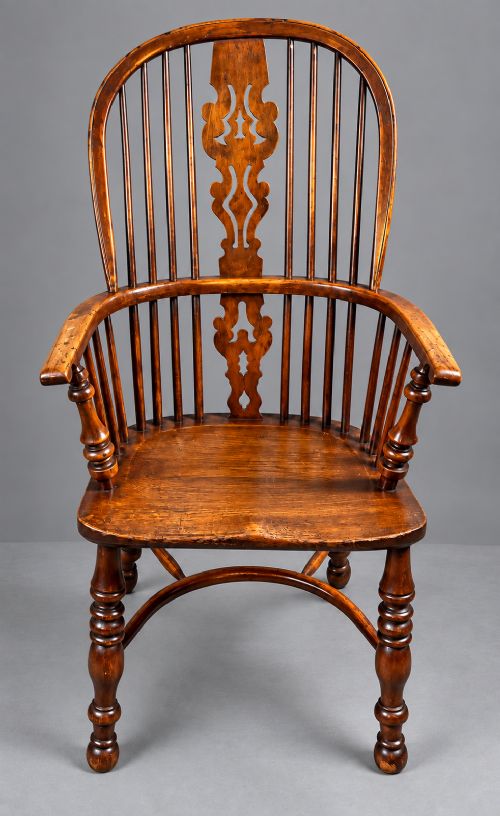
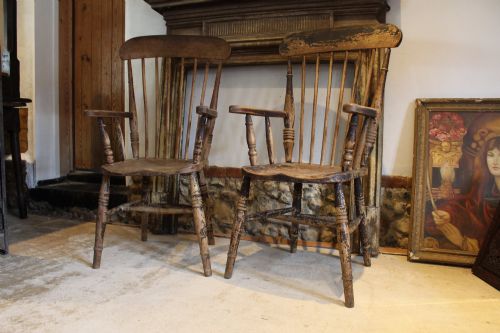
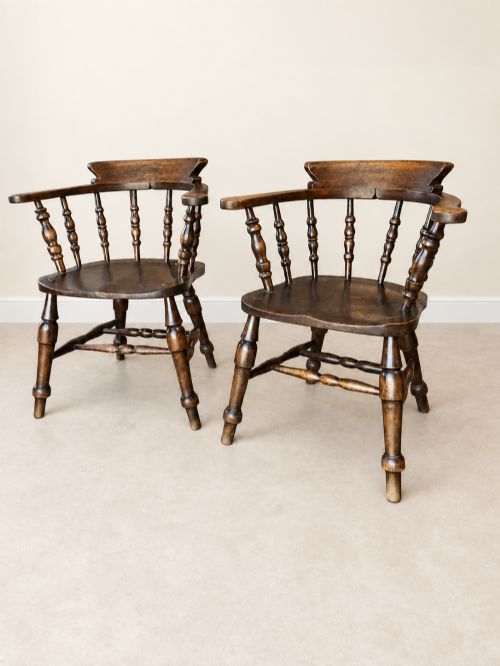
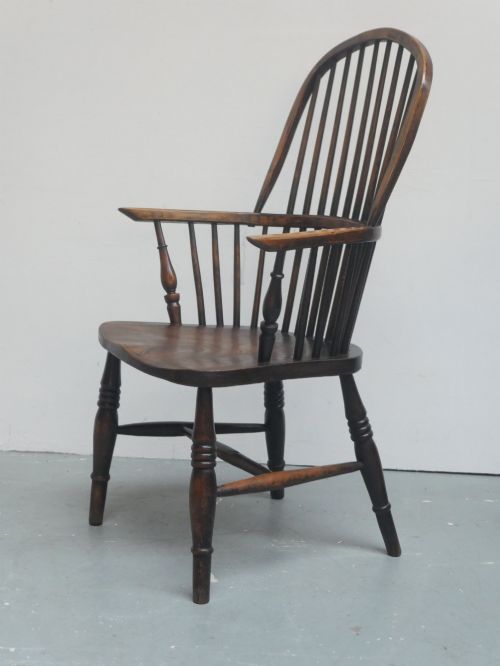
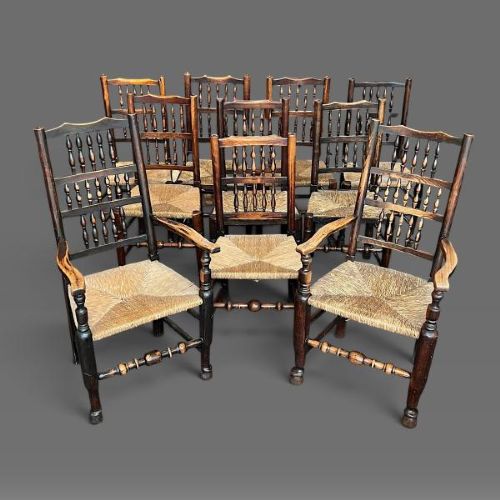
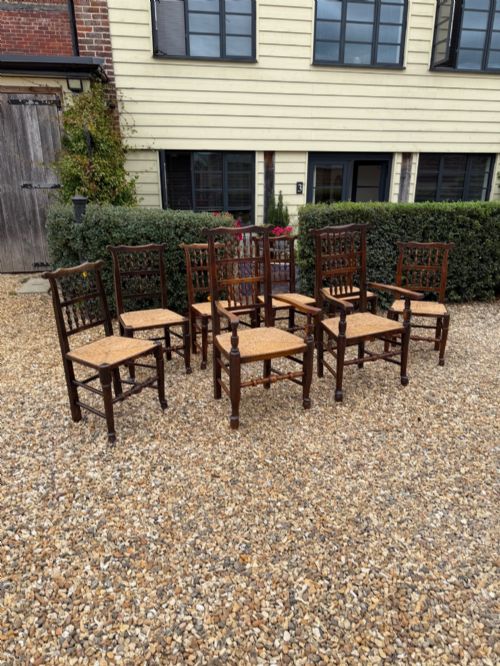
The most common forms on this page are country kitchen chairs, Windsor armchairs, and Lancashire farmhouse chairs. These pieces utilise traditional turned components to support high or low backs, often combining multiple timbers within a single frame.
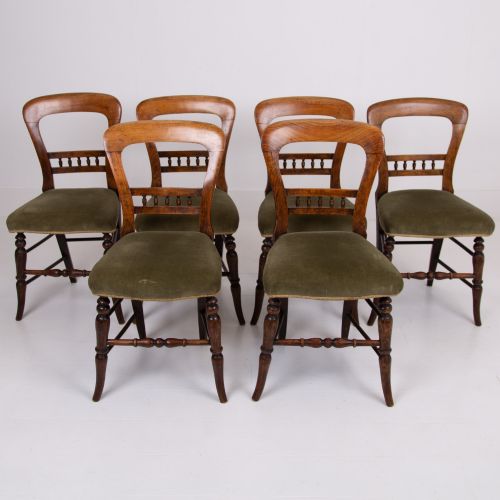
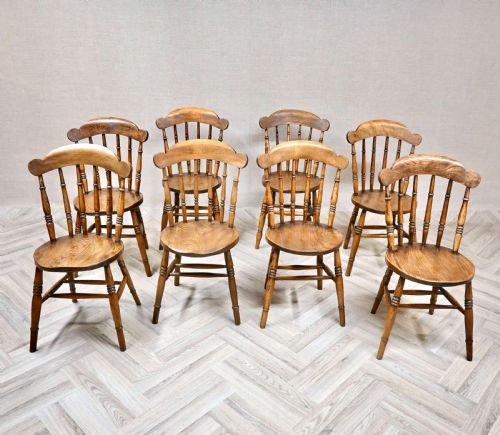
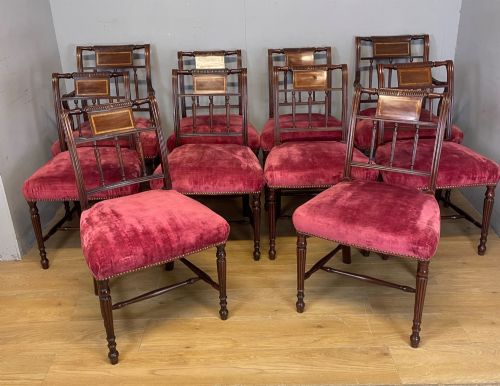
Makers drew upon Georgian and Victorian design traditions, producing functional seating for everyday domestic use. Many survive in sets of four, six, eight, or ten, reflecting their original purpose around large farmhouse and dining tables.
How they were made
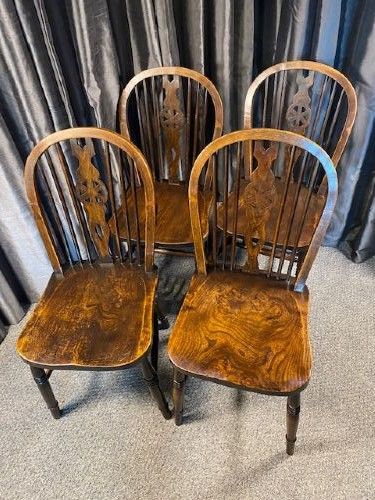
Makers constructed these chairs using solid native timbers such as elm, ash, beech, oak, and mahogany. Seats were frequently carved from single elm planks, sometimes featuring a penny seat depression, while backs utilised slender turned spindles of ash or beech.
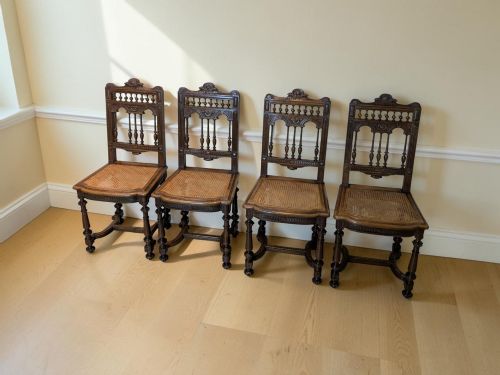
Turnery lathes shaped the vertical spindles and legs, which were then fitted into drilled seats using traditional joinery methods. Some variations incorporate rush seating, leather upholstery, or ebonised wood finishes applied to meet changing aesthetic tastes.
Penny seats feature a circular depression carved into the elm timber to prevent occupants from sliding during long evening meals.
What varies in quality
Quality in these chairs rests upon the selection of timber and the integrity of the original turned components. Examples retaining matching grain patterns across multi-chair sets demonstrate superior initial craftsmanship compared to assembled harlequin groups.
The crispness of the turnery on the spindles and legs indicates the skill of the maker. Patina built up from decades of domestic use distinguishes honest, well-preserved surfaces from heavily refinished examples.
Gabbitass of Worksop·Morris and Co·Philip Webb·J Spencer
The Antique Spindle Chairs Glossary
- Windsor chair
- A wooden chair constructed with a solid sculpted seat into which the legs, back sticks, and bow are separately fitted. These chairs frequently feature bentwood hoops and central splats.
- Smokers bow
- A low-backed Windsor armchair designed for domestic comfort, typically featuring a continuous curved arm rail supported by turned spindles above an elm seat.
- Spindle back
- A chair back constructed from a series of slender, vertical turned wooden rods. These elements provide structural support while keeping the upper frame visually light.
- Rush seat
- A seating surface woven from dried marsh rushes or sedge around a rigid wooden frame. This technique appears commonly on traditional country dining chairs.
- Harlequin set
- A collection of dining chairs that share similar periods, materials, and overall forms but vary slightly in detail, having been brought together over time rather than manufactured as a single batch.
Antique Spindle Chairs: Frequently Asked Questions
What defines a Windsor chair?
A Windsor chair is built around a heavy solid wooden seat, into which the legs and back components are inserted directly. This method creates a sturdy, rigid frame without relying on a traditional box underframe.
Such chairs often include bentwood components for the arms and back bow, paired with turned spindles that distribute weight evenly across the structure.
Where were spindle chairs used?
These chairs served multiple rooms in nineteenth-century homes, functioning as kitchen seating, desk chairs, and parlor furnishings. Country versions stood around large farmhouse dining tables for daily meals.
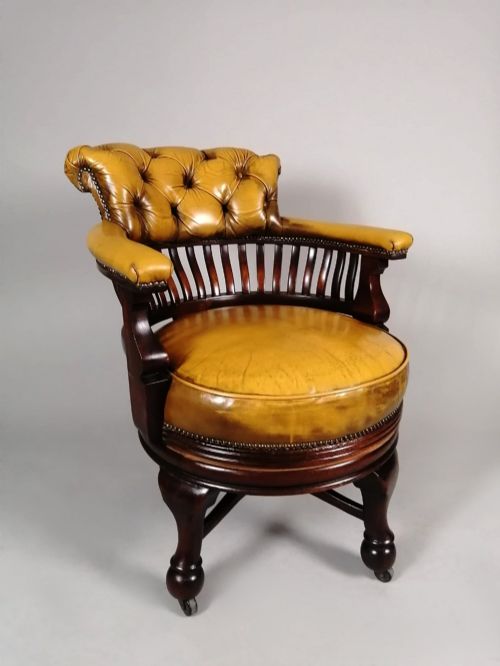
Revolving desk variants and low salon chairs accommodated studies and drawing rooms, matching the specific domestic tasks of the Victorian period.
How do I care for rush seats?
Rush seating requires dry indoor environments to prevent the natural plant fibres from absorbing moisture and weakening. Regular dusting with a soft brush keeps the woven surface clear of grit.
Avoid applying liquid polishes or water directly to the rush, as dampness causes the material to rot and unspool over time.
Are harlequin sets matching?
Harlequin sets consist of chairs that match in general style, timber, and period but differ slightly in minor decorative details. These groups were gathered together rather than bought as an original single set.
Such collections offer a practical way to seat guests around a dining table while retaining a unified historical aesthetic.