

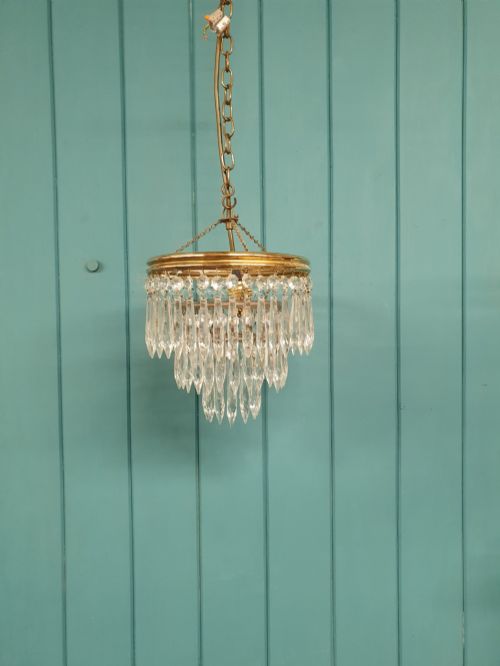


Antique Spike Chandelier
An antique spike chandelier brings concentrated sparkle and distinctive silhouette to a room, driven by Edwardian and early twentieth-century design.
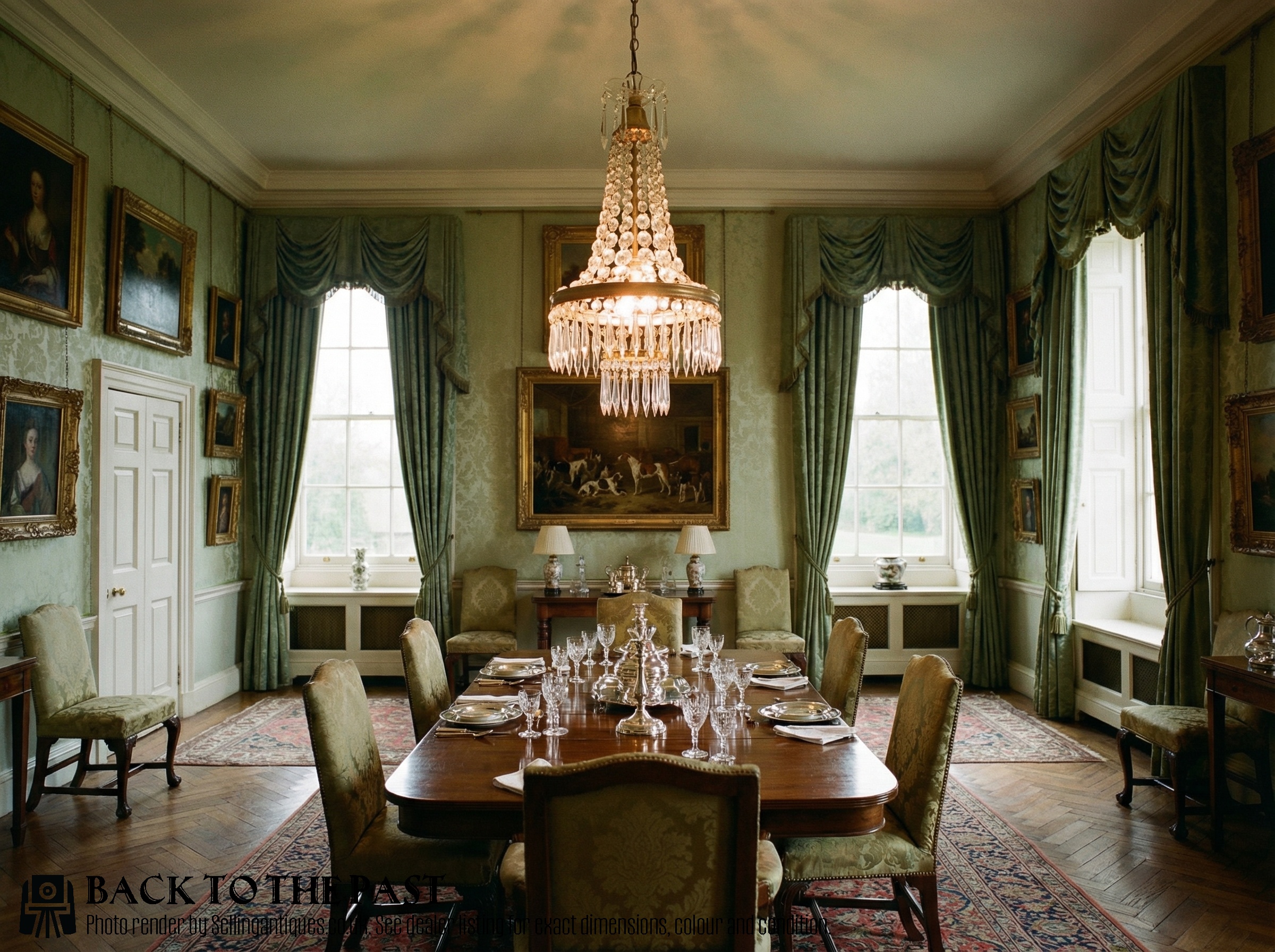
Antique Spike Chandelier
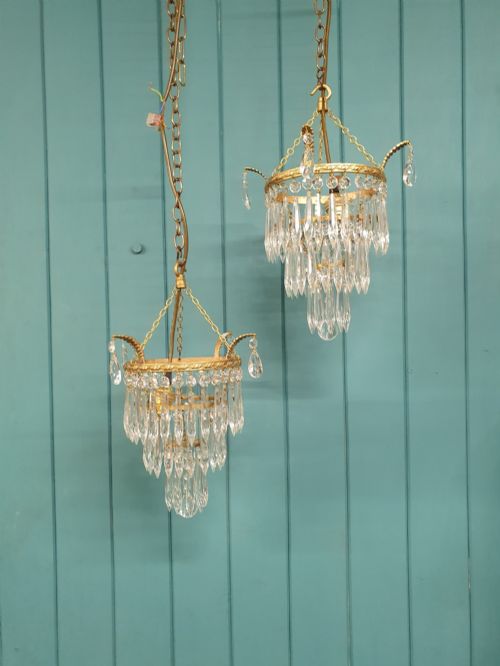
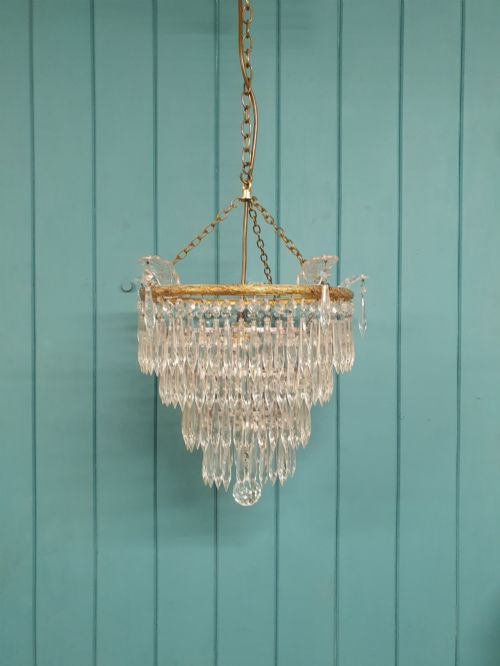
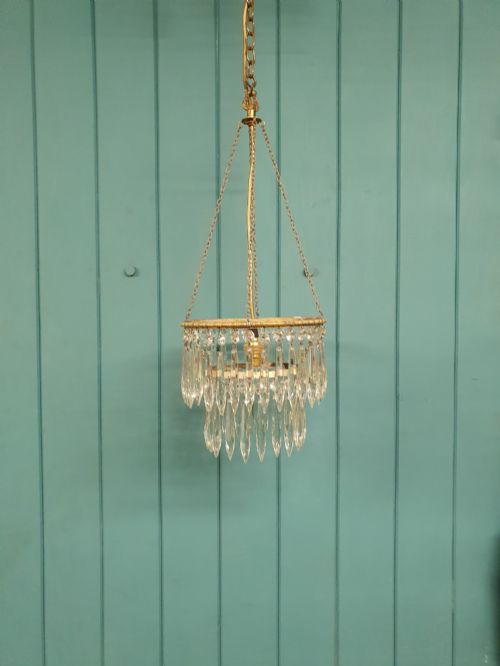
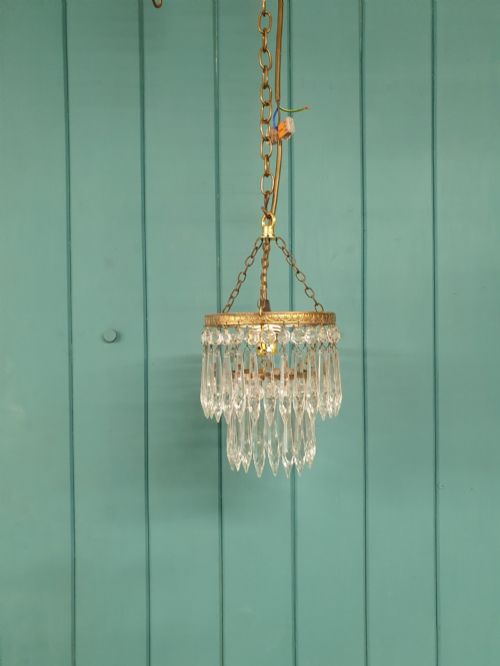
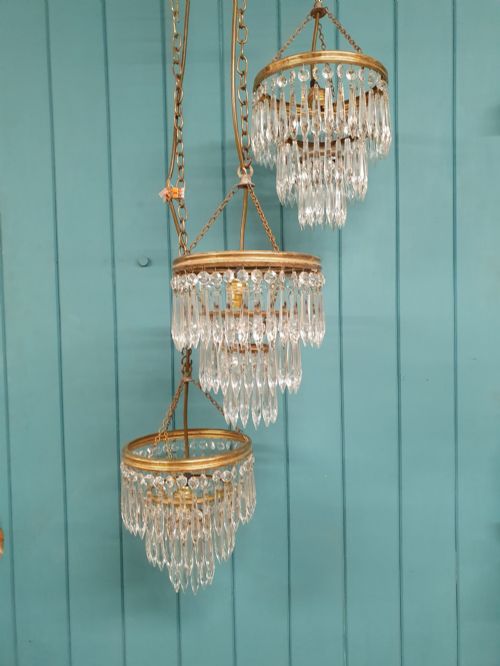
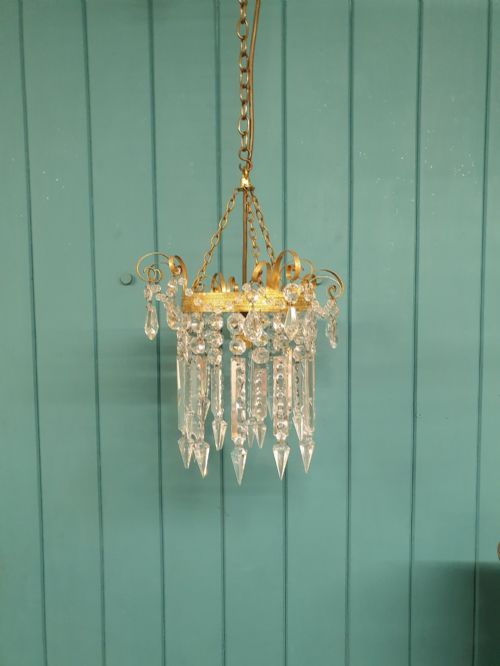
An antique spike chandelier is a ceiling light defined by a central drop or pointed terminal beneath tiers of glass and crystal components. The examples found here date from the Edwardian period and the 1930s, encompassing small pendants alongside larger multi-tiered forms.
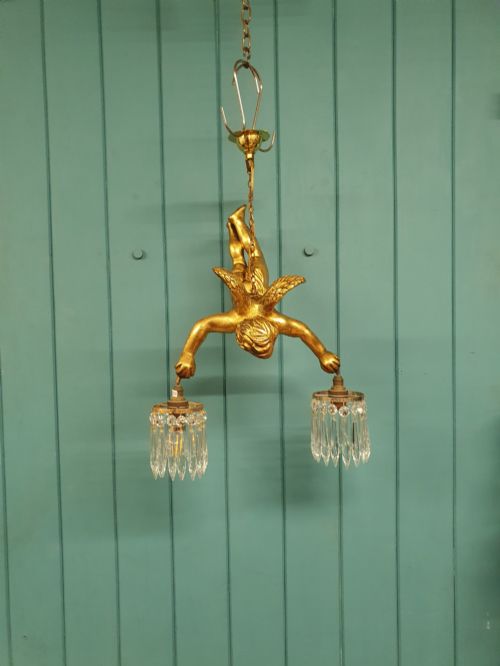
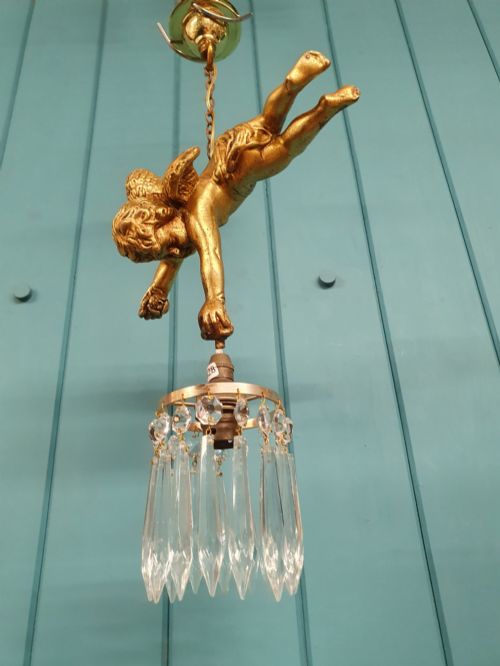
Most items on this page are compact fixtures measuring between six and thirteen inches, often sold individually or as matching pairs. Alongside straightforward brass and cut glass designs, the selection includes pieces incorporating gilt spelter, flying cherubs, swags, and finials in French Rococo Revival and chateau styles.
How they were made
Makers constructed the primary frames of these chandeliers using cast or sheet brass, gilt metal, and gilt spelter to support the hanging elements. Metal components frequently feature decorative elements such as cherubs, swags, and detailed finishing finials.
The suspended ornamentation relies heavily on cut glass, crystal, and crystal glass shaped into icicles, drops, and distinct spike terminals. These glass elements are threaded or wired onto the metal framework to create layered tiers that catch and refract light.
Antique Spike Chandelier Retail Price Guide 2026
Typical asking prices for spike chandelier among the pieces listed under this phrase on Sellingantiques today, from the lower quarter to the upper quarter. They describe what is for sale here now, not the wider market.
Flying cherubs occasionally join the glass drops, supervising the room from above.
What varies in quality
The refinement of the cast metal frame sets the standard for these chandeliers, distinguishing simple brass mounts from elaborate gilt spelter castings adorned with cherubs and cast swags. Crisply detailed chasing and heavier gauge metal indicate a higher grade of manufacture.
The cut and clarity of the glass elements dictate the visual impact of the fixture, with sharp facets and heavy crystal creating superior light refraction compared to plain pressed glass. Complete tiers and matching sets also elevate a piece above single, altered examples.
The Antique Spike Chandelier Glossary
- Spike chandelier
- A ceiling light featuring a prominent pointed terminal or drop at its base. This central spike anchors the vertical composition of the hanging glass components.
- Spelter
- A zinc alloy frequently utilised as a substitute for bronze or brass in decorative metalwork. It is often gilded or painted to resemble more costly metals on Edwardian and early twentieth-century light fittings.
- Cut glass
- Glass that has been shaped and faceted on a wheel to enhance its reflective properties. It forms the shimmering tiers and drops characteristic of these fixtures.
- Swag
- A decorative chain or garland of glass crystals draped across the upper portion of the frame. These elements soften the architectural lines of the chandelier.
Antique Spike Chandelier: Frequently Asked Questions
How do I choose the right size?
These fixtures range from compact six-inch pieces to larger thirteen-inch examples, meaning proportion to your ceiling height is the primary consideration. Smaller versions suit restricted spaces or corridors, while larger or multi-tiered examples require more vertical room to display their drops and swags properly.
Pairs are also available for rooms requiring balanced lighting across two ceiling points.
Where were they originally hung?
Compact ceiling lights of this scale were typically installed in smaller reception rooms, boudoirs, or hallways of Edwardian and early twentieth-century homes. Their low drop made them suitable for spaces without high ceilings where a conventional chandelier would hang too low.
They provided concentrated overhead illumination while adding a decorative focal point.
Are they difficult to wire for modern use?
Most of these antique fixtures require rewiring to meet contemporary electrical standards before installation in a modern home. A qualified electrician can usually adapt the internal fittings while preserving the original metal and glass structure.
Care should be taken to retain the original suspension loop and ceiling canopy where present.
How do I clean an antique glass chandelier?
Maintenance involves gentle cleaning of the glass and crystal components using a mild solution and a soft cloth while the pieces remain attached to the frame. Removing individual cut glass spikes and drops for washing requires patience to ensure all wiring and fixings are kept secure.
Harsh chemical cleaners should be avoided to protect the gilt finish on the brass and spelter frames.