






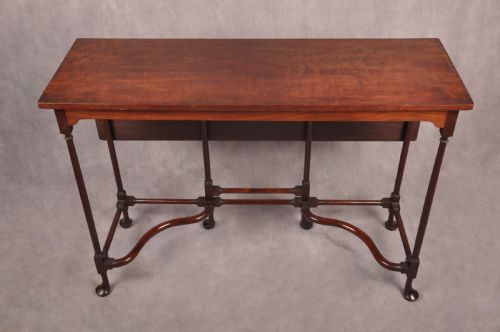
Antique Spider Table
An antique spider table offers slender grace through ultra-thin turned legs, bringing delicate proportion to period rooms.
Antique Spider Table
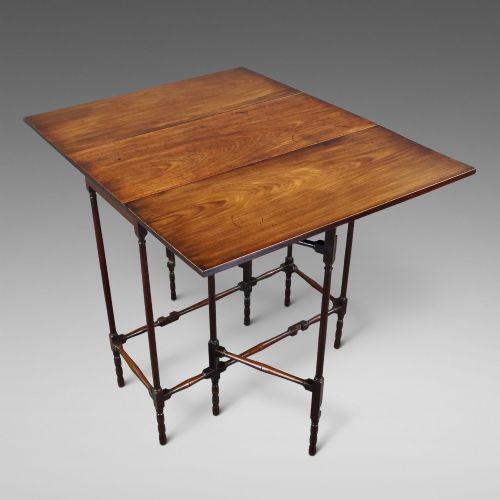
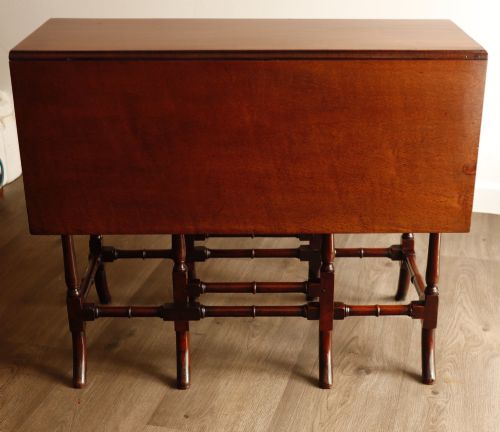
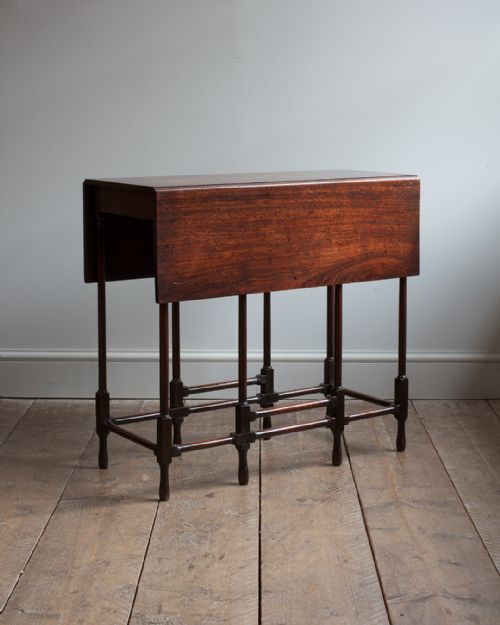
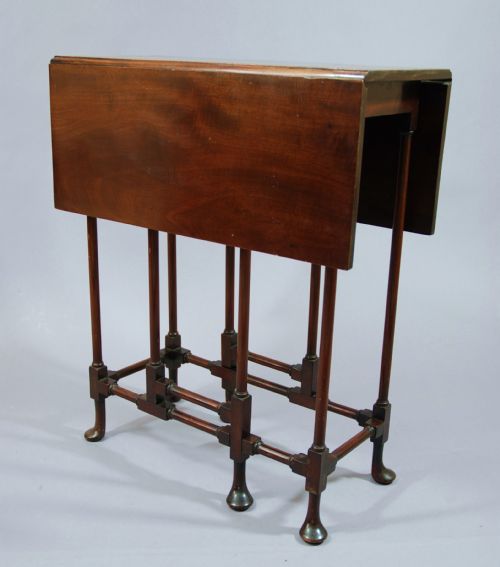
An antique spider table is a light occasional or tea table distinguished by remarkably slender turned legs connected by thin stretchers. Buyers seeking an antique spider table encounter mostly 18th-century Georgian and George III examples alongside later Edwardian interpretations.
The form usually manifests as a drop leaf or gateleg occasional table, designed for portability and subtle placement rather than heavy use. The overriding characteristic remains the delicate undercarriage that gives the piece its arachnid moniker.
Beyond the core 18th-century mahogany iterations, the evidence shows Victorian, 1920, and 1930 variations including nests of tables and Pembroke formats. Mahogany dominates the surviving material record, though walnut and paint also appear.
How they were made
Cabinetmakers constructed these pieces primarily from solid mahogany and walnut, shaping timber to achieve maximum structural integrity despite the extreme thinness of the supports. Turning the legs on a lathe required considerable skill to ensure the tiny spindles could bear weight without snapping.
Drop leaf and gateleg mechanisms depended on precise knuckle joints and rule joints, allowing the flaps to hang flat when raised. Brass hinges and small fixtures completed the hardware on functional folding examples.
The listings span the 18th Century, Georgian, Victorian, and Edwardian periods, utilising mahogany, walnut, burr walnut, brass, paint, and iron.
What varies in quality
The finesse of the turning on the legs and stretchers defines the upper tier of these tables, where crisp detail meets structural tautness. Sub-standard examples often display clumsy, thickened spindles that lose the essential airy lightness of the form.
Timber selection and figure govern visual appeal, with rich mahogany grain or burr walnut elevating the top boards. Construction tightness in the gateleg action similarly separates master joinery from loose, wobbly assembly.
The Antique Spider Table Glossary
- Spider leg
- A very thin, delicate turned table leg characteristic of late 18th-century occasional tables. These slender spindles create an impression of extreme lightness.
- Gateleg table
- A table with hinged leaves supported by legs that swing outward like a gate. This mechanism allows the surface area to expand or contract easily.
- Drop leaf table
- A table featuring a fixed centre section and two hinged flaps that drop down at the sides. It provides versatile surface space for smaller interiors.
- Stretchers
- Horizontal wooden rods connecting the legs of a table near the base to provide rigidity. On these tables, they are famously fine and intricate.
- Pembroke table
- A small rectangular occasional table with two hinged drop leaves and usually one or two small drawers. The design became popular during the Georgian period.
Antique Spider Table: Frequently Asked Questions
What is an antique spider table used for?
These tables served historically as lightweight tea tables or occasional surfaces that could be moved around a drawing room with ease.
Today, owners utilise them as bedside stands, lamp tables, or accent pieces in spaces where bulkier furniture would overwhelm the room.
How do I identify a Georgian spider table?
Georgian examples typically feature rich mahogany timber, hand-turned spindle legs, and precise joinery characteristic of the 18th century.
Look for the characteristic timber ageing, traditional handmade fixings, and the absence of mass-produced machine marks.
Are spider tables sturdy enough for daily use?
The extreme thinness of the legs means these pieces were engineered for elegance and light placement rather than heavy weight-bearing.
Placing them out of high-traffic zones preserves the delicate stretchers and drop leaf hinges for the future.
What woods were used for spider tables?
Mahogany is by far the most prevalent timber seen across the surviving 18th-century and Georgian examples in the record.
Walnut, burr walnut, and occasional painted finishes appear in later Victorian, Edwardian, and Art Deco interpretations.