




Antique Souvenir Jewellery
Antique souvenir jewellery gathers wearable mementos from distant travels, offering tangible pieces of history that collectors cherish for their evocative regional craftsmanship.
Antique Souvenir Jewellery
When searching for antique souvenir jewellery, buyers encounter a diverse array of wearable mementos and decorative boxes collected during historic travels. These items encapsulate the tastes of nineteenth-century tourists traversing Europe and beyond, turning personal journeys into lasting keepsakes.
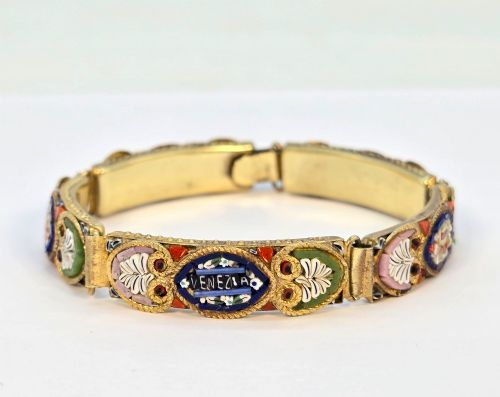
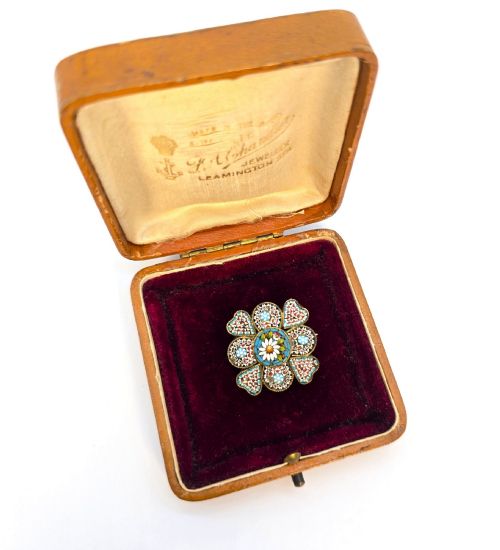
The selection on this page relies heavily on Victorian and early twentieth-century pieces originating from Italian Grand Tour excursions and domestic British seaside trips. Brooches, charm pendants, and bracelets dominate the available forms, frequently incorporating regional materials gathered abroad.
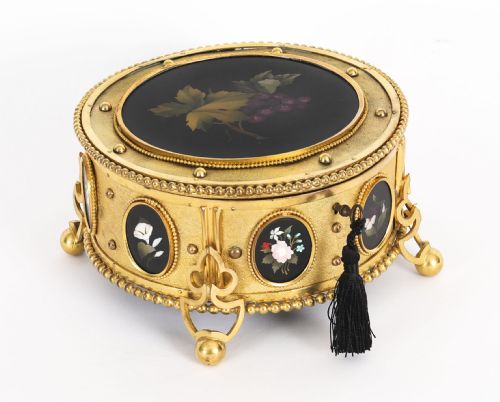
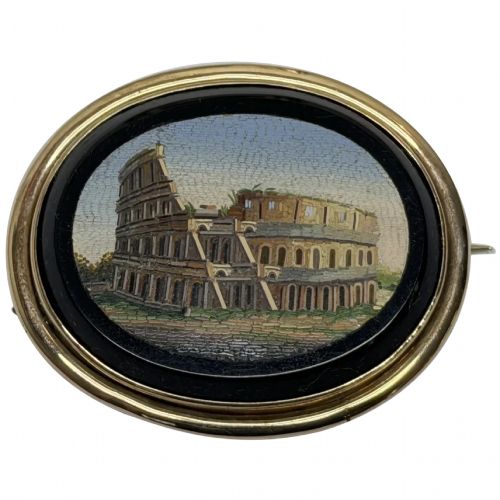
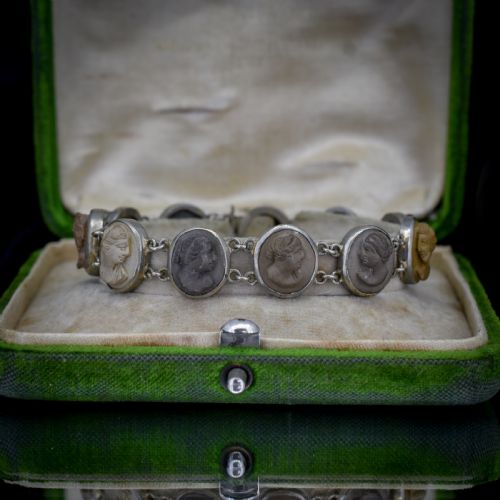
Buyers will readily find intricate micro mosaic scenes, carved lava cameos, and pietra dura plaques set into precious metals. Each piece serves as a direct link to the destinations popular among travellers of the period, from Venetian canals to Roman ruins.
What varies in quality
The standard of execution across antique souvenir jewellery hinges on the precision of the miniature work and the integrity of the mounting. Finely assembled glass tesserae display seamless alignment, while superior lava cameos exhibit sharp relief and deep anatomical definition without surface fracturing.
Someone spent hours sticking porcupine quills into a box lid just so a Victorian tourist could remember a trip.
The Antique Souvenir Jewellery Glossary
- Micro mosaic
- A technique using thousands of tiny coloured glass rods, known as tesserae, fused together to form detailed pictorial scenes. These miniature artworks frequently depict famous Italian landmarks and architectural ruins.
- Pietra dura
- An artistic process involving the inlay of cut and fitted polished coloured stones to create geometric or figurative designs. Artisans used hardstones like jasper, chalcedony, and marble to render lasting floral and scenic motifs.
- Lava cameo
- A relief carving executed on solid pieces of volcanic stone, predominantly sourced from Mount Vesuvius. Popularised during the Grand Tour, these carvings usually portray classical figures and mythological deities.
- Grand Tour
- A traditional trip of Europe undertaken by upper-class European young men of sufficient means and rank. Travellers collected local crafts, antiquities, and bespoke jewellery to prove their cultural education.
- Plique-a-jour
- An enamelling technique where transparent enamel is applied within a wire framework without a backing, resembling miniature stained glass. Light passes freely through the coloured cells, creating a luminous effect.
Antique Souvenir Jewellery: Frequently Asked Questions
What is antique souvenir jewellery?
Antique souvenir jewellery comprises wearable mementos and keepsakes collected by travellers during historic journeys, particularly the nineteenth-century Grand Tour across Europe. These pieces incorporate regional materials and traditional local crafts from the destinations visited.
Items range from micromosaic brooches depicting Roman monuments to lava cameo bracelets and gold pendants bearing city coats of arms. They function simultaneously as personal adornment and historical travel documentation.
How do I identify Grand Tour pieces?
Grand Tour items typically feature distinct regional materials associated with classic European travel destinations, such as Italian lava stone, micro mosaics, and pietra dura hardstone inlay. The subjects often reference classical mythology, archaeology, or famous continental architecture.
Examining the metal mounts and reverse sides often reveals typical nineteenth-century construction methods. Look for regional signatures or specific motifs like the Roman Colosseum or Venetian canals.
How were souvenir boxes used?
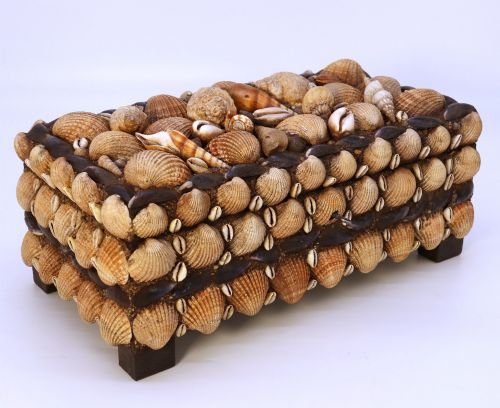
Trinket boxes, jewellery caskets, and display cabinets served practical domestic purposes for storing small personal valuables, calling cards, or precious accessories. Wealthy travellers purchased them abroad as functional reminders of their journeys.
Many incorporate decorative top panels featuring marquetry, penwork, or shellwork, allowing them to double as ornamental desk accessories. Their interiors were often lined with velvet or silk to protect delicate contents.
Are these pieces made of solid gold?
Precious metal content varies significantly across this category, ranging from high-carat gold and silver mounts to gilt metal and ormolu. Finer pendants and charms often utilise yellow gold, sometimes marked with specific carat weights.
Simpler pieces or larger decorative caskets rely on gilt bronze or brass ormolu to frame stone panels and wood bodies. Testing or checking hallmarks helps determine the exact metal composition of individual mounts.
How should I care for micro mosaic jewellery?
Micro mosaics require gentle handling due to their intricate glass construction and the mortar beds holding the tesserae in place. Keep them away from moisture, water immersion, and harsh cleaning chemicals to prevent loosening the tiny elements.
Store them in padded boxes away from direct sunlight and extreme temperature fluctuations. A soft dry brush removes dust safely from the recessed crevices between tiles.