


Antique Sloped Desk
An antique sloped desk offers a practical writing surface with hidden compartments, combining historic craftsmanship with daily utility.
Antique Sloped Desk
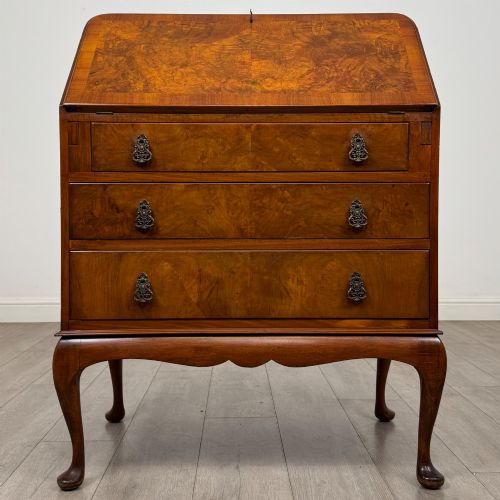
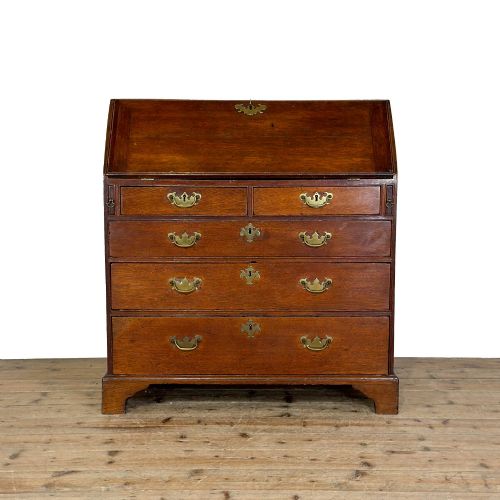
An antique sloped desk encompasses items such as bureaux, writing slopes, Davenport desks, and bureau bookcases spanning several centuries. Buyers searching this phrase most frequently encounter mahogany and oak pieces from the Georgian and Victorian eras, alongside Edwardian examples.
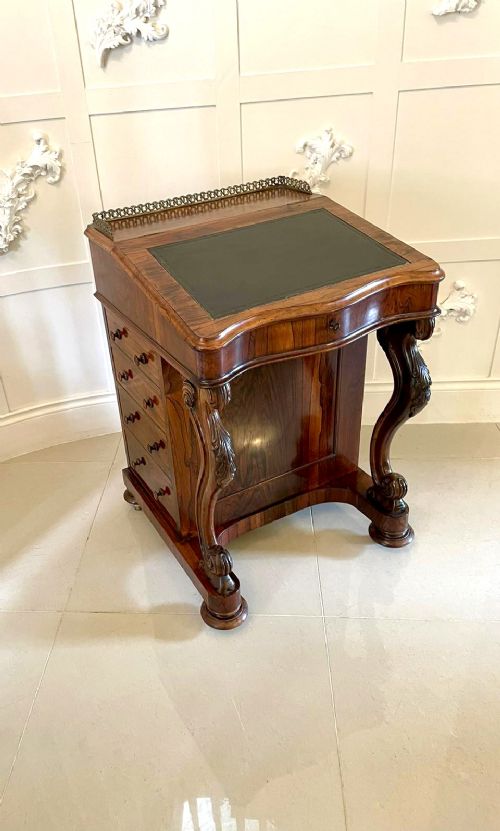
The selection ranges from compact table-top writing boxes and campaign slopes to large bureau bookcases and freestanding Davenport desks. Oak and mahogany versions dominate the early periods, while walnut and rosewood appear frequently in nineteenth-century designs.
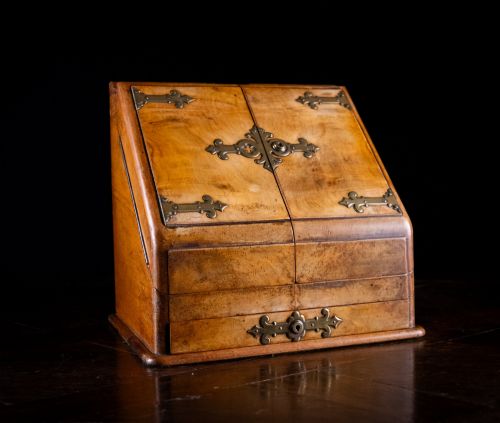
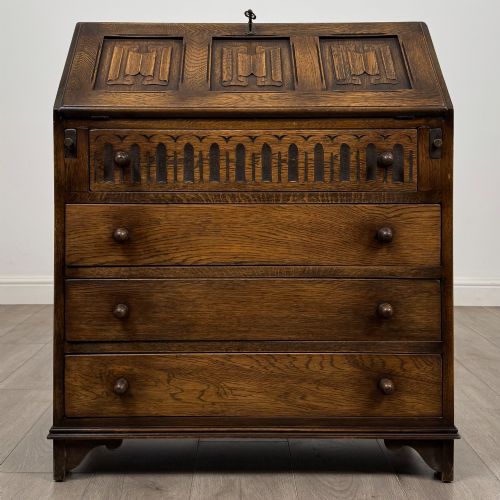
Regional and stylistic variations include English country pieces, Dutch floral marquetry, and Jacobean revival interpretations. These items served primarily for correspondence and record-keeping, utilising hinged fall fronts or sloping lids to conceal pigeonholes and drawers.
Materials and Construction
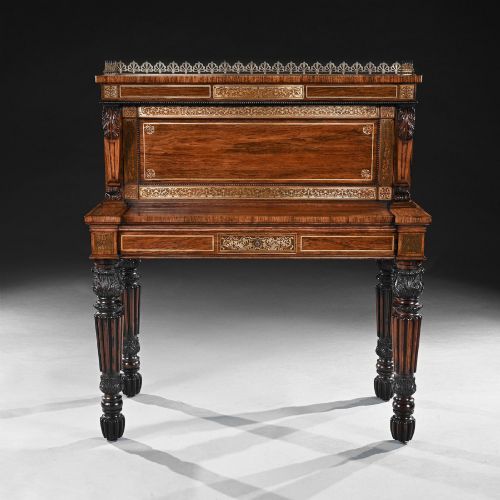
Cabinetmakers constructed these desks using solid timbers like oak, mahogany, walnut, and fruitwood, often applying veneers such as burr walnut, rosewood, and satinwood to principal surfaces. Brass hardware, including handles, escutcheons, and campaign binding, provided structural reinforcement and decorative contrast.
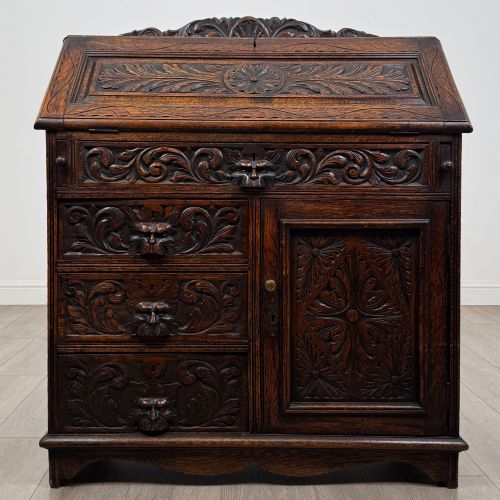
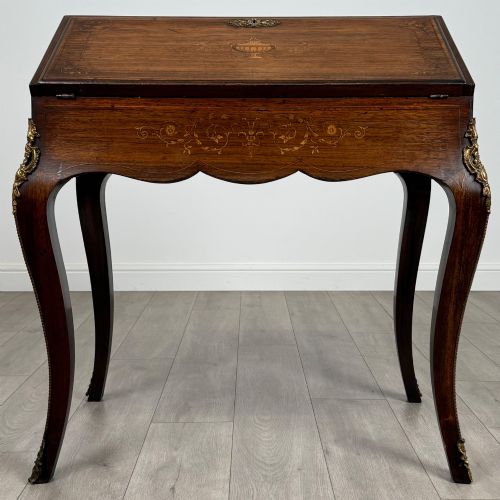
Secondary woods like cedar appeared in interior compartments, while leather inserts provided writing surfaces. Marquetry, inlay, and carved details such as green man motifs or linenfold panels demonstrated advanced decorative techniques across different periods.
Look closely inside these desks for forgotten ink stains and secret compartments hiding tiny drawers for secret correspondence.
Craftsmanship and Materials
Quality rests on the selection of timber figures, such as highly grained burr walnut or figured mahogany, and the precision of the cabinetwork. Superior examples exhibit tightly fitted dovetail joints in the internal drawers and intact, original brasses.
The complexity of the interior arrangement, including secret compartments and well-fitted stationery sections, distinguishes finer pieces from utilitarian items. The condition of applied veneers and marquetry also dictates the standing of an individual desk.
Gillows Oxford Street Workshop·Heals of London·Elkington
The Antique Sloped Desk Glossary
- Bureau
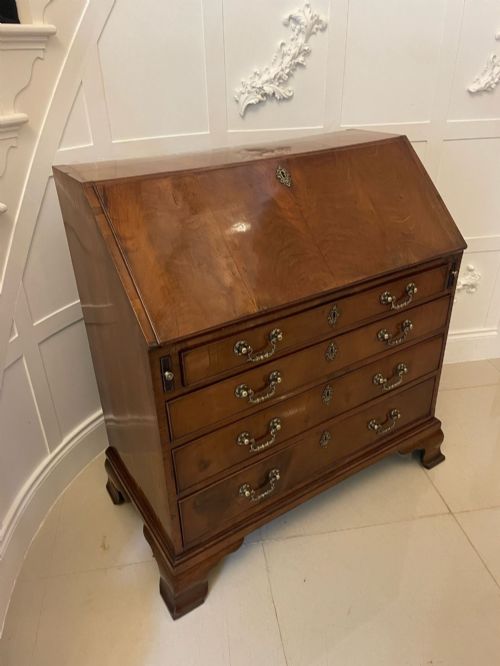
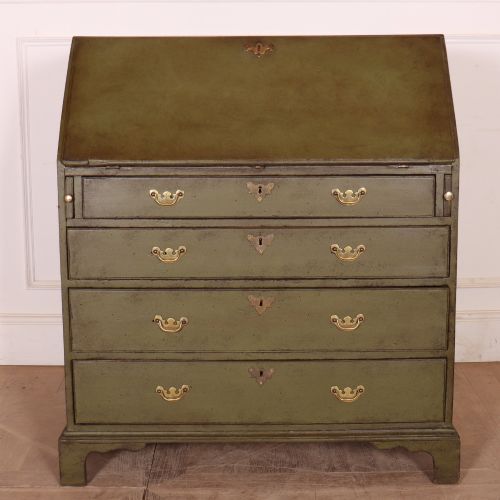
- A desk featuring a sloping hinged lid that drops down to form a writing surface above a set of drawers. This form evolved significantly from seventeenth-century oak examples to refined Georgian and Victorian iterations.
- Writing Slope
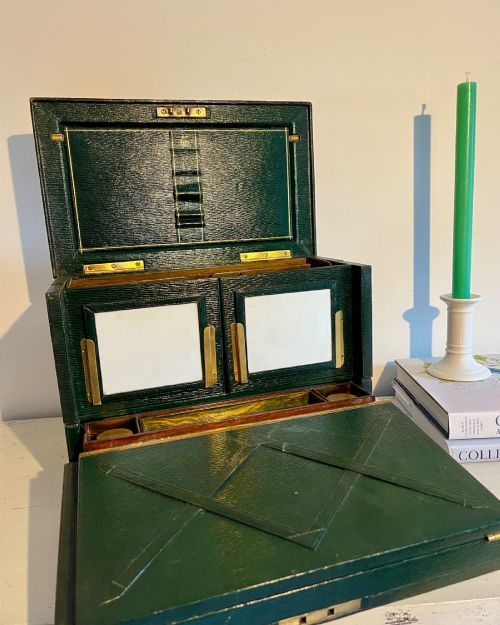
- A portable box with an angled lid designed to hold writing materials and provide an inclined surface for letters. Campaign versions often include recessed brass carrying handles and brass corner binding.
- Davenport
- A compact pedestal desk with a sloping writing surface, usually featuring drawers opening to one side and a stationary compartment on top. Victorian makers favoured this form for boudoirs and smaller rooms.
- Fall Front
- A hinged writing flap that drops from a vertical position to horizontal, supported by side lopers when open. It conceals the internal pigeonholes and small drawers of a bureau.
- Marquetry
- Decorative veneer patterns formed by fitting together small pieces of wood, ivory, or shell to create pictorial designs. Dutch makers frequently applied floral marquetry to eighteenth-century desks.
- Lopers
- Wooden pull-out brackets positioned beneath a fall-front desk to support the writing flap when opened. They slide back into the frame when the desk is closed.
Antique Sloped Desk: Frequently Asked Questions
How do I use a bureau?
To use a bureau, you pull out the wooden lopers to support the hinged fall front as it drops down into a horizontal position.
This reveals a fitted interior with pigeonholes and small drawers for stationery, while the lower section provides general storage through graduated drawers.
Where were writing slopes used?
Writing slopes were used in homes, offices, and during travel, particularly by military officers and nobility who required a portable writing desk.
Campaign slopes were built with reinforced brass corners and flush handles to withstand the rigours of transport.
How do I date an antique desk?
Dating relies on identifying the primary and secondary timbers, construction methods like dovetailing, and stylistic markers associated with specific periods.
For instance, solid oak and simple lines often point to earlier centuries, while rosewood, burr walnut, and specific brass inlays frequently indicate nineteenth-century Victorian or Regency origins.