
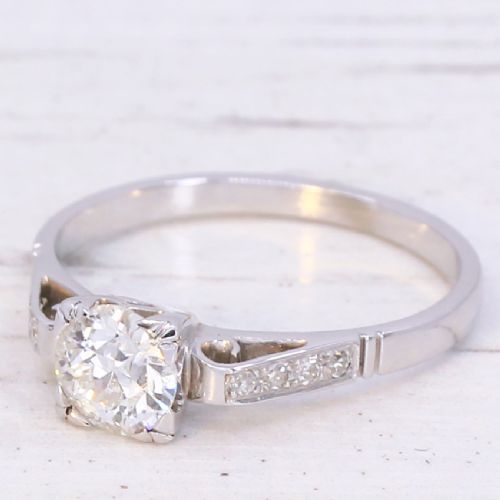
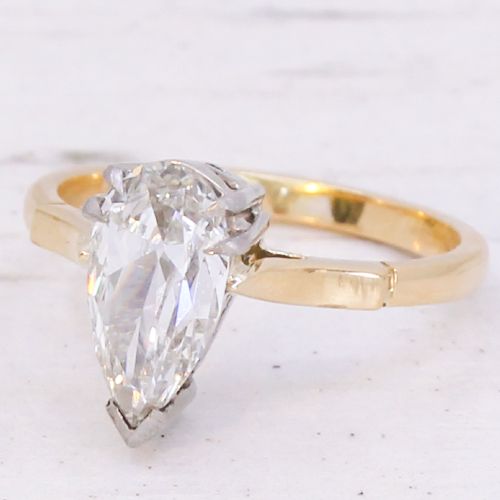
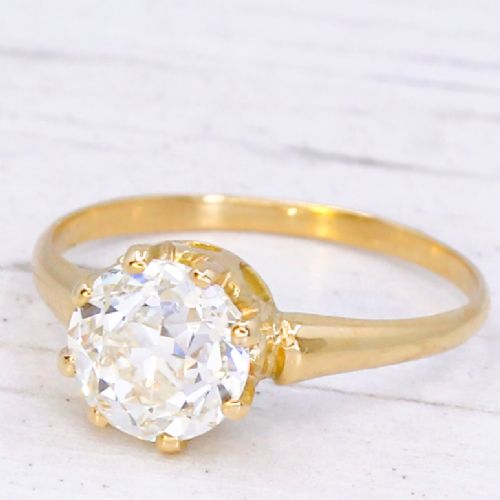
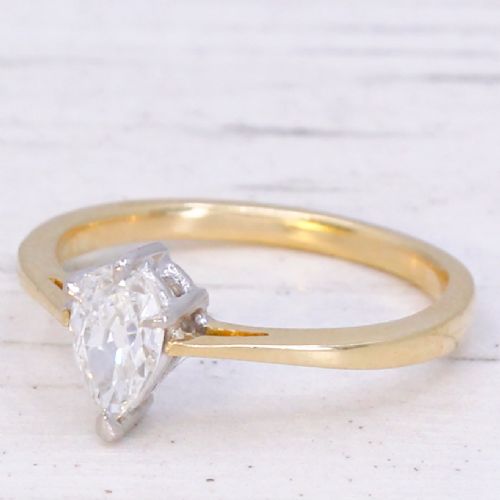
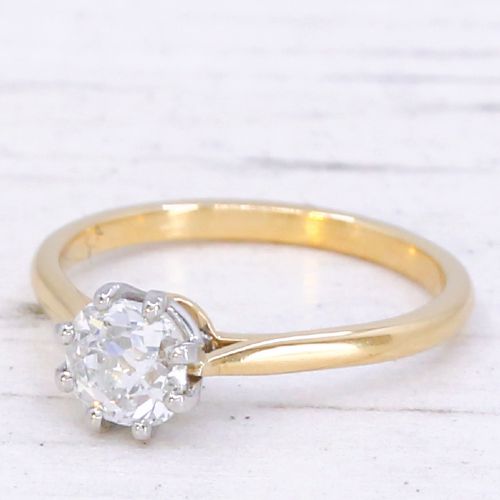


Antique Single Diamond Ring
An antique single diamond ring carries a solitary stone set in precious metal, offering a direct link to the craftsmanship of past centuries.
Antique Single Diamond Ring
An antique single diamond ring focuses entirely upon one central stone, presenting either an engagement ring or a dress ring of notable simplicity. When searching for an antique single diamond ring, collectors encounter pieces shaped by Victorian, Edwardian, Art Deco and mid-century aesthetics.
The forms span straightforward gold bands to elaborate platinum settings, reflecting the shifting tastes of the nineteenth and twentieth centuries. Solitaires dominate the selections, highlighting the individual character of each diamond without distraction from secondary stones.
How they were made
Goldsmiths shaped these pieces using durable metals such as platinum, yellow gold, white gold and nine-carat gold, often combining gold bands with platinum heads to secure the stone firmly. Platinum gained particular favour during the Edwardian and Art Deco periods for its strength and bright finish.
The diamonds themselves display hand-cut facets, including old European cuts, old mine cuts and old pear cuts, fashioned before modern automated methods existed. These stones were set by hand into bezels, prong settings or illusion settings designed to maximise the visual presence of the diamond.
Victorian jewellers occasionally smuggled a single diamond into black onyx backgrounds to ensure maximum nocturnal mystery.
What varies in quality
The standard of an antique single diamond ring depends heavily upon the skill of the original cutter and the integrity of the metalwork. Hand-cut diamonds possess individual facet arrangements that create distinct light return compared to modern stones.
The precision of the setting and the preservation of original claw work or millegrain edges also separate standard examples from finer specimens. Metal durability and the absence of heavy past alterations maintain the historical integrity of the piece.
The Antique Single Diamond Ring Glossary
- Solitaire
- A ring featuring a single prominent gemstone. This design concentrates all visual interest upon one central stone.
- Old European cut
- A round diamond cut popular from the late nineteenth to the mid-twentieth century. It typically exhibits a small table, heavy crown and open culet.
- Old mine cut
- An early cushion-shaped diamond cut with a near-square girdle and high crown. This cut reflects candle or gas light with a distinctive warm glow.
- Millegrain
- A decorative technique involving small, bead-like metal reliefs along the edges of a setting. It adds a delicate texture popular in Edwardian and Art Deco jewellery.
- Illusion setting
- A metal head surrounding a diamond designed to make the stone appear larger than its actual carat weight. This method was widely used in Victorian and early twentieth-century rings.
Antique Single Diamond Ring: Frequently Asked Questions
How do I care for an antique diamond ring?
Clean the piece gently using warm water, mild soap and a soft brush to remove everyday oils from beneath the setting. Avoid harsh chemical cleaners that might affect older gold alloys or delicate platinum work.
Take the ring to a professional jeweller periodically to check the security of the prongs. Regular inspection prevents the stone from loosening over decades of daily wear.
Can I wear an antique single diamond ring daily?
Most pieces handle everyday wear well, especially those set in durable platinum or sturdy eighteen-carat gold bands. Consider removing the ring during heavy physical tasks or manual labour to protect the historic metalwork.
Older settings with worn claws require inspection before continuous daily use. Proper maintenance ensures the stone remains secure through modern routines.
How do I determine the period of my ring?
Examine the mounting style, metal choices and cutting technique of the diamond for primary clues. Art Deco pieces often display geometric platinum arrangements, whereas Victorian examples frequently utilise yellow gold.
Consulting a gemological report or an experienced specialist provides deeper confirmation. Hallmarks stamped inside the band also help verify the assay office and year of manufacture.
What is the difference between old cut and modern cut diamonds?
Older cuts feature hand-polished facets shaped individually by artisans rather than by precise mathematical machines. This artisanal approach yields wider facet patterns and a softer, deep-toned sparkle under low lighting.
Modern brilliant cuts follow strict geometric proportions designed for maximum optical return in electric light. Old cuts retain a distinct historic charm due to their unique, non-standardised symmetry.