





Antique Silverware Cup
These antique silverware cup examples span Georgian christening mugs to Scottish quaichs, offering tactile pieces of drinking history for the collector.
Antique Silverware Cup
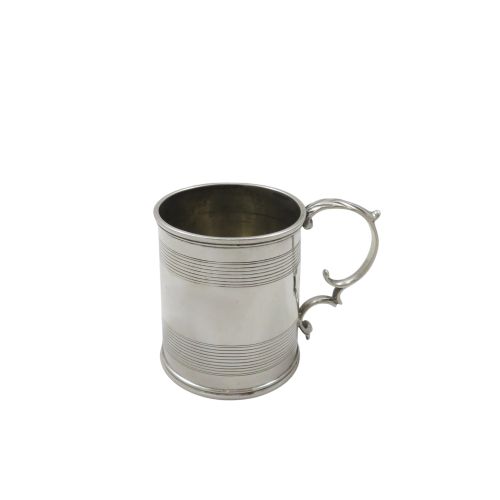
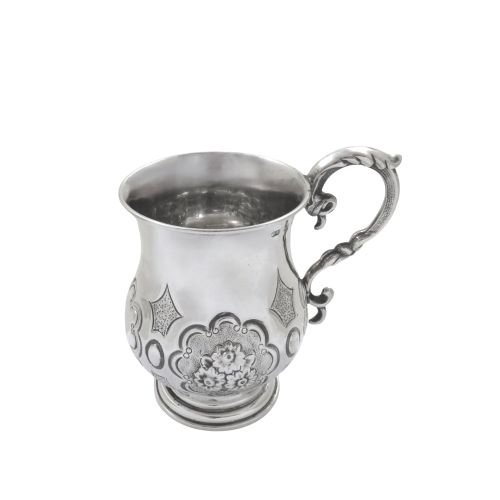
When you search for an antique silverware cup, you encounter a diverse array of historical drinking vessels spanning multiple centuries and regions. The selection on this page most frequently includes Victorian and Georgian sterling silver christening mugs, communion chalices, and traditional drinking vessels.
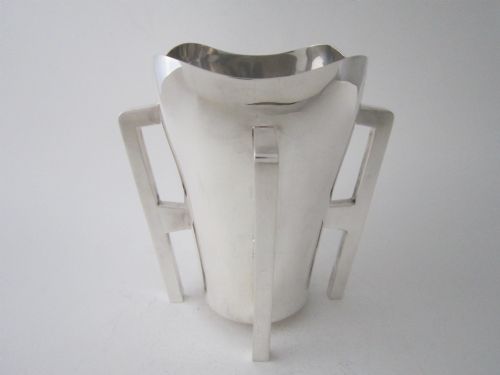
The forms range widely from traditional handled mugs and pedestal goblets to Scottish horn quaichs, barrel-shaped novelty vessels, and decorative tots. Each piece reflects the social and domestic rituals of its period, whether used for baptisms, formal dining, or private consumption.
Origins vary considerably, encompassing English, Irish, Scottish, French, Russian, and Indian craftsmanship. Buyers find everything from intimate egg cups and vodka tots to large ceremonial beakers and multi-piece liqueur services.
How they were made
Makers utilised sterling silver, silver plate, and old Sheffield plate as the primary metallic foundations for these vessels. Many examples incorporate supplementary materials such as natural horn, porcelain, and interior gold gilding known as silver gilt.
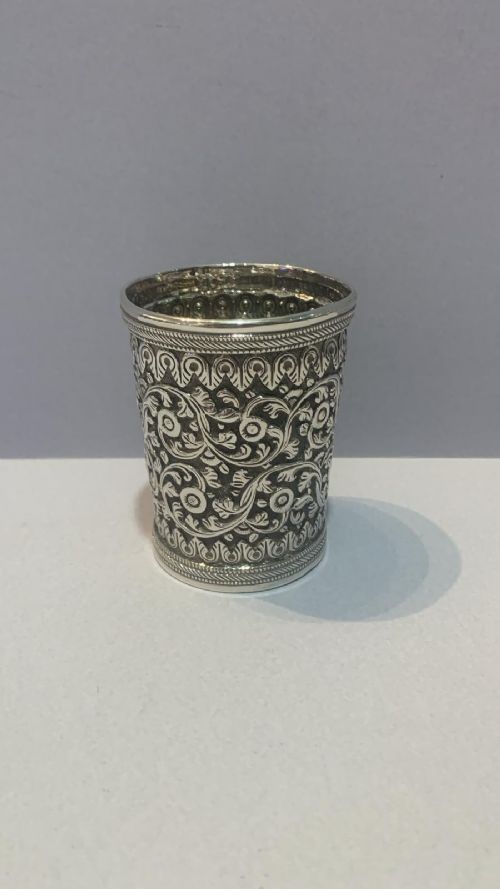
Techniques relied heavily on traditional silversmithing methods, including hand-raising, casting, and meticulous floral engraving. Distinct regional styles emerged through specialised practices, such as the mounting of natural horn in Scottish workshops or intricate repoussé decoration in Kutch silver.
The listings feature silver items incorporating natural horn, copper, and porcelain alongside standard sterling silver and plate.
What varies in quality
The distinction between standard examples and exceptional works rests upon the crispness of the maker's punch marks, the depth and clarity of hand-engraving, and the overall weight of the metal. Superior pieces retain their structural integrity without thinning of the walls from excessive polishing over generations.
Provenance and maker attribution elevate certain items significantly, particularly those bearing crisp hallmarks from documented workshops in London, Dublin, or St Petersburg. The harmonious integration of secondary materials, such as polished horn mounted in silver or applied gilt interiors, further separates standard domestic wares from masterworks.
Elkington·Mackay and Chisholm·William Eaton·Thomas Sutton·Aleksandr Timofeyevich Shevyakov
The Antique Silverware Cup Glossary
- Christening mug
- A small handled drinking vessel traditionally presented as a baptismal gift during the Georgian and Victorian eras. These often feature repoussé floral decoration or cartouches suitable for personal engraving.
- Quaich
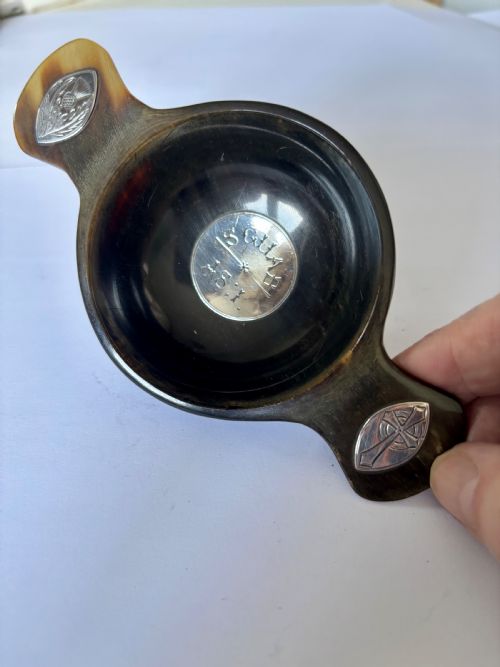
- A traditional Scottish two-handled drinking vessel used for toasts, typically shallow and circular in form. Examples frequently combine silver mounts with turned natural horn or stave construction.
- Chalices and goblets
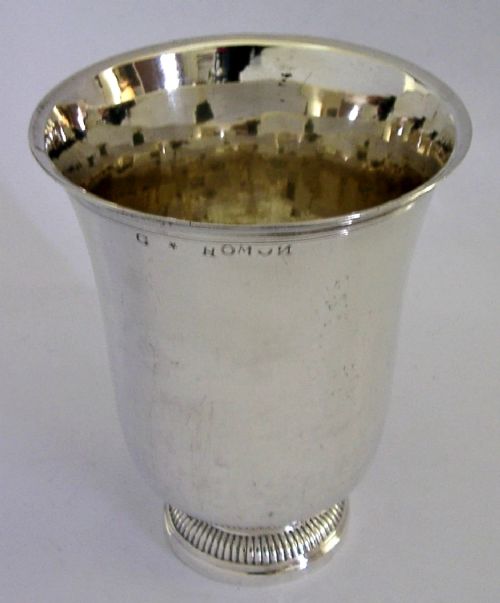
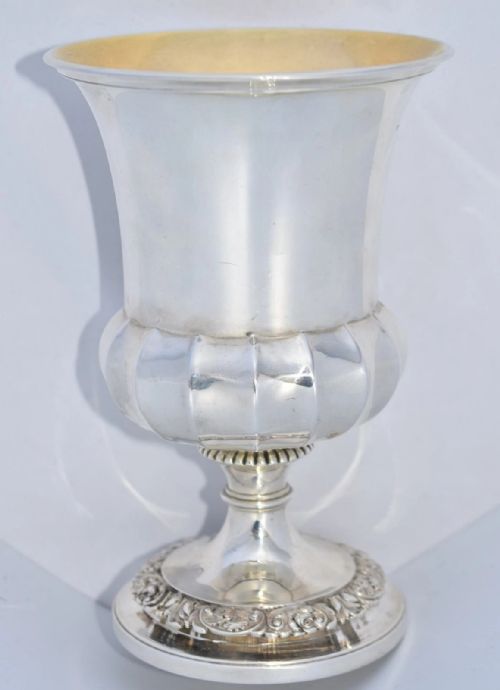
- Elevated drinking vessels supported on a stem and foot, historically utilised for ecclesiastical communion or formal dining. They often date from the Georgian and Victorian periods in solid sterling silver.
- Old Sheffield plate
- An early fused plating technique where a thin sheet of silver is fused to a thicker copper core. This method produces distinctive edge-bleeding of the copper visible beneath worn silver surfaces.
- Silver gilt
- Sterling silver that has been coated with a thin layer of gold on the interior or exterior surface. This treatment protects the silver from tarnishing when in contact with acidic liquids and adds a rich visual contrast.
Antique Silverware Cup: Frequently Asked Questions
How do I date an antique silver cup?
Dating relies primarily upon the stamped hallmarks, which typically include a date letter, a assay office mark, and a maker's mark.
Comparison with known regional registry styles and stylistic motifs provides secondary confirmation of the manufacturing period.
What is a quaich used for?
A quaich served as a traditional Scottish welcoming cup, passed between guests for sharing a dram of whisky or ale.
The two opposing handles allowed the drinker to hold the vessel securely with both hands.
Can I use silver cups for drinking?
Solid silver and silver gilt vessels are generally food-safe, though antique pieces require gentle hand washing without harsh detergents.
Silver plate and old Sheffield plate should be used with care to prevent wearing through the thin outer metallic layer.
What distinguishes old Sheffield plate from standard silver?
Old Sheffield plate involves fusing silver to a copper base rather than depositing silver chemically onto a base metal.
This historic technique leaves subtle traces of warm copper beneath high-friction areas on older domestic items.
Why do some silver cups have gold inside?
Gilding the interior surface prevents acidic beverages from tarnishing or reacting chemically with the underlying sterling silver.
This traditional practice also enhances the visual presentation of drinking vessels and communion chalices.