



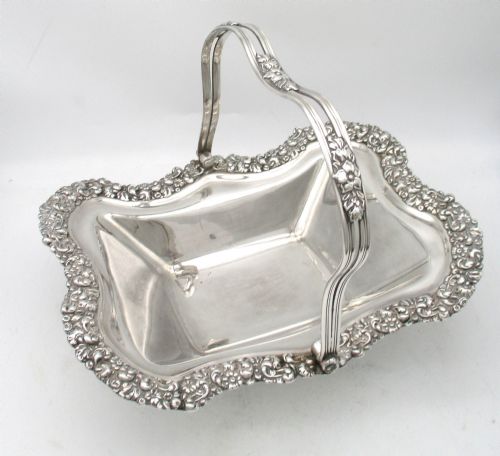
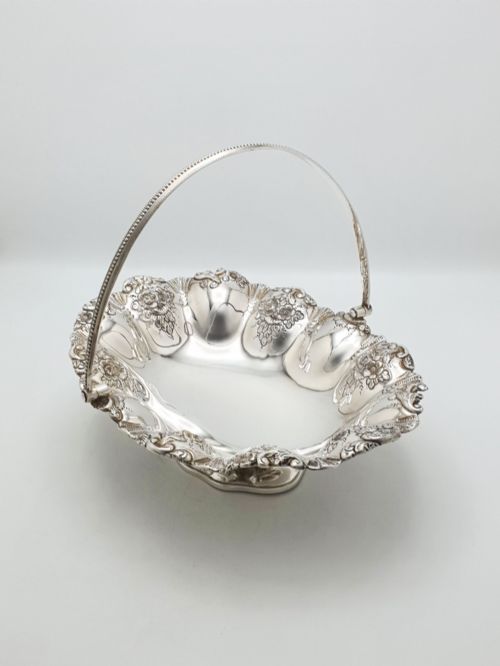
Antique Silver Swung Handle Basket
An antique silver swung handle basket brings tactile grace to a table, combining hinged metalwork with glass liners or pierced forms.
Antique Silver Swung Handle Basket
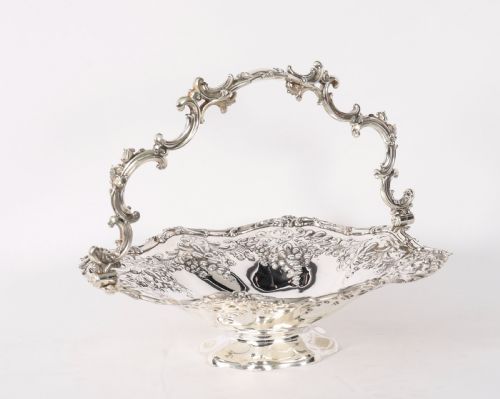
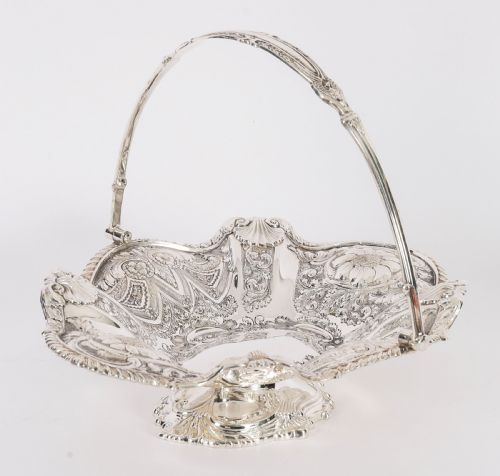
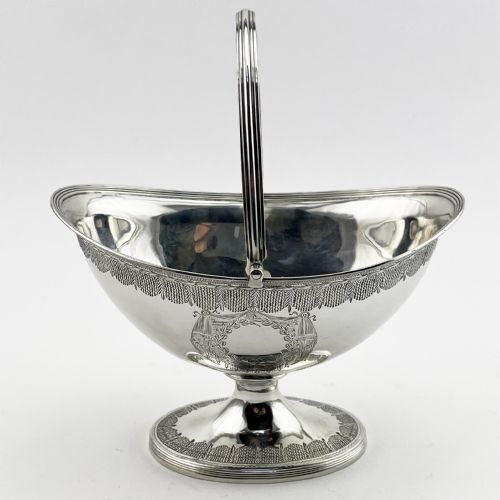
An antique silver swung handle basket typically appears as a sugar basket, fruit basket, or sweetmeat basket designed for formal table service. These pieces span Georgian, Victorian, and Edwardian periods, stretching from the eighteenth century into the twentieth.
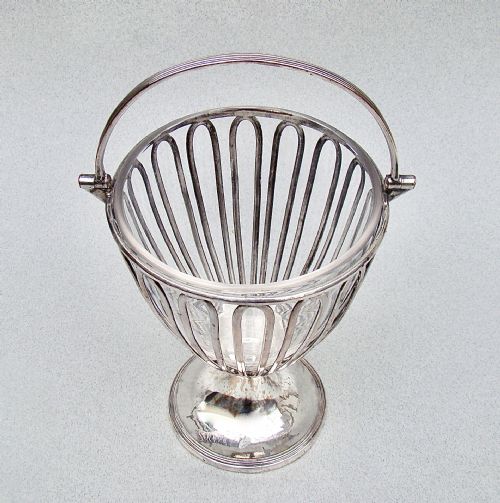
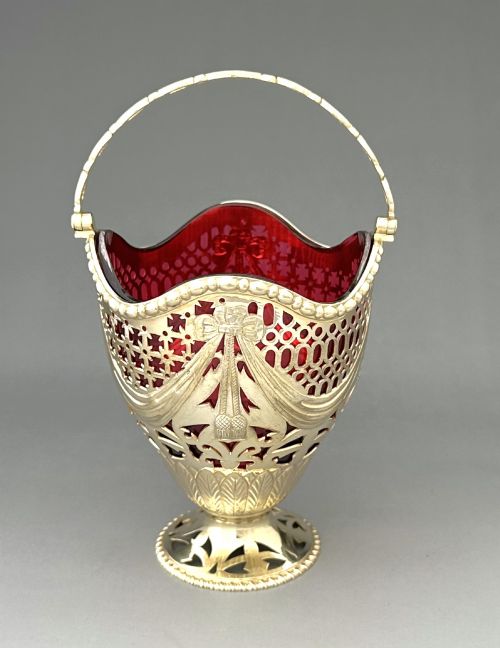
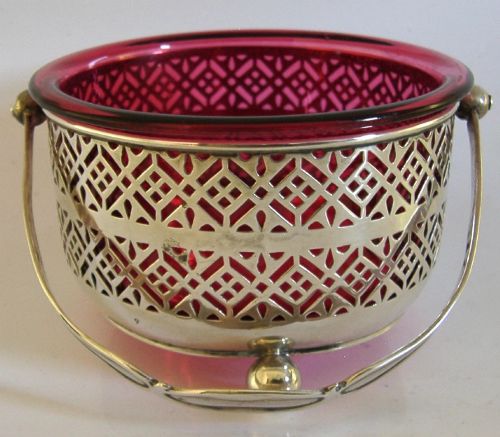
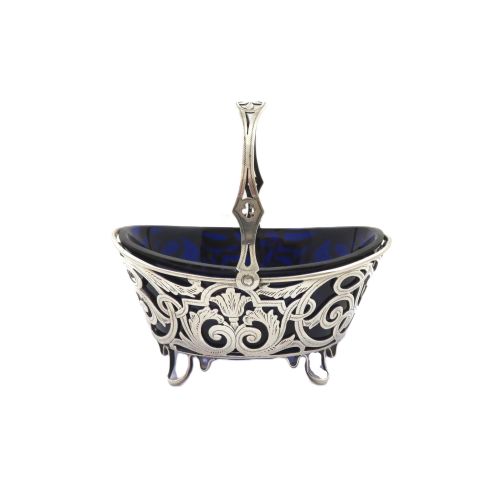
The most frequent versions on this page are solid sterling silver and silver plated vessels featuring pierced latticework, wirework, or embossed floral motifs. Many incorporate coloured glass liners, notably cranberry and ruby hues.
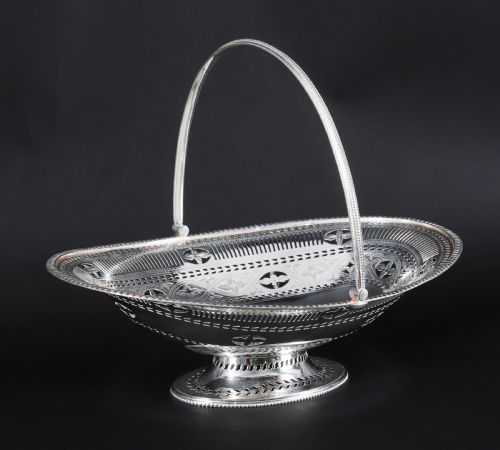
Makers fashioned these baskets for practical dining uses, including holding sugar, cakes, or bread, resulting in a variety of oval, round, and boat-shaped profiles with movable overhead handles.
Materials and technique
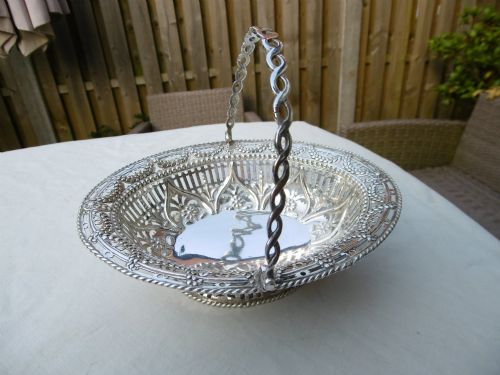
Silversmiths utilised sterling silver and Old Sheffield Plate alongside electroplated nickel silver to form the body and hinged handle of each basket. Piercing, fretwork, and wirework techniques created openwork lattices across the metal walls.
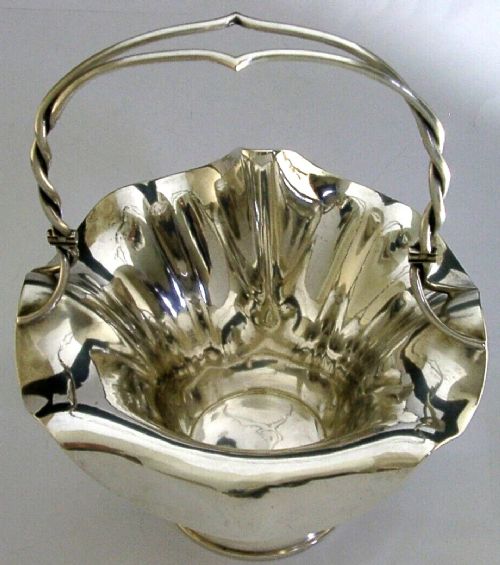
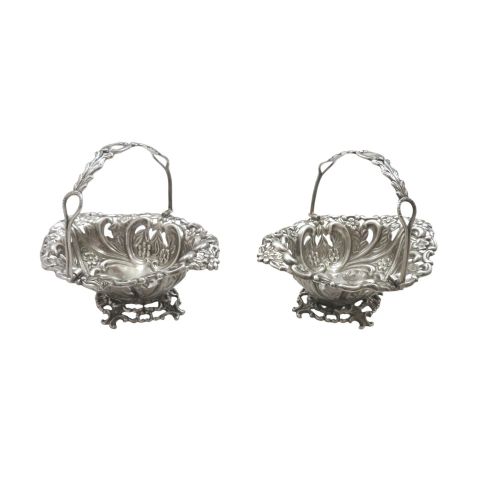
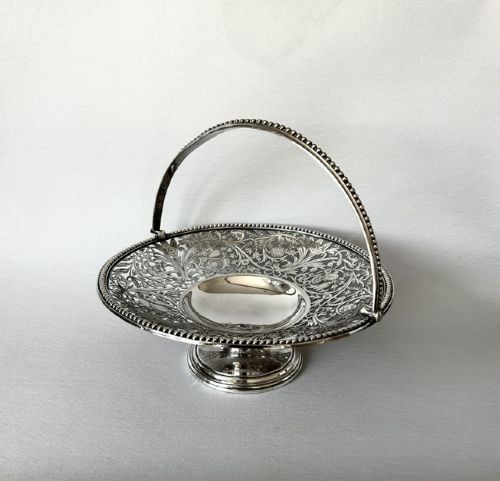
Makers added depth through repoussé embossing and cast floral detailing along rims and handles, occasionally applying silver gilt finishes or pairing the metal with blown cranberry and cobalt glass liners.
Antique Silver Swung Handle Basket Retail Price Guide 2026
Typical asking prices for silver swung handle basket among the pieces listed under this phrase on Sellingantiques today, from the lower quarter to the upper quarter. They describe what is for sale here now, not the wider market.
Some delicate wirework baskets require a steady hand, as their hinged handles swing freely like tiny metallic pendulums.
Craftsmanship and distinction
Quality rests on the crispness of the pierced or fretwork detailing and the structural integrity of the swing handle mechanism. Hand-pierced geometric patterns executed by named silversmiths demonstrate greater skill than simpler stamped alternatives.
The weight of the metal and the preservation of original glass liners or crest engravings distinguish superior examples. Pieces retaining intact gilding and well-defined maker marks command closer attention.
Aldridge and Green·Henry Chawner·George W Scott and Sons Ltd·Hammond Creake and Co·James Deakin and Sons·William Hutton and Sons·James Dixon and Sons Ltd·Samuel Herbert
The Antique Silver Swung Handle Basket Glossary
- Swing handled basket
- A vessel equipped with a movable overhead bail handle hinged to the rim on opposing sides. This allows the handle to fold down flat against the body.
- Old Sheffield Plate
- A composite material formed by fusing a sheet of silver to a thicker copper base prior to shaping. It was widely utilised before the invention of electroplating.
- Pierced work
- A decorative technique involving the cutting or piercing of openings through the metal wall to create geometric or floral patterns. It lightens the visual weight of the basket.
- Sweetmeat basket
- A small footed or handled vessel intended for holding bite-sized confections, nuts, or sweetmeats during formal dining. They frequently date to the Georgian era.
- Repoussé
- A metalworking method where the design is hammered into relief from the reverse side. This creates raised floral or scroll motifs along the rim or body.
Antique Silver Swung Handle Basket: Frequently Asked Questions
What were these baskets used for?
These vessels held sugar, bread, cakes, or fruit during formal dining and tea service. Smaller versions served sugar or sweetmeats near the tea tray.
Their movable handles allowed servants to pass them easily around the table among guests.
How do I identify the period?
Georgian examples often display crisp hand-piercing and classical forms like boat shapes. Victorian and Edwardian pieces frequently feature heavier cast floral handles and repoussé rims.
Assay office marks and maker stamps provide precise dating on solid silver items.
Are glass liners original?
Many pierced baskets included blown glass inserts to hold loose items like berries or sugar lumps. Cranberry and ruby glass liners are typical of the Edwardian era.
Matching the shape and wear patterns helps determine if the liner belongs to the period.
How should I clean them?
Solid silver and silver plate require gentle cleaning with a non-abrasive polish to preserve engraved crests and pierced details. Harsh scrubbing can damage Old Sheffield Plate layers.
Glass liners wash safely in warm soapy water away from the metal mounts.