
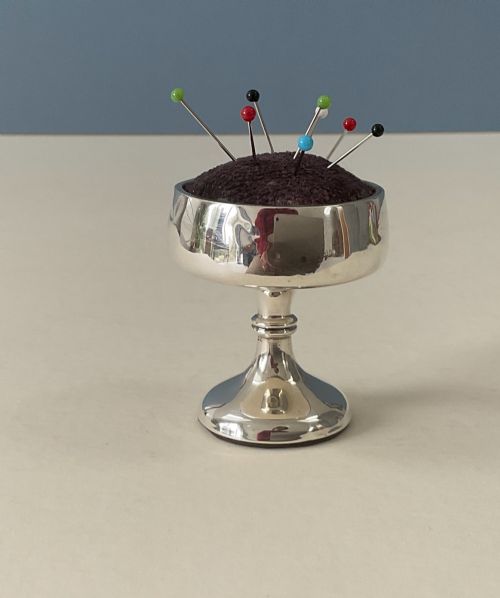


Antique Silver Sewing Box
An antique silver sewing box is a fitted receptacle for needlework implements, prized for its combination of precious metalwork and domestic utility.
Antique Silver Sewing Box
When you search for an antique silver sewing box, you encounter a specialised form of containment designed for threads, thimbles, and pins. These pieces range from substantial workboxes inlaid with mother-of-pearl to diminutive etuis and figural pin cushions.
The selection on this page draws heavily from the Victorian and Edwardian eras, alongside earlier Georgian examples and French contributions. You find everything from string dispensers and cotton holders to novelty animal pin cushions.
Materials extend beyond silver to include tortoiseshell, rosewood, burr yew, velvet, and bone, reflecting the diverse domestic tastes of the eighteenth, nineteenth, and early twentieth centuries.
How they were made
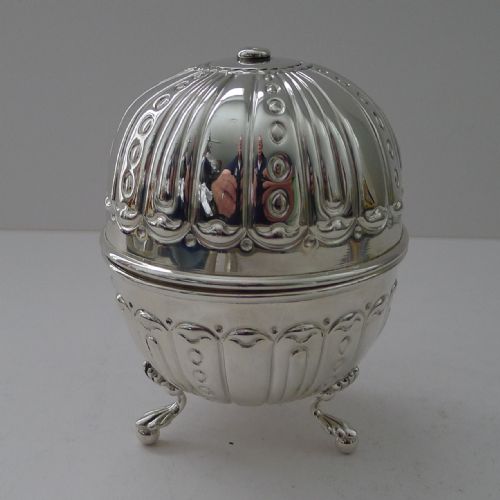
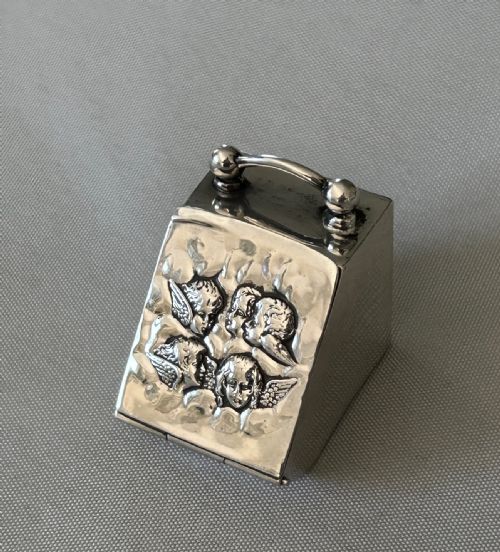
Silversmiths utilised sterling silver alongside base metals, employing techniques such as pierced floral scrollwork to adorn cotton holders and chatelaine cases. Ormolu mounts and gold leaf accents often embellished French and English containers alike.
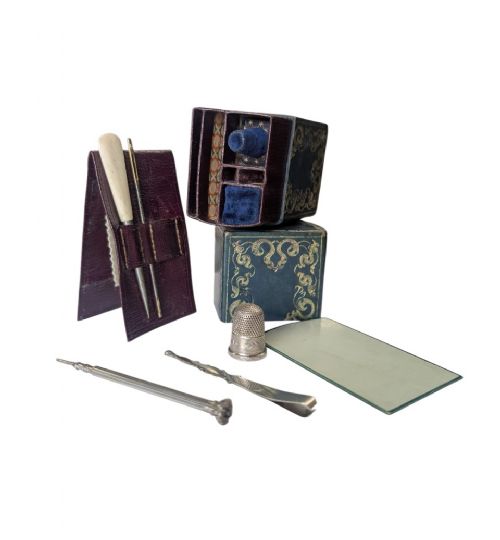
Wooden carcases in rosewood and burr yew received delicate silver stringing and mother-of-pearl inlay, creating contrasting surfaces. Interior fittings utilised velvet linings, bone implements, and fitted compartments tailored for specific sewing tools.
Listings feature items spanning the eighteenth, nineteenth, and early twentieth centuries, incorporating materials from tortoiseshell and burr yew to sterling silver and ormolu.
What varies in quality
The standard of execution in an antique silver sewing box rests upon the crispness of the metalwork and the integrity of the fitted interior. Pierced scrollwork that retains sharp edges and fine detail distinguishes superior pieces from softer castings.
Construction quality also shows in the alignment of hinges, the snugness of lids on etuis, and the survival of original velvet linings or internal bone accessories. Pieces incorporating unusual figural forms or specialised novelty designs demonstrate higher levels of period craftsmanship.
Artificer's Guild
The Antique Silver Sewing Box Glossary
- Etui
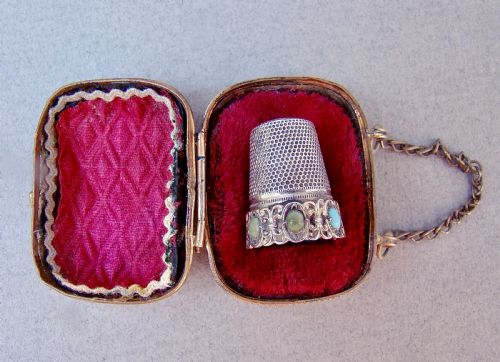
- A small ornamental case for holding needles, cosmetics, or other small articles. These pocket-sized containers often house complete sets of miniature sewing tools.
- Chatelaine
- A decorative belt hook worn with a series of chains suspended from it. Each chain typically holds useful domestic items such as scissors, thimble cases, or keys.
- String box
- A container specifically engineered to dispense twine or sewing thread through a central aperture. They often feature weighted lids or internal spools.
- Ormolu
- Gilded bronze used widely for decorative mounts on nineteenth-century boxes and furnishings. The technique imparts a rich golden finish to metal fittings.
- Tortoiseshell
- The mottled shell of certain sea turtles utilised as an overlay on wooden workboxes. Craftsmen frequently paired it with inlaid silver stringing.
Antique Silver Sewing Box: Frequently Asked Questions
What tools belong inside an antique sewing box?
Original interiors typically contained matching thimbles, needles, bodkins, and small scissors secured in fitted velvet slots. Many boxes also accommodated thread winders and bone folding implements.
Over the decades, individual tools frequently became separated from their parent containers. Finding a complete set of matching implements remains an uncommon occurrence.
How do I distinguish Georgian from Victorian boxes?
Georgian pieces from the mid-eighteenth century often display restrained classical lines and fine hand-chased silver mounts on etuis. Victorian examples tend toward heavier ornamentation, incorporating diverse materials like tortoiseshell and mother-of-pearl.
Maker marks and silver hallmarks provide the most reliable chronological anchors. Stylistic shifts in interior velvet colours and floral scrollwork further clarify the period of manufacture.
How should I clean silver sewing boxes?
Dust accumulated in pierced scrollwork and engraved crevices should be removed using a very soft, dry brush. Harsh chemical dips risk damaging delicate velvet linings, wood veneers, and bone components.
Polishing cloth application must avoid staining adjacent fabric or inlay materials. Preserving the natural patina of the silver remains preferable to aggressive polishing.
Were novelty pin cushions used daily?
Figural pin cushions shaped as animals, birds, or everyday objects served as both decorative desk accessories and functional sewing tools. Their whimsical designs made them popular gift items during the Edwardian period.
While functional, their elaborate forms suggest they spent considerable time displayed on dressing tables or sewing desks rather than enduring heavy workroom use.