
Antique Silver Scent
Antique silver scent bottles and vinaigrettes are miniature pocket vessels, combining precious metal mounts with coloured glass, crystal, or agate to hold perfumes and aromatic vinegars.
Antique Silver Scent
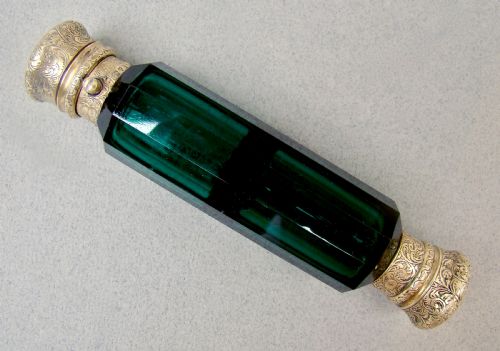
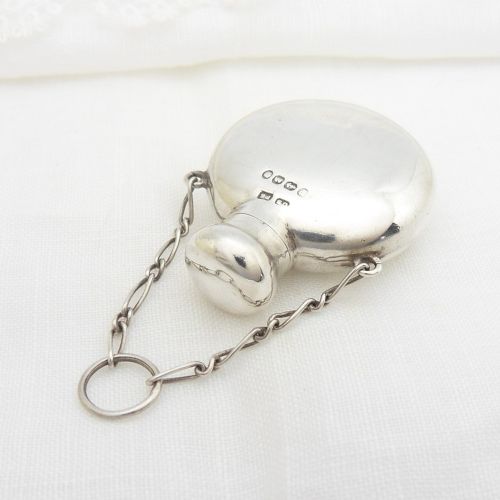
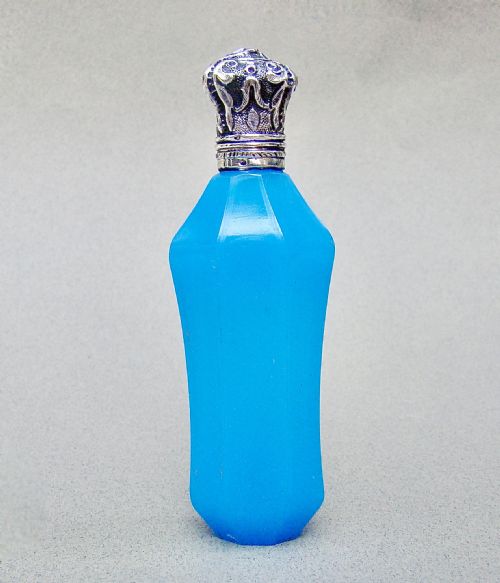
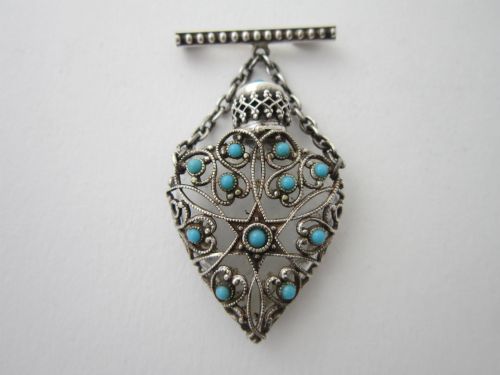
Antique silver scent pieces encompass scent bottles, perfume flasks, and vinaigrettes designed for personal use during the Georgian, Victorian, and Edwardian eras. These portable items range from small chatelaine flasks to novelty shapes like hunting horns and violins.
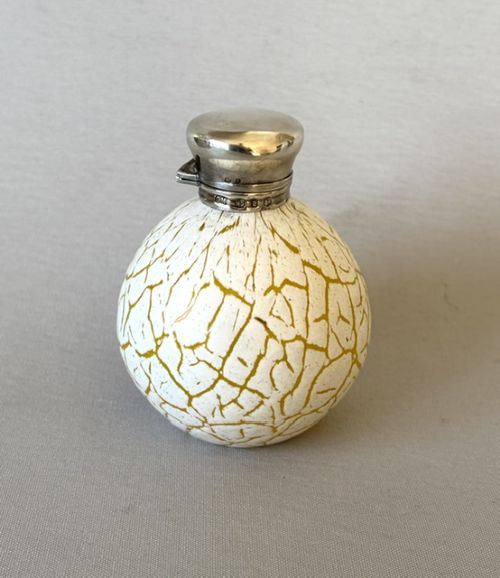
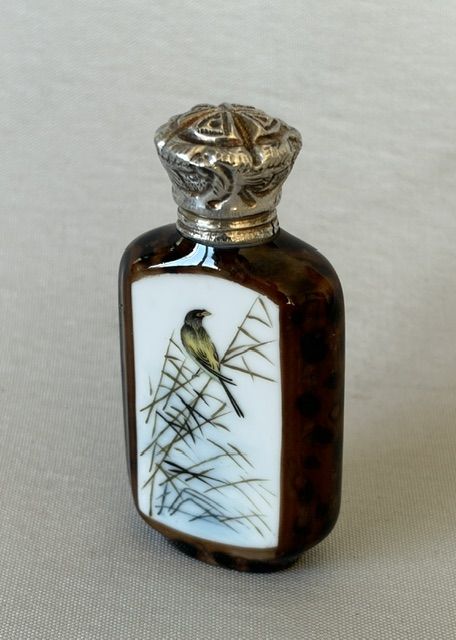
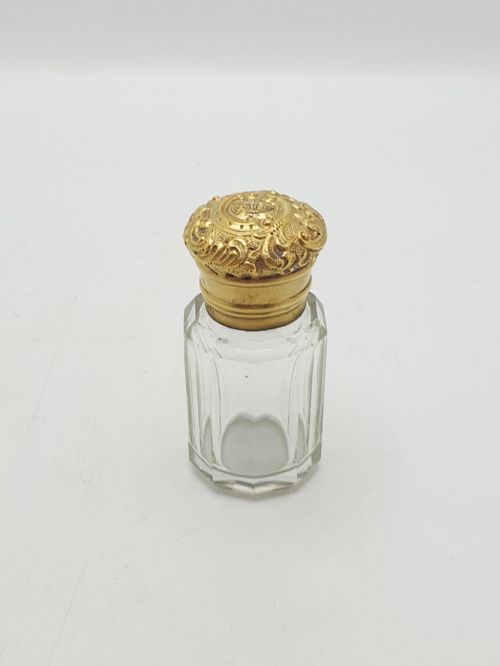
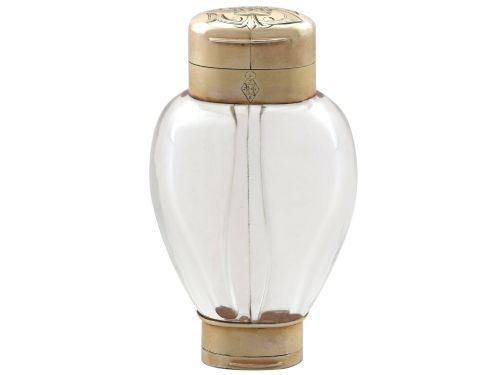
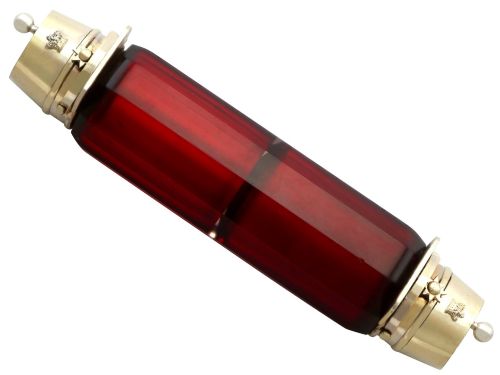
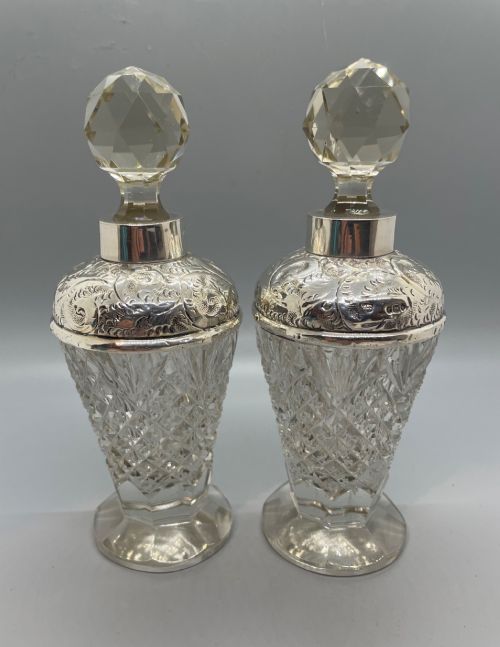
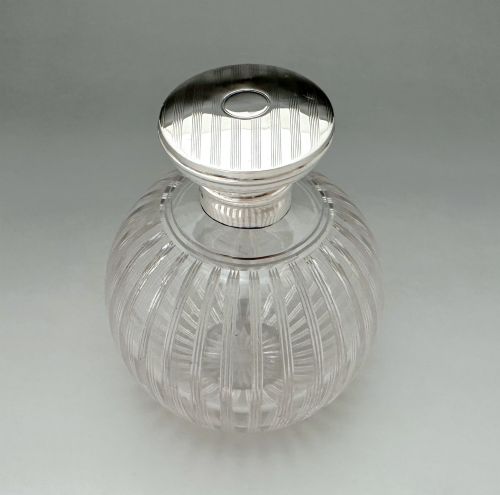
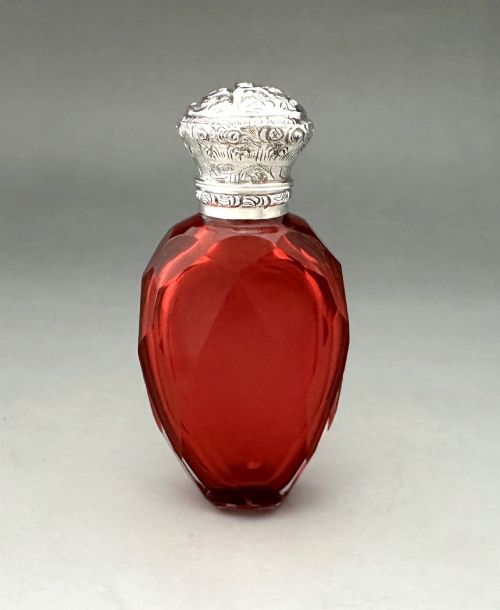
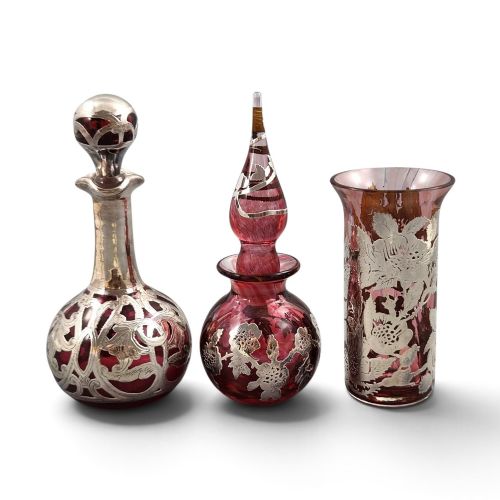
Vessels on this page frequently pair sterling silver or silver gilt mounts with cut glass, opaline glass, and ruby or cranberry glass bodies. Makers also utilised enamel, tortoiseshell, and semi-precious stones such as agate and citrine to embellish the designs.
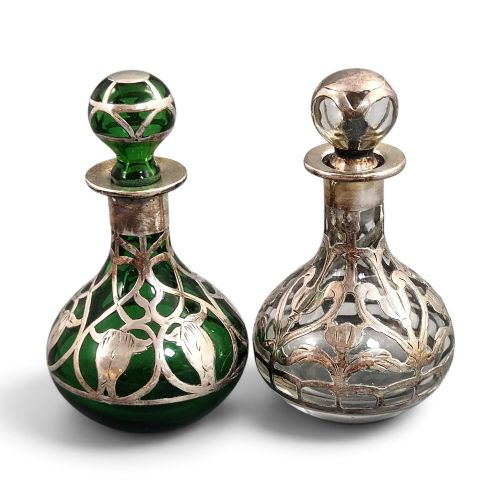
The selection reflects diverse European craftsmanship, featuring English sterling silver alongside 19th-century French mounts and Bohemian coloured glass. Buyers encounter both simple collared perfume decanters and intricate chatelaine accessories.
Materials and construction
Craftsmen formed the mounts using sterling silver, silver gilt, and Old Sheffield plate, frequently applying repoussé, chasing, or silver overlay techniques to decorate the metal collars and hinged lids.
Glass bodies were blown, moulded, or cut, utilising materials like crackle glass, crystal, and coloured glass in shades of green, red, and blue. Vinaigrettes often concealed pierced internal grilles designed to hold a sponge soaked in aromatic vinegar.
Listings feature Victorian, Edwardian, and Georgian periods, incorporating materials such as sterling silver, ruby glass, enamel, and tortoiseshell.
Quality factors
The refinement of the silver mountwork and the clarity of the glass determine the standing of a piece. Well-defined chasing on the silver and precision in the cut glass indicate superior workshop production.
The integrity of internal elements, such as intact pierced silver grilles inside vinaigrettes and original glass stoppers within scent bottles, contributes to desirability. Maker attribution and legible hallmarks also elevate the stature of a vessel.
William Comyns & Sons·Saunders & Shepherd·Taylor & Perry·Gorham·Harold Bushell & Co·Henry Perkins·Edward Smith·Franchini & Bigaglia
The Antique Silver Scent Glossary
- Vinaigrette
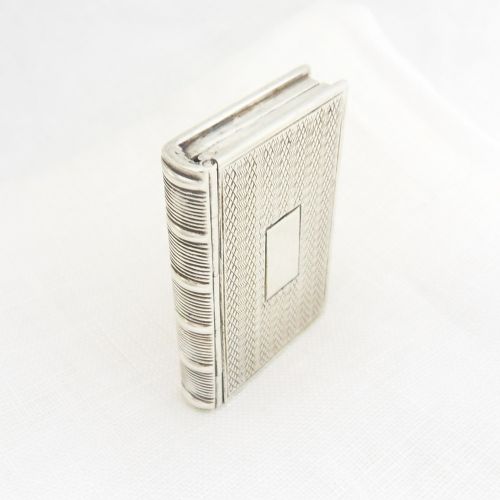
- A small hinged box containing a perforated internal grill, used historically to hold a sponge soaked in aromatic vinegar. These containers date primarily from the Georgian and Victorian periods.
- Chatelaine
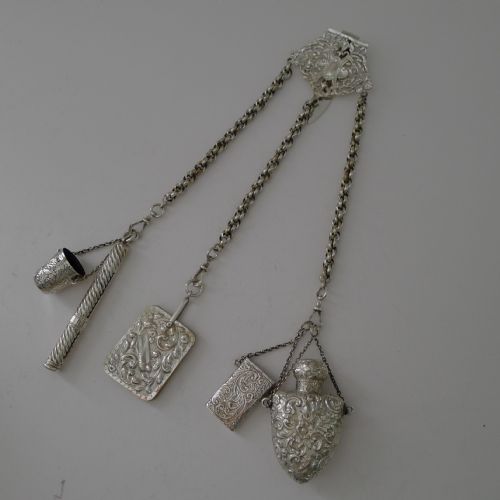
- A decorative belt hook worn to suspend everyday household items such as scent bottles, keys, and scissors. Wealthy women utilised them for practical convenience and social display.
- Silver Gilt
- Silver that has been coated with a thin layer of gold on the surface. This technique provides the warm appearance of gold while retaining a silver base.
- Old Sheffield Plate
- A composite material formed by fusing a thin layer of silver to a thicker copper base. It was widely used for small items and funnels before the invention of electroplating.
- Opaline Glass
- An opaque or translucent glass produced in various pale shades during the nineteenth century. It frequently formed the colourful bodies of Victorian scent flasks.
Antique Silver Scent: Frequently Asked Questions
How do I use a chatelaine?
A chatelaine is designed to clip onto a waistband, supporting suspended decorative items like scent bottles and chatelaine chains. It served as both a practical accessory and a status symbol.
Today, these pieces can be displayed flat in cabinets or mounted on suitable stands. They allow collectors to appreciate the linked chains and suspended silver flasks together.
How are periods identified?
Periods are identified through hallmarks, stylistic cues, and manufacturing techniques found on the silver mounts. Datestamps on English silver provide exact years of production.
Stylistic shifts, such as the organic lines of Art Nouveau or the geometric patterns of Art Deco, help date unmarked Continental and glass pieces. Comparing glass colours and cut patterns also assists in attribution.
How do I clean silver mounts?
Silver mounts require gentle cleaning with a soft cloth to preserve the patina and avoid damaging adjacent glass or enamel. Aggressive polishes should be kept away from stones and glass.
Harsh chemical dips can ruin the aged appearance of antique silver. Careful wiping around hallmarks ensures the metal remains bright without erasing historical details.