


Antique Silver Ring Case
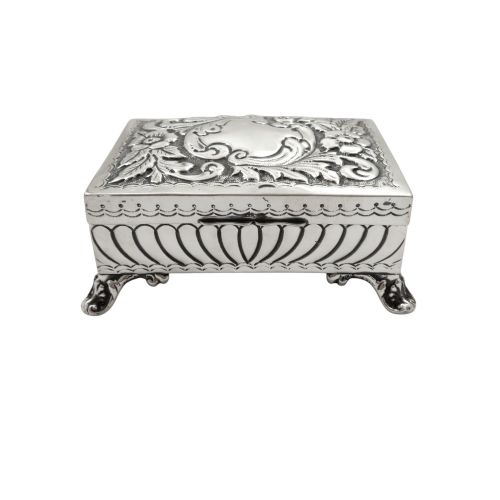
When you search for an antique silver ring case, you find small fitted containers designed to protect precious jewellery or hold sets of cased tableware.
Antique Silver Ring Case
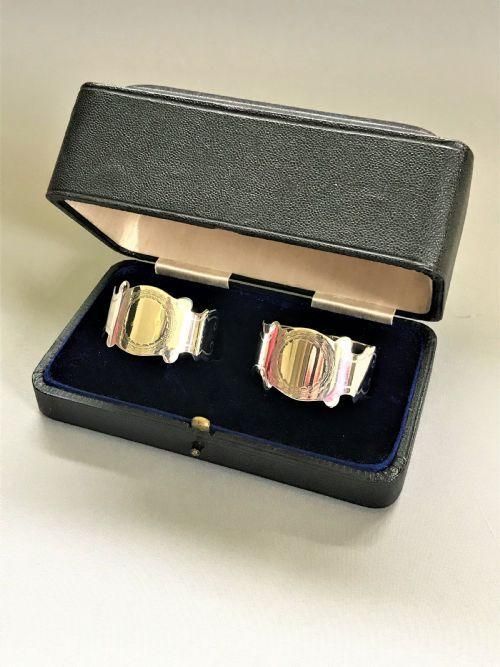
The term antique silver ring case covers small fitted boxes and cased sets intended to house personal treasures or dining accessories. While dedicated ring boxes appear from the Edwardian period, many entries under this search phrase encompass cased sterling silver napkin rings spanning the Victorian, Edwardian, and George V eras.
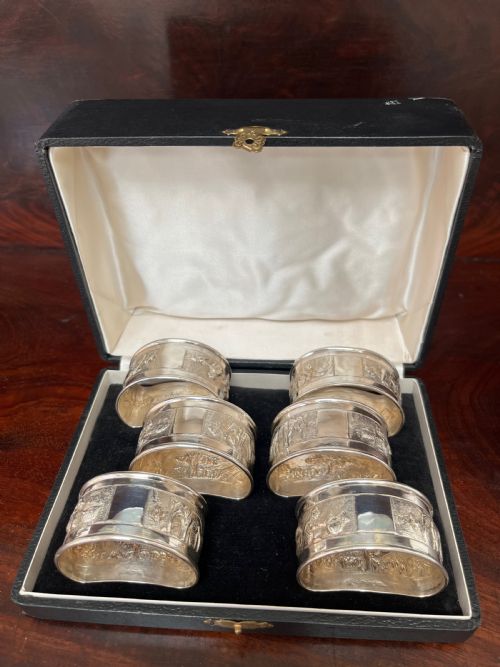
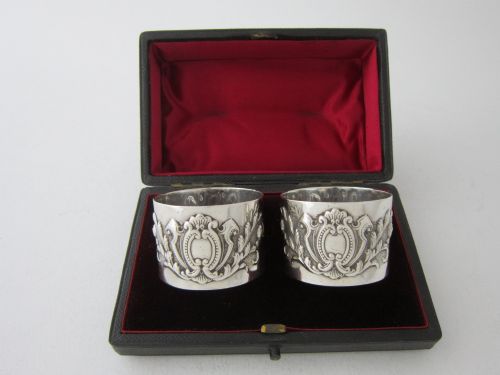
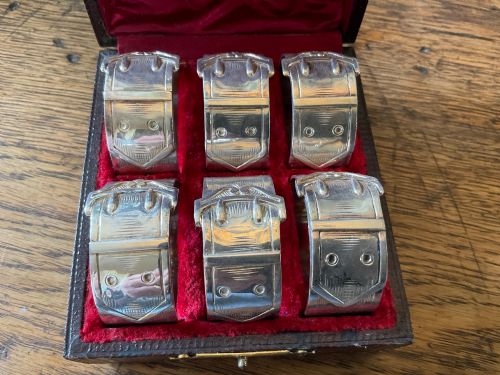
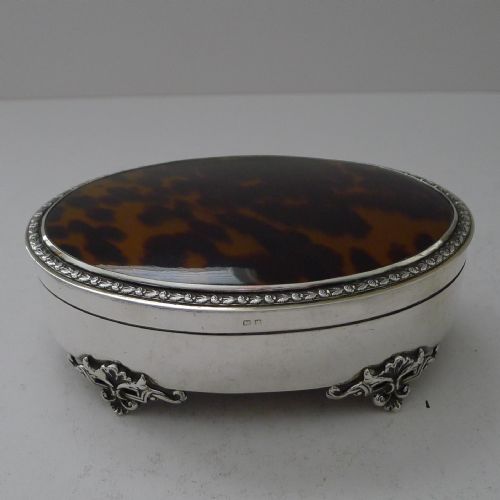
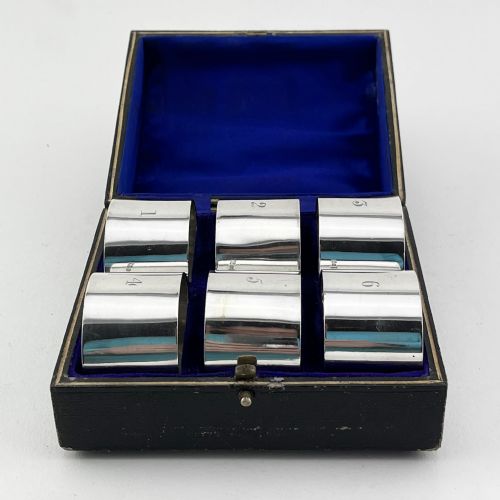
These items emerge from diverse contexts, ranging from individual heart-shaped trinket boxes to pairs and sets of six napkin rings nestled in original fitted velvet or silk-lined packaging. The domestic rituals of the nineteenth and early twentieth centuries generated a steady demand for such protective enclosures.
Makers produced these protective housings to shield precious metals and soft linings from daily wear. Survivors frequently retain their original form, preserving the integrity of both the silver object and its fitted interior.
Materials and Construction
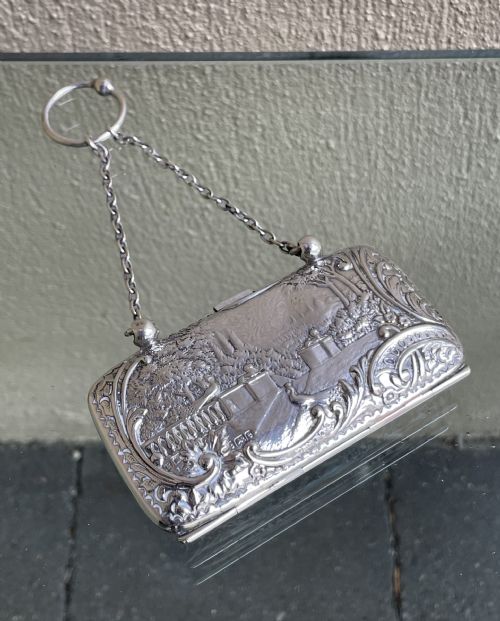
Silversmiths shaped sterling silver using techniques such as piercing, stamping, and engraving to create decorative motifs like grape and vine patterns, belt buckles, and angels. Workshops in major centres like Birmingham, London, and Chester stamped their wares with hallmarks verifying the metal standard and year of production.
Interiors rely on tactile linings made from velvet, silk, or leatherette, fitted tightly into wooden or card boxes covered in leather or brass-accented materials. These internal beds cushioned the silver elements, keeping individual pieces secure within their hinged or lidded enclosures.
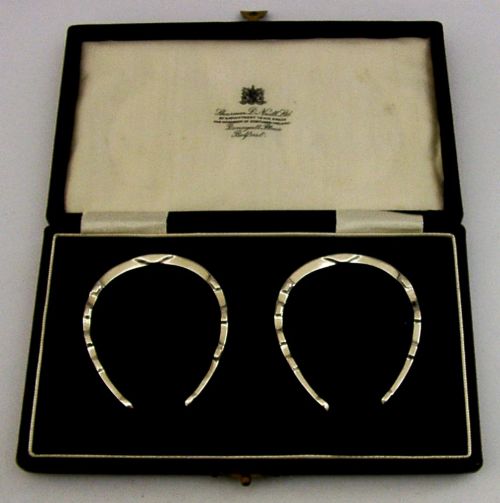
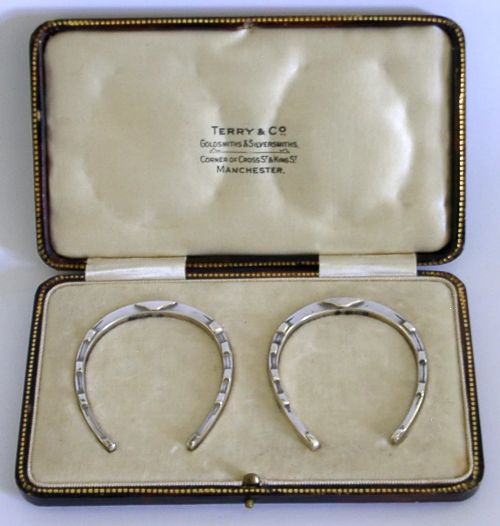
Some napkin rings were modelled as belt buckles, ducks, or lucky horseshoes, ensuring every meal came with a touch of whimsy.
Evaluating Craftsmanship
Quality reveals itself in the crispness of the silversmith's chasing and the structural snugness of the fitted case. Superior examples display deep, legible hallmarks and well-preserved internal silk or velvet fabrics that show minimal fraying from use.
The presence of an original maker-branded presentation case elevates an object, particularly when the internal lining remains intact and the exterior leather or leatherette housing closes flush. Complete sets matching every individual ring to a single fitted slot demonstrate higher original execution.
C.T. Burrows & Sons·Mappin & Webb·Asprey & Co.·Joseph Lum·Winterhalder & Hofmeier
The Antique Silver Ring Case Glossary
- Sterling silver
- A silver alloy containing 92.5 percent pure silver by mass, with the remainder composed of copper or other metals. This standard dominated British silversmithing throughout the Victorian and Edwardian periods.
- Hallmark
- An official stamp applied by an assay office to indicate the purity of the metal, the maker, and the year of manufacture. Common British assay towns include London, Birmingham, and Chester.
- Fitted case
- A specialised box constructed with an internal bed tailored to hold a specific object or set of items. These boxes often feature hinged lids lined with silk or velvet.
- Napkin ring
- A small ring used to identify individual table napkins between uses. Many surviving examples are sold together as matched sets inside original presentation boxes.
- Piercing
- A decorative technique where metal is cut through to create openwork patterns such as scrolls or geometric shapes. This method lightened the weight of the silver while adding visual complexity.
Antique Silver Ring Case: Frequently Asked Questions
How do I date a silver case?
Dating relies primarily on the assay office hallmarks stamped directly onto the silver surface. These official marks indicate the specific year of production and the town where the metal was tested.
Stylistic cues such as Edwardian piercing or Victorian chasing further narrow the timeframe. The design of the fitted presentation box also reflects the manufacturing period.
Were all napkin rings originally cased?
Not all napkin rings came with dedicated housing, but finer sets were sold in custom presentation boxes. These fitted enclosures protected the polished silver from tarnish and scratches.
Survival of the original velvet or silk-lined case adds significant context to a set. Makers often branded the inside of the lid with their commercial details.
How should I clean silver cases?
Cleaning requires gentle care to preserve both the silver metal and the delicate interior linings. Standard silver polish should be used sparingly on the exterior while avoiding contact with old fabric.
Moisture must be kept away from the velvet, silk, or leatherette inside the box. Soft microfibre cloths help maintain the polish without wearing down engraved details.