





Antique Silver Punch Spoon
An antique silver punch spoon brings social history to the table, offering tactile connection to the punch bowls and hospitality of Georgian and Victorian parlours.
Antique Silver Punch Spoon
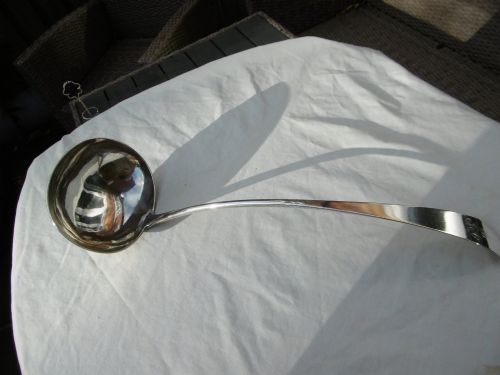
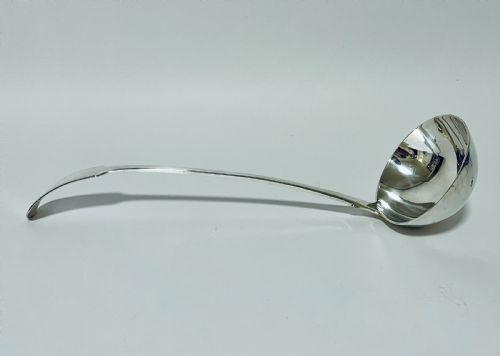
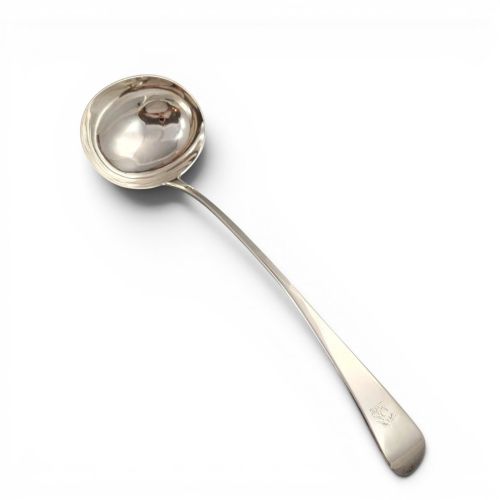
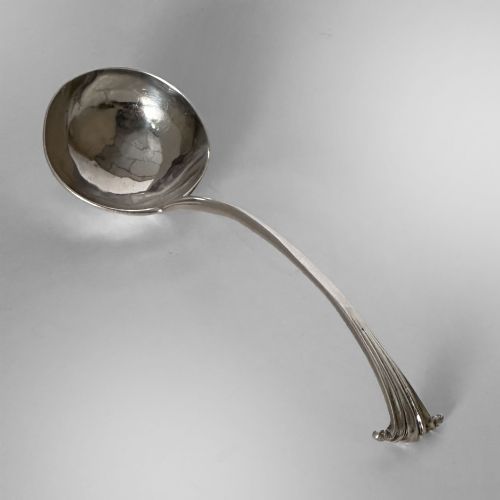
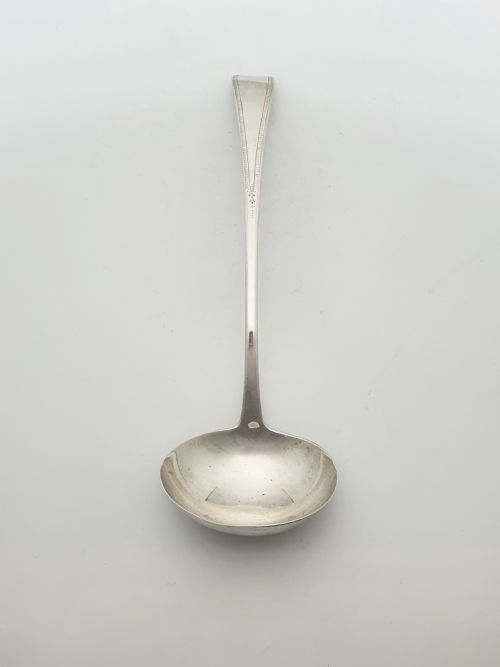
An antique silver punch spoon or ladle is a serving utensil designed for dipping and dispensing punch from a bowl into individual glasses. The pieces found here span the Georgian, Regency, and Victorian periods, encompassing both English provincial and London makes.
The form frequently appears alongside broader serving flatware and toddy ladles, sometimes adopting related forms like the Mr Punch and Judy spoon or deep bowls intended for communal drinking vessels. These utensils reflect the domestic rituals of eighteenth and nineteenth century entertaining.
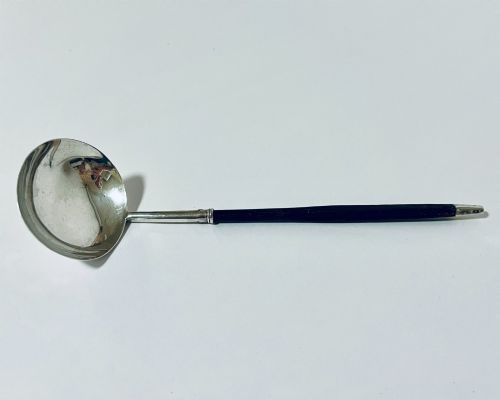
Makers shaped these items in sterling silver, often pairing the metal with organic elements such as horn, wood, or coquilla nut for the handle. Buyers encounter everything from provincial Scottish pieces to London hallmarked work bearing family crests.
Materials and construction
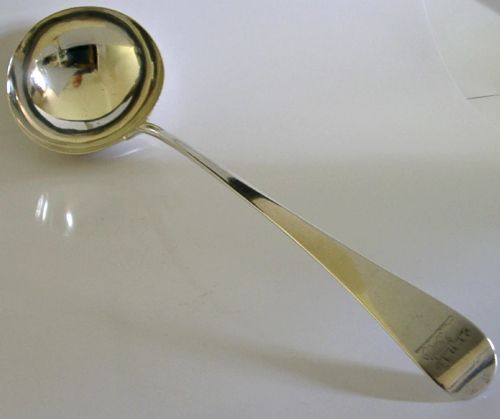
Silversmiths hammered and shaped sterling silver and silver alloys into bowls and stems, frequently incorporating a gold wash inside the bowl to protect the metal from the acidic punch mixtures. Handles often integrated turned wood, horn, or coquilla nut to provide a comfortable grip while insulating the hand from chilled or warm liquids.
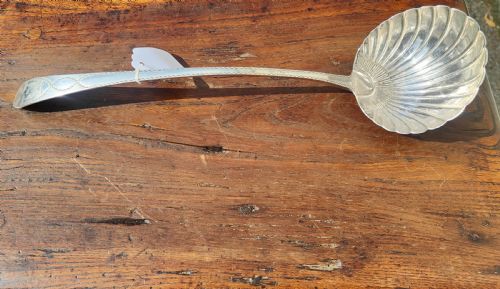
Makers utilised traditional techniques such as casting, hammering, and engraving to ornament the handles with threaded borders, crests, and specific patterns like Old English or Queen's pattern. Hallmarks stamped directly into the silver record the assay office, date letter, and maker's mark, anchoring each piece in its specific year of production.
Distinctions in quality
Quality rests in the gauge of the silver and the crispness of the hand-engraved crests and patterns, where thicker metal resists bending during use. Superior examples display balanced proportions between the deep bowl and the long handle, alongside clear, legible hallmarking.
The integration of organic materials like horn or coquilla nut demonstrates higher craftsmanship when the joints remain tight and smooth against the metal mounts. Maker attribution also alters standing, with pieces bearing marks from noted workshops commanding particular attention.
Milne and Campbell·Hester Bateman·Michael Smith·Tiffany and Co·Mary Chawner
The Antique Silver Punch Spoon Glossary
- Toddy ladle
- A small serving utensil designed for transferring hot whisky punch from a jug to a glass. These often feature twisted whalebone or turned wooden handles.
- Gold wash
- A thin layer of gold applied to the interior of a silver bowl to prevent tarnishing from acidic beverages and foods. This finish is also known as vermeil.
- Coquilla nut
- The hard, brown seed of a South American palm tree utilised by makers for turned handles on serving spoons and ladles. It offers a smooth, tactile texture.
- Hallmark
- A series of official marks stamped onto silver items to guarantee the metal purity, the maker, and the year of manufacture. Provincial pieces often carry distinct town marks.
- Old English pattern
- A traditional flatware design characterised by a rounded end curving downwards and a distinct drop where the stem meets the bowl. It remains common on Georgian examples.
Antique Silver Punch Spoon: Frequently Asked Questions
What is the difference between a punch spoon and a toddy ladle?
Punch spoons and ladles generally feature larger bowls intended for communal serving bowls, whereas toddy ladles are scaled for smaller portions of whisky-based drinks.
Both forms utilise long stems to reach deep vessels, though toddy ladles more frequently incorporate twisted whalebone or wooden handles.
How do I identify the date of a silver punch spoon?
Dating relies upon the hallmarks stamped into the metal, which include symbols for the assay office, the monarch's head, and a specific letter corresponding to the year of manufacture.
Stylistic cues such as threaded borders or regional provincial marks further help narrow the production period.
Can I use an antique punch spoon for serving today?
These utensils remain structurally sound for modern use, provided they receive gentle hand washing without abrasive cleaning agents.
The solid silver and organic handles are durable enough to serve punch or gravy at a modern dining table.
Why do some spoons have wooden or nut handles?
Organic materials like wood, horn, and coquilla nut prevented heat transfer when ladling warm alcoholic punches from heated bowls.
These materials also added visual contrast and tactile variety to the polished silver bowls.