


Antique Silver Plate Caster
An antique silver plate caster brings a gleam of dining history to the table, offering a period vessel for sugar, pepper or mustard.
Antique Silver Plate Caster
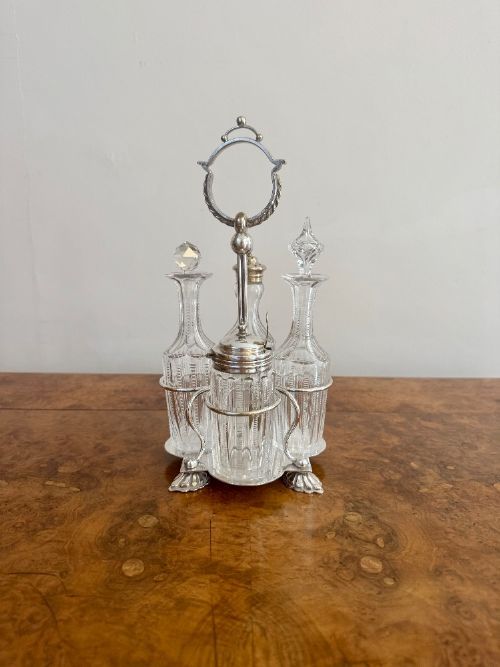
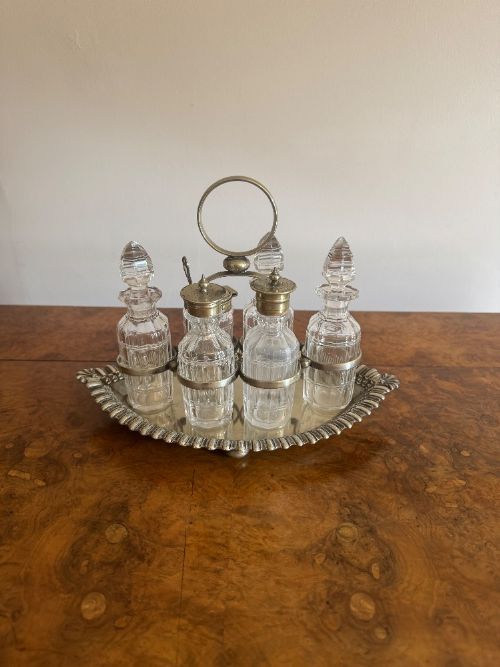
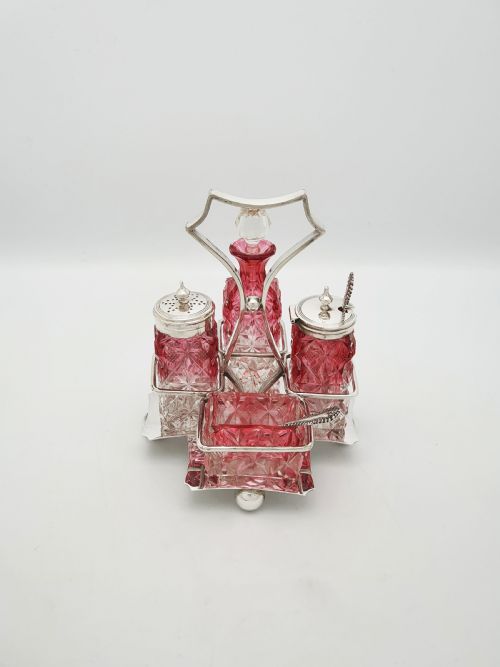
When searching for an antique silver plate caster, a buyer explores a variety of dining table accessories designed to dispense seasonings or sugar. These pieces frequently appear within this selection as part of larger cruet sets, condiment stands or as individual sugar shakers.
The objects span multiple periods, with Edwardian and Victorian examples forming a large portion of the available range alongside Georgian forms and Art Deco designs. Makers utilised electroplated nickel silver and standard silver plate over base metals, frequently pairing the metalwork with cut glass, cranberry glass and gilt elements.
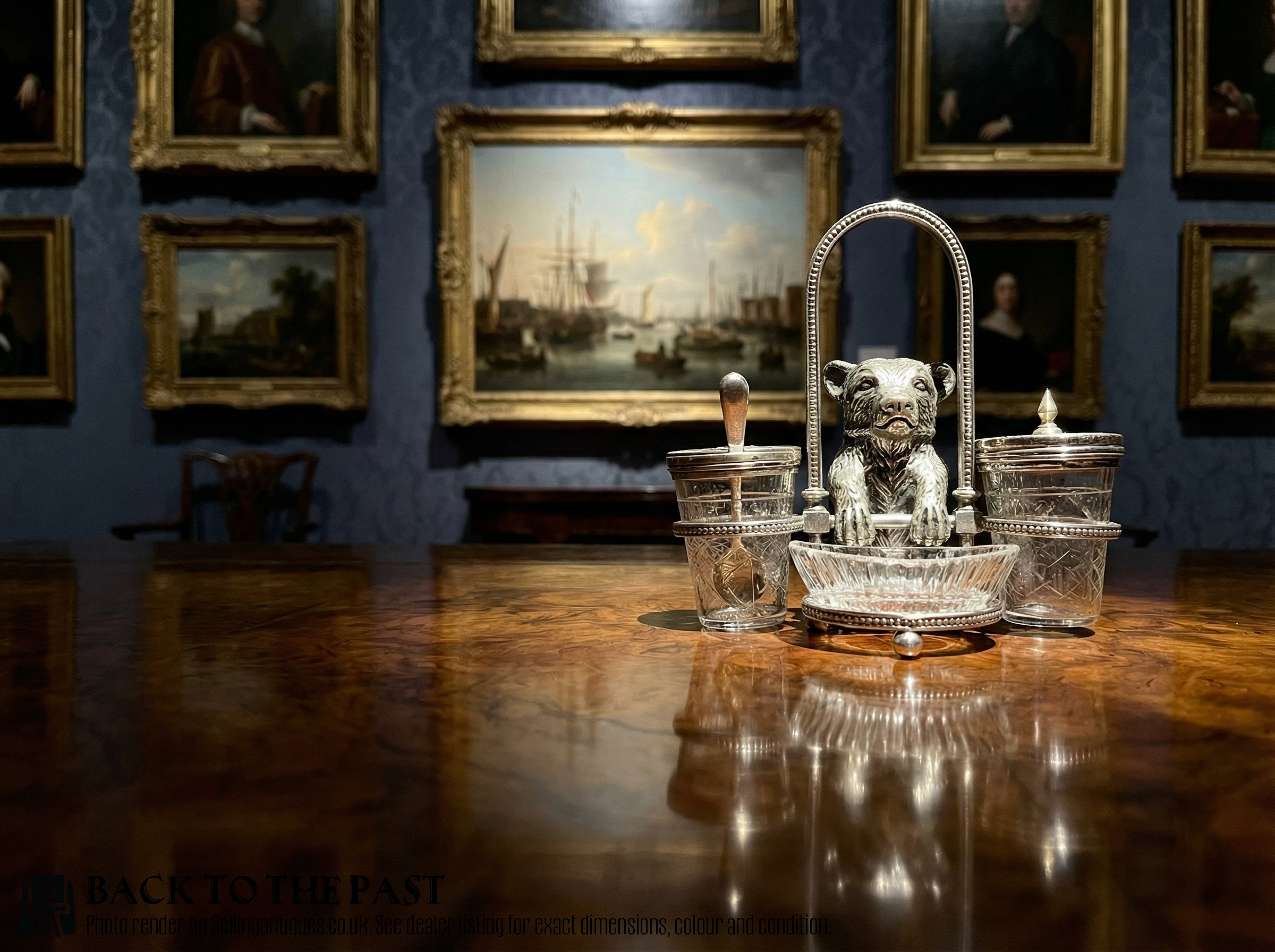
Beyond standard shakers, the selection includes novelty farmyard, hunting and equestrian pieces, alongside butler tray condiment stands and bachelor cruet sets. These varied forms reflect changing dining habits across the nineteenth and twentieth centuries.
Factors influencing quality
Quality in these pieces rests upon the crispness of the piercing on the shaker lids and the weight of the metal framework. Substantial frames maintain their shape and securely hold the fitted glass bottles without wobble.
The preservation of the silver plating across high-wear areas indicates the original standard of manufacture. Novelty items derive distinction from the sculptural detail and articulation found in figural farmyard or equestrian designs.
Dining tables gained personality through novelty cruets shaped as farmyard animals and hunting scenes.
Mappin Brothers·Walker & Hall·Wade Wingfield Wilkins·Mappin & Webb·William Batt & Sons
The Antique Silver Plate Caster Glossary
- Cruet set
- A matched collection of bottles or jars for holding condiments, held together in a metal stand or frame. These stands often include handles for transport around the dining table.
- Silver plate
- A thin layer of silver bonded to a base metal such as nickel silver or copper. This technique allowed makers to produce durable tableware with the appearance of solid silver at a lower cost.
- Electroplated nickel silver
- A base alloy of copper, nickel and zinc coated with a layer of silver using an electrical current. It became a standard manufacturing method for domestic metalware during the nineteenth century.
- Cranberry glass
- A rich red-pink transparent glass created by adding gold chloride to the molten glass batch. It appears frequently in Victorian and Edwardian condiment sets.
- Condiment stand
- A framework designed to hold multiple small vessels for salt, pepper, mustard and oil. These stands range from simple wirework frames to elaborate figural designs.
Antique Silver Plate Caster: Frequently Asked Questions
How do I date a cruet set?
Dating these items involves examining the overall style, manufacturing techniques and registration marks stamped into the metal framework. Victorian and Edwardian examples often display distinct design characteristics and maker marks.
Comparing the cut glass patterns and metal composition against documented periods helps establish a reliable timeline of manufacture.
What is a bachelor cruet set?
A bachelor cruet set is a smaller version of a standard condiment stand, designed for single-person dining or smaller households. These compact pieces typically hold a reduced number of bottles.
They offer the same functionality as larger sets while occupying less space on the table.
How were novelty cruets used?
Novelty cruets shaped as farmyard animals, figures or equestrian scenes served as both functional condiment holders and conversation pieces for the dining table. Guests would lift the specific animal or object to access the seasoning inside.
These whimsical items demonstrate the Victorian appetite for imaginative domestic silver and plateware.