


Antique Silver Pearl Drop
These antique silver pearl drop jewels combine silver settings with lustrous pearls in pendants, necklaces and earrings spanning the Georgian to the 1930s.
Antique Silver Pearl Drop
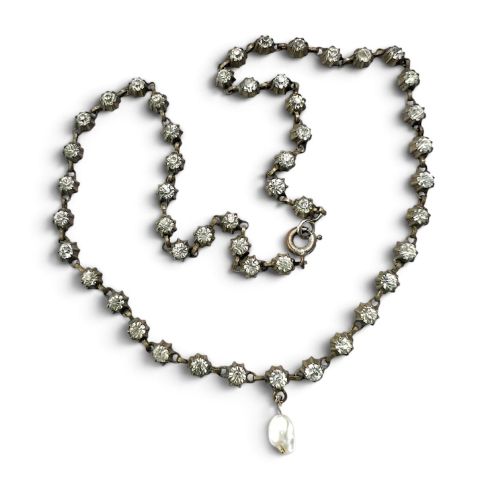
When you search for antique silver pearl drop, you encounter a selection of historic jewellery dominated by pendants, necklaces and drop earrings. These items range from Georgian and Victorian examples through to Edwardian and 1930s pieces.
The objects frequently combine silver frames with gold accents, enamel work and gemstones such as amethyst, diamond and turquoise alongside the characteristic pearl drop.
How they were made
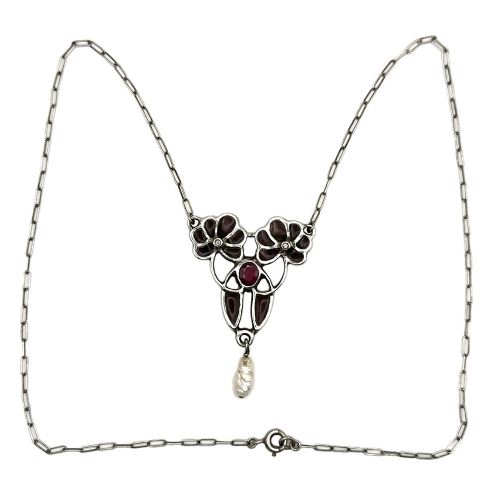
Makers set pearls into silver, silver gilt and gold mounts, frequently combining stones like diamond, amethyst and paste with enamel techniques such as plique-à-jour.
The construction incorporates intricate foliate mounts, delicate chains and structured drop settings suited to the prevailing Art Nouveau, Arts and Crafts and Victorian styles.
Materials across the inventory include natural pearl, blister pearl, enamel, silver gilt, gold, amethyst, diamond, rock crystal, opal, abalone and turquoise.
What varies in quality
Quality differences stem from the fineness of the enamel work, the complexity of the silver metalwork and the integration of secondary gems like diamonds and amethysts.
Peculiarities in attribution to specific makers or workshops elevate the distinction of individual pendants and earrings.
Archibald Knox·Liberty & Co·Murrle Bennett·Wilhelm Fuhner·Levinger & Bissinger·Otto Prutscher·Eduard Loss·Meyle & Meyer·The Artificers Guild·Theodor Fahrner
The Antique Silver Pearl Drop Glossary
- Silver gilt
- Silver that has been coated with a thin layer of gold. This technique provides the visual warmth of gold while utilising a silver base.
- Plique-à-jour
- A transparent enamelling technique where enamel is applied within a cellular framework without a backing, resembling miniature stained glass.
- Natural pearl
- A pearl formed organically within an oyster without human intervention. These contrast with cultured varieties through their natural growth formation.
- Paste
- Faceted glass used as a gemstone substitute in historic jewellery. Skilled artisans cut paste to mimic diamonds and coloured stones.
- Marcasite
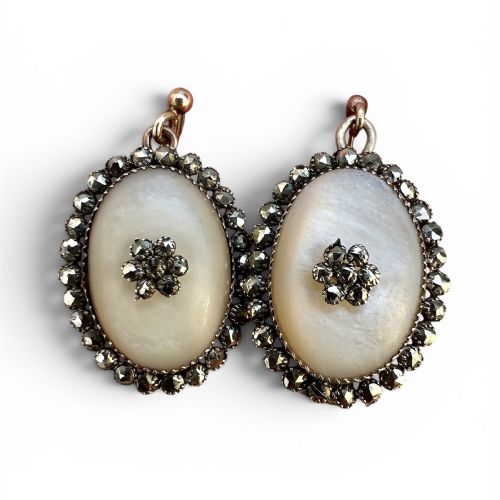
- Polished pyrite stones cut and set into silver mounts. They impart a glittering metallic sparkle to Georgian and Victorian pieces.
Antique Silver Pearl Drop: Frequently Asked Questions
How do I clean antique silver pearl drop jewellery?
Clean these delicate items gently with a dry or very slightly damp soft cloth to protect the silver surface and the pearl nacre.
Avoid liquid dips, ultrasonic cleaners and harsh chemicals because they can damage enamel, pearls and gemstone settings.
Can I wear antique pearl earrings every day?
Pearls are relatively soft organic gems that absorb skin oils and cosmetics over time. Occasional wear helps preserve their condition.
Put them on after applying perfumes and hairspray, and store them separately to prevent scratching.
What periods do these silver pearl pieces cover?
The available items span from the Georgian and Victorian eras through Edwardian designs to the early twentieth century. Art Nouveau and Arts and Crafts styles are particularly prominent.
Each period brings distinct mounting techniques and stylistic motifs to the silver and pearl drops.
How do I identify Art Nouveau pearl pendants?
Art Nouveau examples display flowing organic lines, naturalistic motifs, and translucent enamelling techniques such as plique-à-jour. They frequently utilise silver gilt and feature swinging pearl drops.
These characteristics separate them from the more geometric or traditional designs of other eras.