
Pearl Drop Pendant Necklace
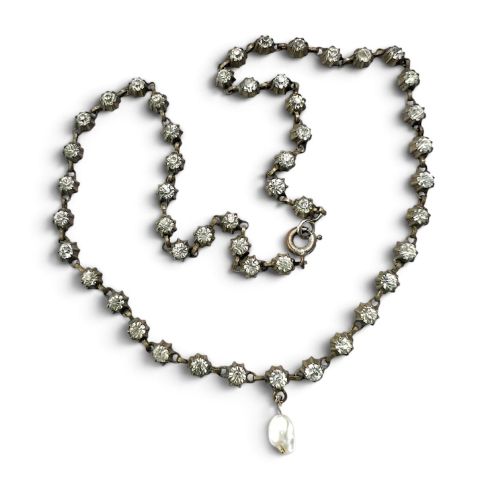
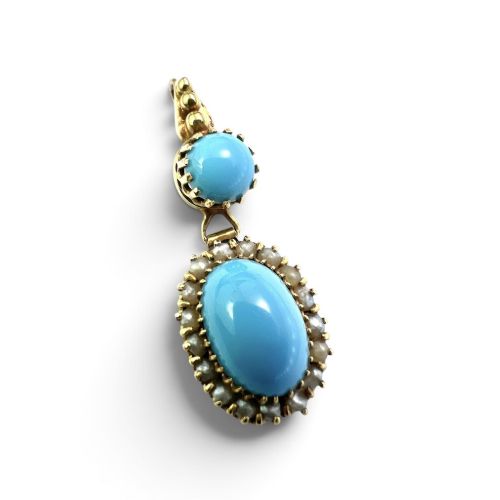
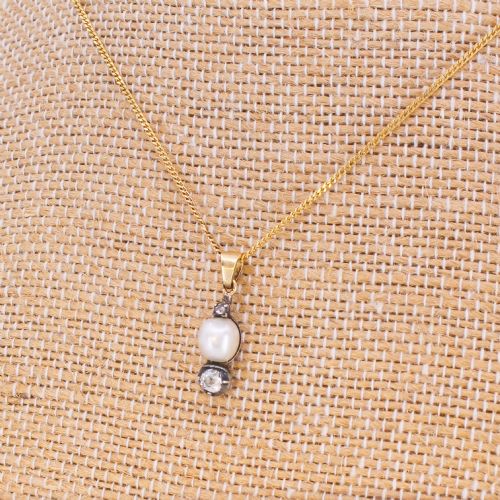
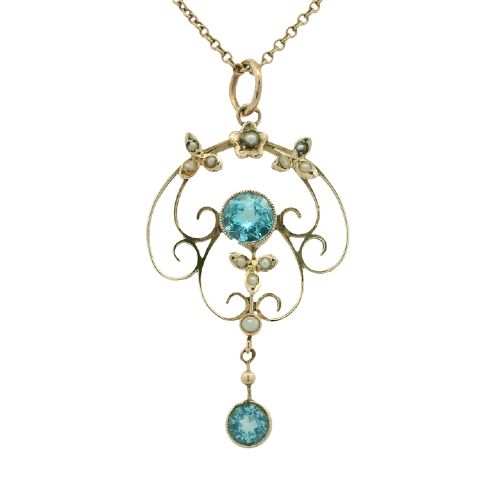
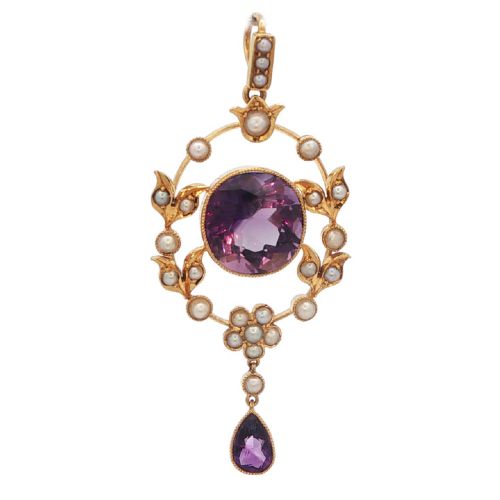
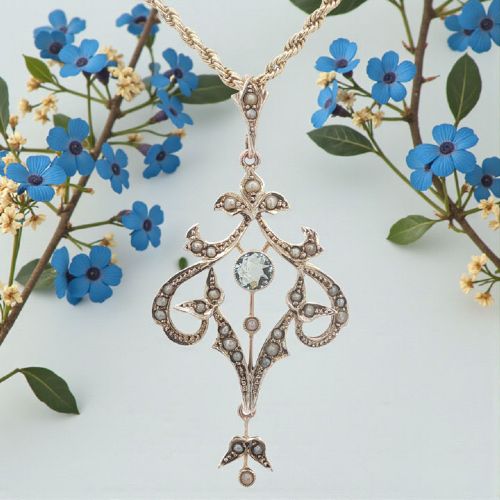
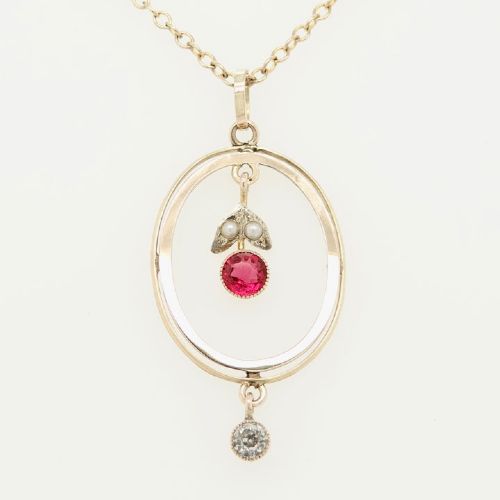
A pearl drop pendant necklace brings together delicate suspended pearls and golden frames from the Victorian and Edwardian eras.
Pearl Drop Pendant Necklace
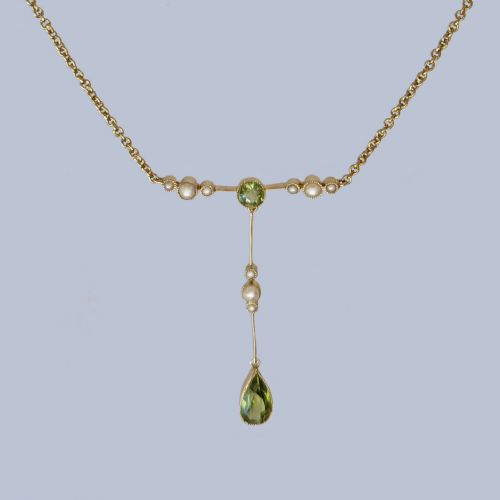
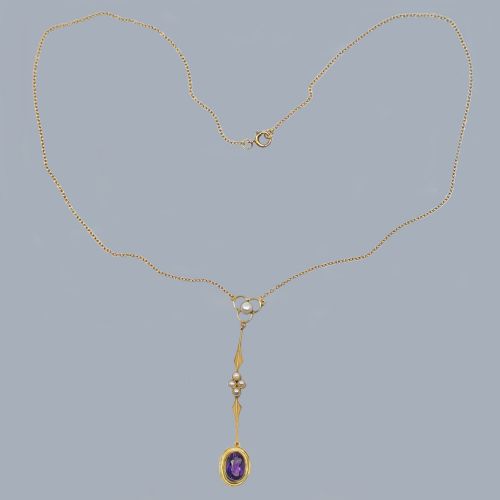
A pearl drop pendant necklace is an antique piece where a single pearl or cluster hangs centrally from a chain or lavalier mount. These designs span from the Victorian period through the Edwardian era and into the early twentieth century.
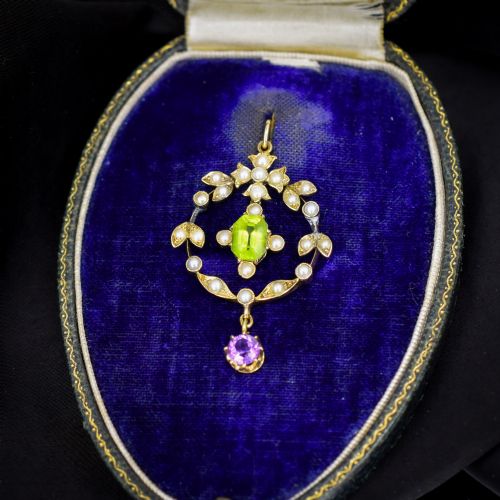
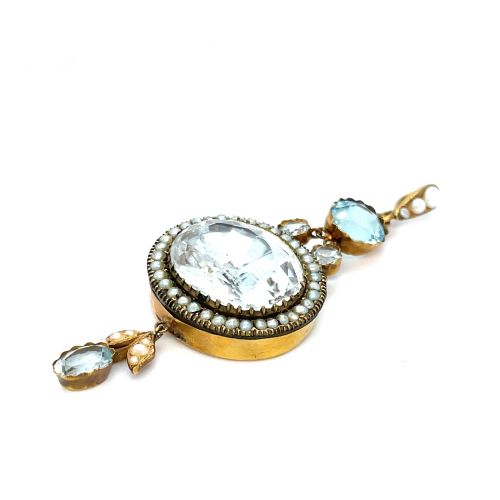
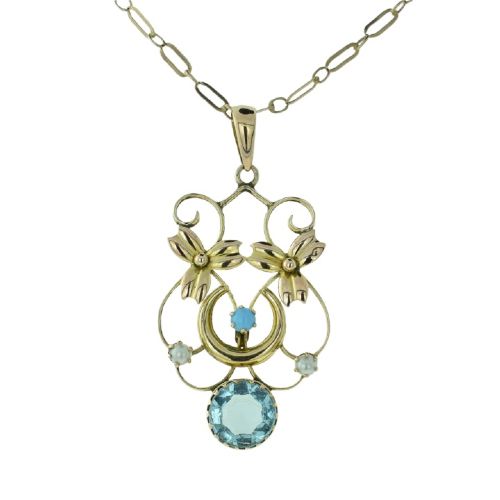
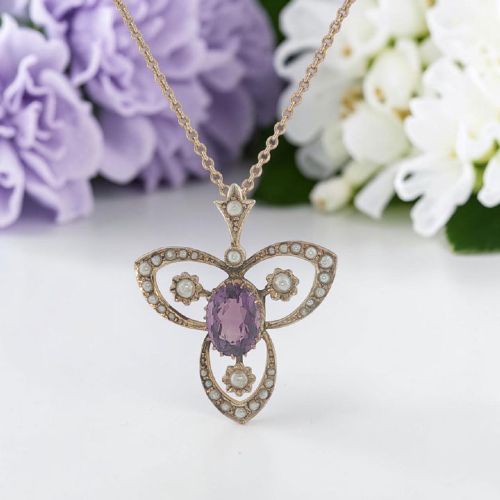
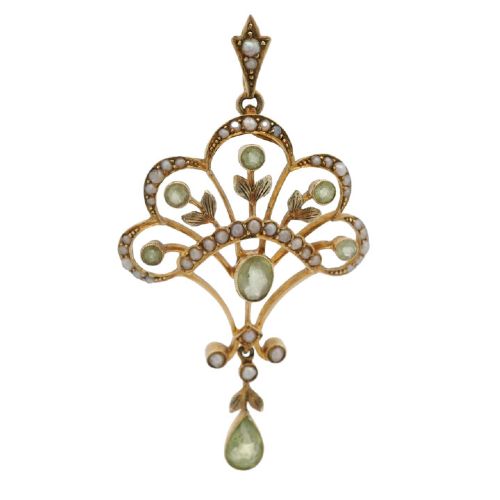
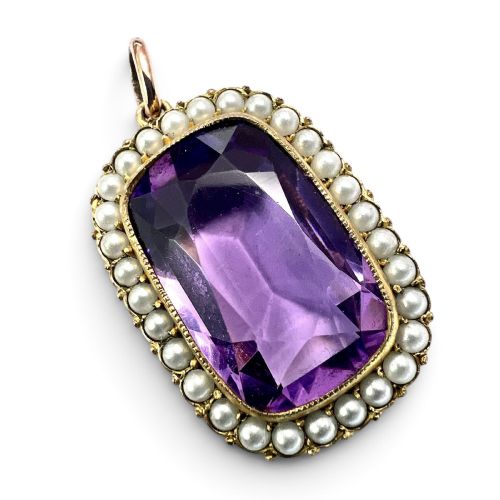
The version met most often on this page pairs seed pearls with coloured gemstones like amethyst, aquamarine, or peridot set in nine carat or fifteen carat gold. Many examples function as both pendants and brooches.
Makers utilised characteristic motifs from Art Nouveau, Arts and Crafts, and Victorian Renaissance Revival styles. The drop configuration gives movement to the piece when worn against the chest.
Materials and construction methods
Goldsmiths worked primarily in nine carat gold, fifteen carat gold, and silver, often mounting stones in closed or open-backed settings. Seed pearls were drilled and secured on tiny pins or threaded onto fine wire.
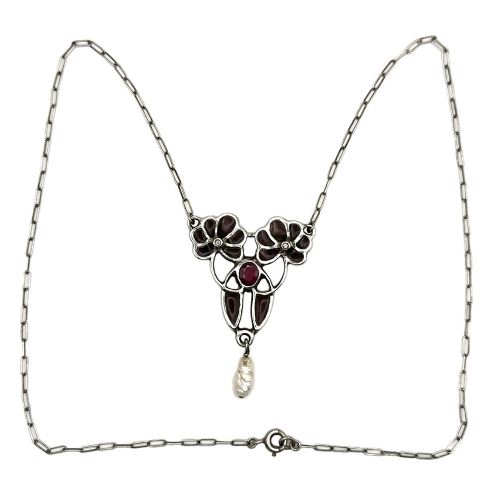
Enamelling techniques such as plique-à-jour appeared on silver frames during the Art Nouveau and Arts and Crafts movements. Central gemstones like aquamarine, tourmaline, and amethyst were collet-set or claw-set by hand.
Chain construction varied from simple links to integrated lavalier drops and fringe arrangements incorporating small pearls alongside sapphires, garnets, or diamonds.
Listings feature yellow gold, rose gold, and silver alongside stones including amethyst, peridot, aquamarine, tourmaline, and diamonds.
Distinguishing fineness and execution
Quality rests upon the originality of the components and the delicacy of the metalwork. Hand-beaten silver and finely chased gold show greater artisanal skill than mass-produced stamped mounts.
The match and lustre of the pearls dictate the overall harmony of the jewel. Graduated seed pearls or well-matched natural drop pearls elevate the piece above standard commercial production.
The integration of design elements, such as symmetrical wirework in Edwardian pieces or fluid enamel lines in Art Nouveau examples, separates standard workshop output from exceptional creations.
S. Blanckensee & Son·Archibald Knox·Liberty & Co·Murrle Bennett·Wilhelm Fuhner
The Pearl Drop Pendant Necklace Glossary
- Lavalier
- A pendant style featuring a central suspended drop, popular during the Edwardian period. These pieces often hang from a fine gold chain with secondary suspending elements.
- Seed pearl
- A very small, naturally formed or cultured pearl used extensively in clusters and borders. They provide a delicate textured background to larger coloured gemstones.
- Plique-à-jour
- An enamelling technique where enamel is applied to open cells without a backing, creating a stained-glass effect. This method appears on silver Art Nouveau mounts.
- Holbeinesque
- A Victorian revival style drawing on sixteenth-century portrait jewellery designs. These pieces typically feature heavy gold work set with gemstones and pearl drops.
- Foil back
- A historical technique where a thin sheet of metallic foil is placed behind a gemstone to enhance its colour and reflectivity. It is found in Victorian paste and quartz jewellery.
Pearl Drop Pendant Necklace: Frequently Asked Questions
What is a lavalier necklace?
A lavalier necklace incorporates a central suspended drop hanging below the main neckline. This form gained popularity in the Edwardian era.
Such designs allow the central pearl or gemstone to move freely as the wearer walks.
How do I care for antique pearl jewelry?
Antique pearls require gentle handling because organic nacre is sensitive to acids, perfumes, and cosmetics. Wipe them clean with a soft dry cloth after wearing.
Store these necklaces flat in lined boxes to prevent the delicate silk threads or fine gold chains from stretching and snapping.
Can these pendants double as brooches?
Many Edwardian and Victorian examples feature hidden hinged pins and safety catches behind the frame. This dual function allowed the owner to pin the jewel to a bodice or hang it from a chain.
Examine the reverse of the setting to identify integrated brooch fittings.
How do I distinguish Edwardian from Victorian pieces?
Victorian jewellery often displays heavier gold settings, darker gemstones like garnets, and formal geometric or revival motifs. These pieces tend to feel substantial and structured.
Edwardian work shifts towards lighter platinum and yellow gold mounts, pastel stones like peridot and aquamarine, and airy floral motifs.