



Antique Silver Pan
These antique silver pan examples span Georgian warmers and Edwardian novelties, offering a practical touch of historical metalwork for the table.
Antique Silver Pan
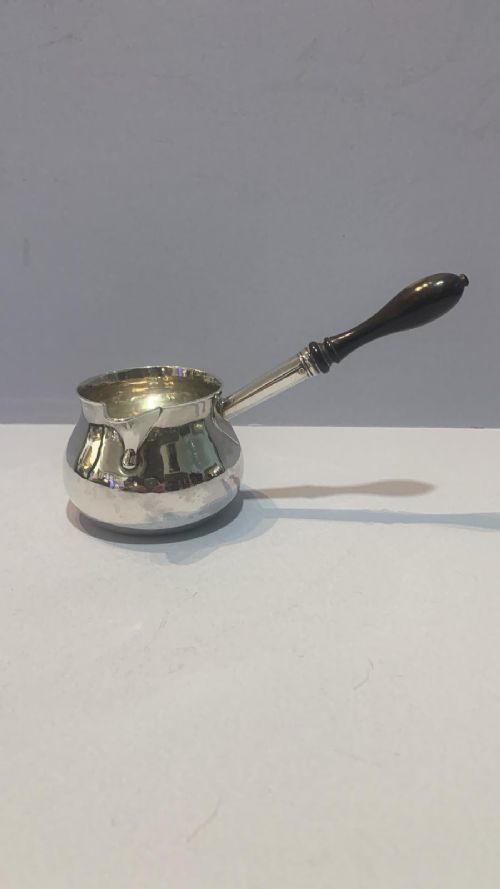
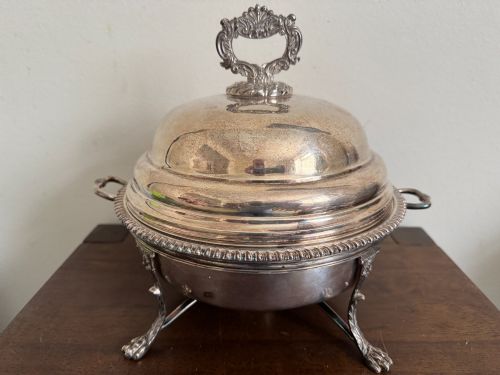
An antique silver pan encompasses utilitarian vessels from the eighteenth and nineteenth centuries, including brandy warmers, supper dishes, and warming pans. These forms were designed for heating liquids or keeping food warm at the dining table, often incorporating wooden handles to protect the user from heat.
The pieces on this page lean heavily towards Georgian and nineteenth-century examples in sterling silver, old Sheffield plate, and silver plate. Makers utilised materials such as ebony wood and copper alongside silver to create functional pieces for domestic service.
How they were made
Silversmiths constructed these vessels using sterling silver or through the Old Sheffield plate technique, which fused a layer of silver onto a copper base. Handles were frequently fashioned from turned ebony wood or other dense timbers and fitted to metal sockets to insulate against heat.
Provincial workshops employed traditional hammering and joining methods, leaving subtle tactile indicators of handcrafting. Surface finishes range from plain polished metal to intricate engraved decoration and parcel-gilt interiors.
Antique Silver Pan Retail Price Guide 2026
Typical asking prices for silver pan among the pieces listed under this phrase on Sellingantiques today, from the lower quarter to the upper quarter. They describe what is for sale here now, not the wider market.
What varies in quality
The standard of an antique silver pan is determined by the crispness of its original construction, the integrity of any applied makers' marks, and the survival of matching components like covers and lampstands. Provincial pieces from early makers command attention for their individual character and heavier gauge metal.
Condition involves the preservation of original wooden handles and the extent of wear on Old Sheffield plate where the underlying copper shows through. Superior examples retain their structural balance and clear hallmarks without heavy restoration.
Samuel Blatchford·William Hutton and Sons·Dan Holy·Vasily Agafonov
The Antique Silver Pan Glossary
- Old Sheffield Plate
- A composite material made by fusing a thin sheet of sterling silver to a thicker copper ingot, popular before electroplating was invented.
- Brandy Warmer
- A small spouted pan used for heating spirits or melting butter directly over a small flame or lampstand.
- Warming Dish
- A double-walled or compartmentalised vessel designed to hold hot water beneath a serving surface to keep food warm.
- Sterling Silver
- An alloy of silver containing ninety-two point five percent pure silver and seven point five percent other metals, typically copper.
Antique Silver Pan: Frequently Asked Questions
What was a brandy warmer used for?
A brandy warmer served to heat small quantities of spirits, often at the table, using a dedicated lampstand or burner.
These vessels feature a distinctive pouring lip and an extended handle designed to hold a wooden grip.
How do I clean an antique silver pan?
Cleaning requires a soft cloth and a reputable silver polish formulated to preserve the delicate patination and hallmarks.
Avoid harsh abrasives, particularly on Old Sheffield plate pieces where excessive rubbing can expose the underlying copper base.
What is Old Sheffield plate?
Old Sheffield plate is an early fusion material created by melting a sheet of silver onto a copper core before rolling them into sheets.
This technique produced durable domestic wares that predated nineteenth-century electroplating methods.
Why do some pans have wooden handles?
Wooden handles made from ebony or similar hardwoods provided thermal insulation when the metal vessel was heated over a flame.
These handles were securely pinned into metal sockets attached to the side of the pan.