






Antique Silver Office Accessories
Antique silver office accessories bring tactile elegance to a workspace, combining practical utility with fine period craftsmanship across inkwells, letter openers, and desk stands.
Antique Silver Office Accessories
These pieces comprise functional items designed for writing desks and administrative tasks, spanning periods from the Georgian era through to the mid twentieth century. Buyers seeking antique silver office accessories will encounter practical forms intended for daily correspondence and record keeping, including inkwells, letter openers, receipt hook stands, perpetual calendars, and desk clips.
The selection ranges from early nineteenth century examples incorporating agate and sterling silver to later twentieth century pieces reflecting Art Deco, Victorian, Edwardian, and Egyptian Revival styles. Forms such as letter openers and inkwells dominate the available range, often paired with materials like tortoiseshell, cut glass, or silver plate to create diverse desk ensembles.
How they were made
Maker workshops utilised solid sterling silver alongside silver plate and metal frames, frequently combining these metals with natural materials like agate, tortoiseshell, and cut glass vessels. Surface decoration ranged from smooth polished finishes to detailed figural motifs, such as Egyptian Revival depictions of deities.
Construction techniques relied upon traditional silversmithing methods, including casting, hammering, and engraving, alongside specialised assembly for mechanical items like perpetual calendars and desk clips. Plinth bases and structural mounts anchored heavier elements such as glass inkwells and receipt hooks securely to the desk.
Antique Silver Office Accessories Retail Price Guide 2026
Typical asking prices for silver office accessories among the pieces listed under this phrase on Sellingantiques today, from the lower quarter to the upper quarter. They describe what is for sale here now, not the wider market.
Listings span the Georgian, Victorian, and Edwardian periods, extending through Art Deco and mid-twentieth century traditional designs.
What varies in quality
Quality differentiates by the crispness of the silversmith's work, the integrity of hallmarks, and the harmonious integration of secondary materials like agate or tortoiseshell. Superior examples display clear maker stamps, crisp chasing, and secure seating of glass or stone elements within their silver mounts.
The retention of original mechanical functions in items like perpetual calendars and the preservation of delicate applied details also divide standard production from finer workshop output. Pieces benefiting from named maker attribution or cohesive stylistic execution generally exhibit higher standards of period design.
Moses Brent·Tiffany and Co
The Antique Silver Office Accessories Glossary
- Sterling silver
- A standard alloy consisting of ninety-two point five percent silver by mass, with the remainder typically copper. This alloy provides the durable yet malleable foundation for many desk accessories.
- Hallmark
- An official stamp applied by an assay office to indicate the purity of the metal, the maker, and the year of manufacture. These marks offer definitive chronological evidence for antique pieces.
- Letter opener
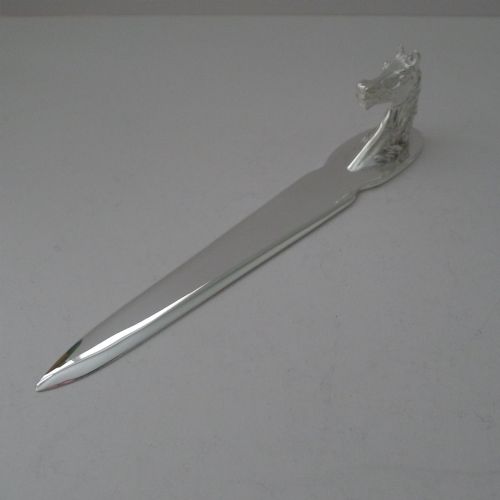
- A blade-like instrument designed to slice open envelopes and folded correspondence. They appear in silver alone or paired with decorative handles of stone and shell.
- Perpetual calendar
- A desk device with interchangeable dates or rollers designed to display the day and month for any year. These mechanical items often feature tortoiseshell and silver panels.
- Receipt hook stand
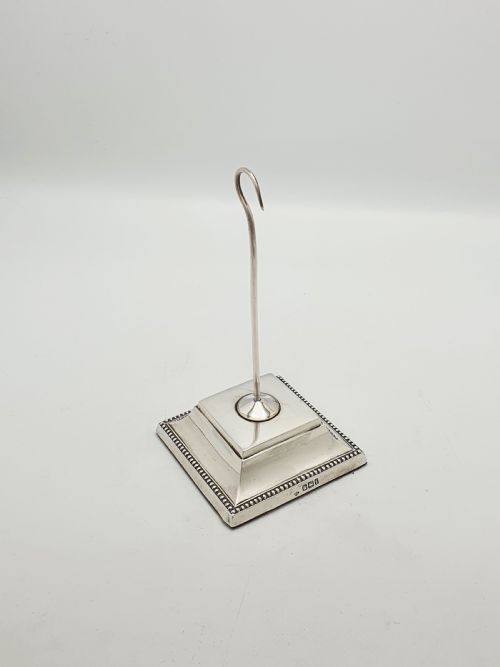
- A desk accessory featuring a vertical spike or clip mounted on a plinth base to hold papers and bills. The base is frequently weighted and fashioned from sterling silver.
Antique Silver Office Accessories: Frequently Asked Questions
What is an antique silver inkwell?
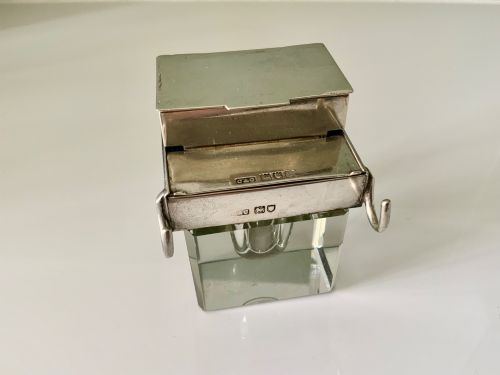
An antique silver inkwell is a small lidded vessel designed to hold liquid ink for a dip pen, usually featuring a fitted glass or ceramic insert.
These pieces sit upon a desk, often mounted on a wide silver stand to prevent tipping, and served as a central writing accessory before the invention of the fountain pen.
How do I identify a Victorian desk accessory?
Victorian desk accessories can be identified through their distinct stylistic markers, which often include ornate floral chasing, heavy cast metal mounts, and robust construction.
Many pieces from this era also bear official hallmarks indicating the specific year of manufacture during the nineteenth century.
What materials accompany silver on these desks?
Silver office pieces frequently incorporate natural and decorative materials to contrast with the polished metal surface.
Common pairings include translucent cut glass ink reservoirs, striated agate stones on letter openers, and warm amber-toned tortoiseshell panels on perpetual calendars.
How were letter openers used?
Letter openers were utilised to neatly slice through the folded paper edges of envelopes before letter-writing machines became common.
Wealthy correspondents used ornate blades fashioned from silver and decorative stones as both practical tools and decorative desk items.
Are these desk accessories still functional?
Many of these pieces remain entirely practical for modern use, serving as paperweights, letter knives, and desk organisers.
Mechanical items like perpetual calendars require manual adjustment of their date panels, while inkwells function well as decorative containers or pen rests.