

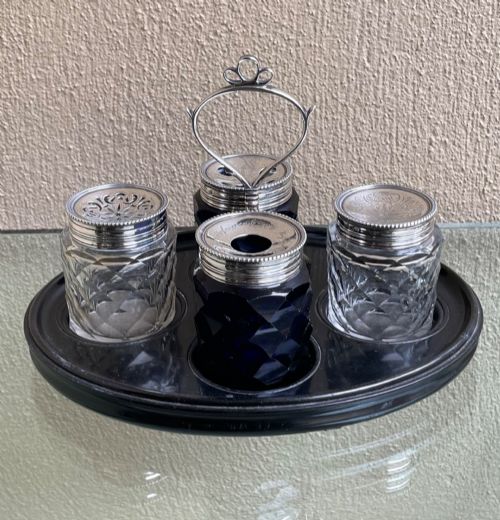
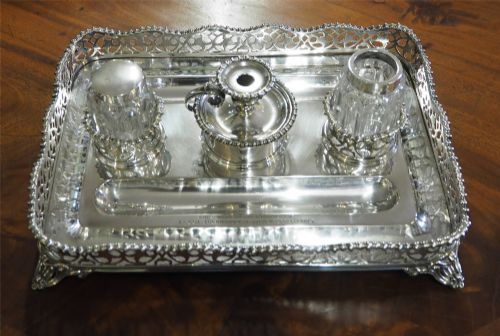
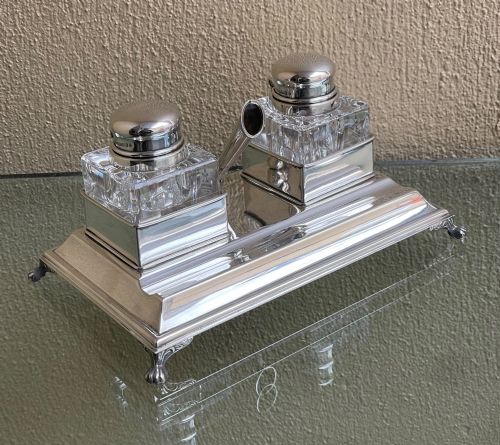
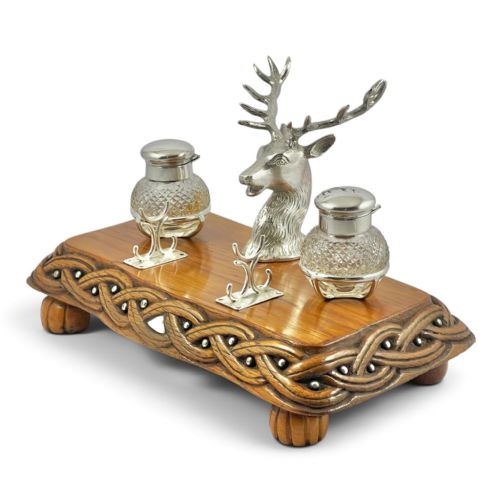


Antique Silver Inkwell Accessory
These antique silver inkwell accessory pieces bring desk furniture into focus with heavy sterling, cut glass, and fitted stands from past centuries.
Antique Silver Inkwell Accessory
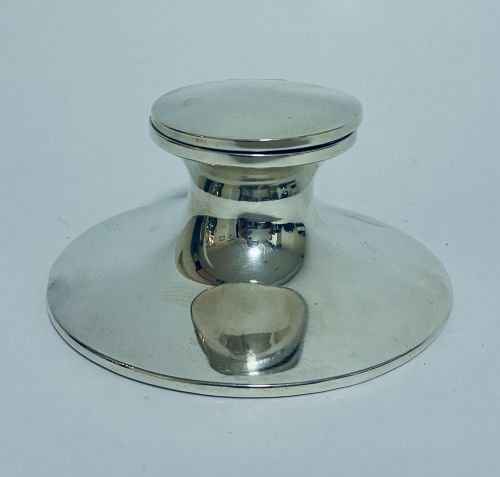
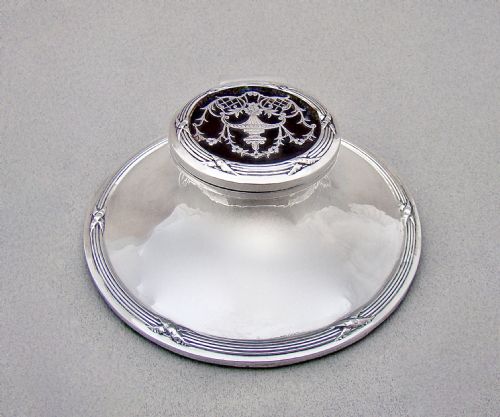
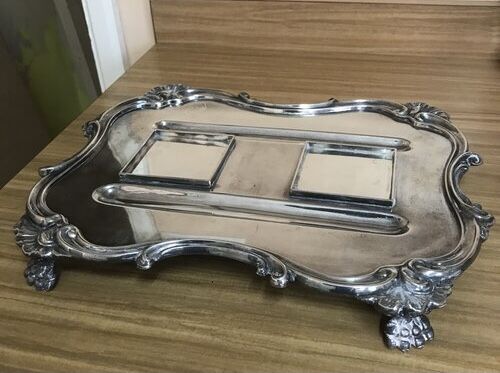
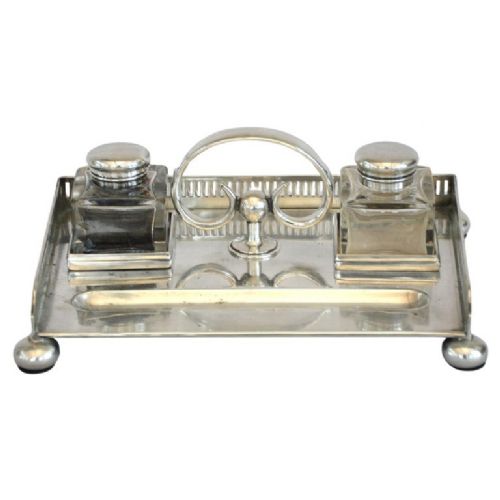
An antique silver inkwell accessory comprises desk furniture designed for writing tasks, spanning capstan shapes, travel vessels, and desk stands. Buyers seeking this phrase encounter items stretching from the Georgian era through Victorian and Edwardian periods.
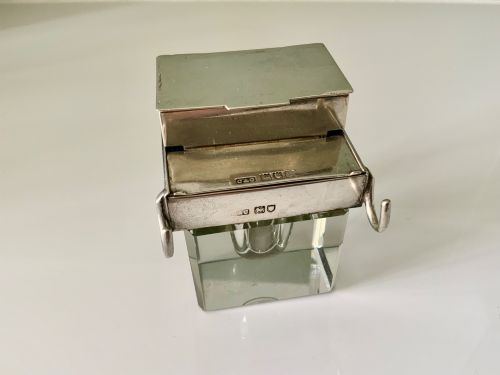
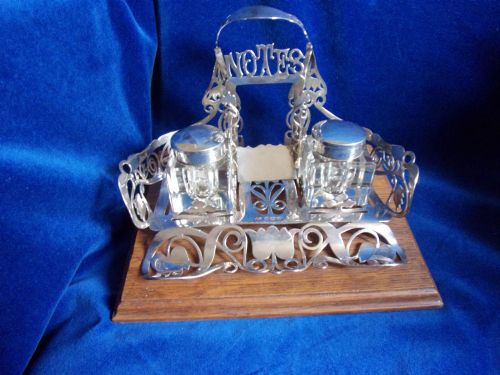
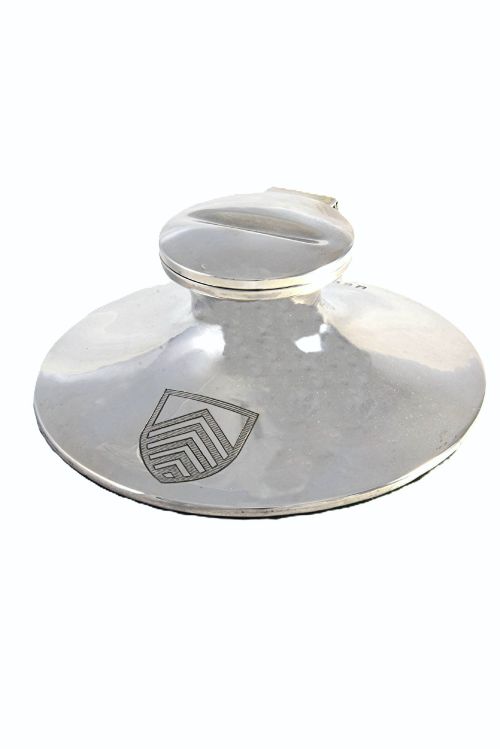
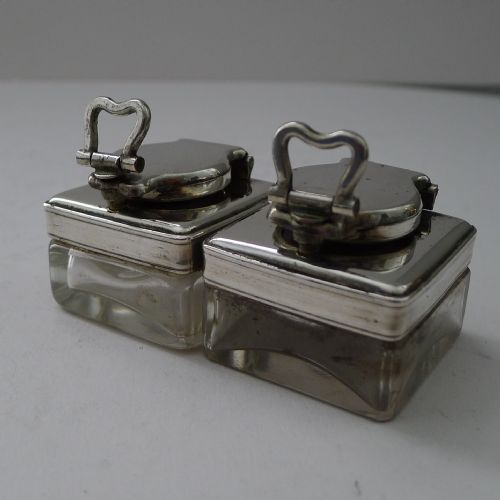
The most common formats on this page are silver-mounted glass vessels, capstan inkwells, and larger desk stands holding multiple ink bottles alongside pen rests. Materials range from solid sterling silver and silver plate to cut glass, oak, and horn.
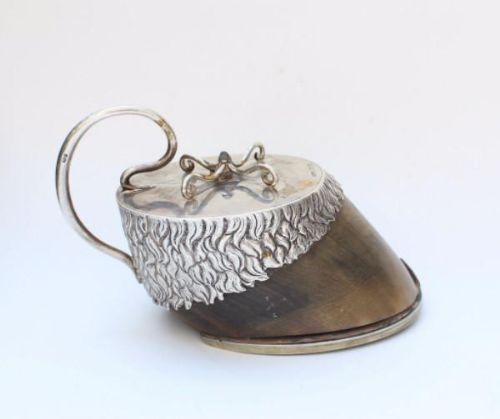
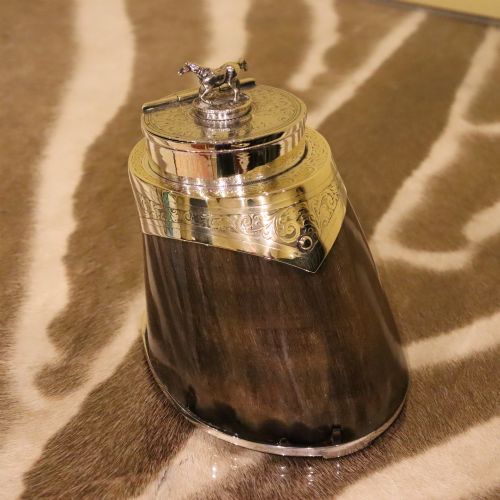
Origins include domestic English workshops alongside Scottish examples, utilising materials like tortoiseshell, enamel, and even taxidermy horse hooves. These pieces reflect the detailed writing culture of the nineteenth and early twentieth centuries.
Materials and Technique
Silversmiths employed sterling silver and silver plate for mounts, lids, and frames, often combining them with heavy cut glass or moulded glass inserts to hold the ink safely. Oak, coromandel, satinwood, and onyx provide sturdy wooden or stone bases for larger stands.
Decorative techniques include hand fretting, guilloche enamel floral medallions, and intricate silver-gilt work. Taxidermy elements such as horse and pony hooves appear mounted with silver rims and hinged lids to serve as desk tidies and paperweights.
Antique Silver Inkwell Accessory Retail Price Guide 2026
Typical asking prices for silver inkwell accessory among the pieces listed under this phrase on Sellingantiques today, from the lower quarter to the upper quarter. They describe what is for sale here now, not the wider market.
Quality and Construction
Substantial weight in the silver mounts and thickness in the cut glass liners separate more substantial pieces from lighter items. The presence of matching sets, complete pen trays, and integrated accessories like chambersticks elevate the complexity of an inkstand.
The precision of hallmarks, the crispness of hand fretting or enamel work, and the quality of secondary materials like tortoiseshell, horn, or exotic woods dictate the standing of individual desk accessories.
Henry Matthews·Walker And Hall·Tiffany And Co·Robert Garrard·Robert Hennell
The Antique Silver Inkwell Accessory Glossary
- Capstan inkwell
- A desk inkwell shaped like a naval capstan, tapering inward from a wide base to a smaller top with a hinged lid. This design provided stability on moving ships or busy desks.
- Standish
- An inkstand or tray containing inkwells, pen rests, and sometimes sanders or bell containers for a desk. These portable writing cabinets held all necessary writing implements.
- Guilloche enamel
- Metalwork decorated with precise, intricate mechanical patterns under a translucent enamel layer. It frequently appears on Edwardian inkwell lids and decorative medallions.
- Silver-gilt
- Silver that has been coated with a thin layer of gold over its surface. This technique provides a rich golden interior finish to inkstands and desk sets.
- Pen wipe
- A small desk accessory made from fabrics or materials designed to clean wet ink off nibs. They sit alongside inkwells on coordinated desk tidy trays.
Antique Silver Inkwell Accessory: Frequently Asked Questions
How were desk inkstands used?
Desk inkstands served as central writing stations holding inkwells, sanders for drying ink, and pen rests on a unified wooden, metal, or stone tray.
They sat upon writing desks in libraries and studies to keep writing tools organised and ready for correspondence.
How do I date an inkwell?
Dating relies on checking silver hallmarks stamped into the metal mounts, which indicate the assay office and year letter for creation.
Stylistic cues such as Edwardian capstan forms or Victorian aesthetic movement mounts also help narrow the manufacturing era.
Can I still use antique inkwells?
Many antique silver and glass inkwells remain functional, though glass inserts should be inspected for secure fits and interior residue.
Modern fountain pen inks can be used in them, though many collectors prefer to display these pieces as historical desk ornaments.