
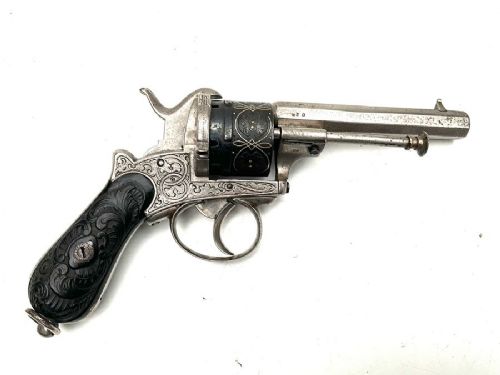


Antique Silver Firearm
An antique silver firearm combines functional mechanical history with intricate decorative metalwork, offering collectors tangible links to past craftsmanship.
Antique Silver Firearm
When you search for an antique silver firearm, you encounter historical weaponry adorned with precious metal inlays, mounts, and wirework. These pieces span periods from the early eighteenth century through the Victorian era, encompassing various global origins.
The most common examples on this page are flintlock pistols and pocket pistols featuring silver wire inlay, mounts, or grotesque butt caps. You will also find shoulder arms such as muskets and carbines alongside nineteenth-century pinfire and pepper-pot revolvers.
Geographic styles vary widely, ranging from Scottish Highland scroll-butt designs and English Queen Anne pocket pistols to Ottoman Balkan holster pistols and South Indian matchlock muskets. Each region utilised distinct locking mechanisms and decorative motifs suited to its military and cultural context.
Materials and construction methods
Makers constructed the core mechanics and barrels from iron and steel, housing them in stocks carved from dense timbers like walnut, ebony, and general hardwood. Brass often reinforced stress points alongside iron components.
Decoration relied heavily on silver, applied as cast mounts, side plates, and delicate wire inlay embedded meticulously into the wooden grips. Gilt inlay and cast bronze or brass elements frequently augmented the silver detailing on barrels and locks.
Gamblers once relied on small concealed defenders to settle card disputes discreetly.
Distinctions in craftsmanship and design
Quality rests primarily in the precision of the metalworking and the complexity of the silver ornamentation integrated into the stock. Finer pieces display crisp barrel casting, tight wood-to-metal fitting, and detailed chased silver wirework rather than basic surface application.
The reputation of the maker and the regional distinctiveness of the form significantly elevate a piece. Signed London or provincial makers working in defined styles command greater interest than unsigned or generic specimens.
John Campbell of Doune·James Barber·Timothy Hughes·R Willoughby·Meyer & Mortimer
The Antique Silver Firearm Glossary
- Flintlock
- An ignition mechanism that uses a piece of flint struck against a steel frizzen to create sparks and ignite gunpowder.
- Snaphaunce
- An early predecessor to the flintlock featuring a manually opened frizzen and a spring-driven pan cover.
- Matchlock
- An early firearm mechanism where a burning slow match is lowered into a pan of priming powder to fire the weapon.
- Pinfire
- A cartridge design featuring a protruding pin struck by the hammer to detonate the internal priming compound.
- Grotesque butt cap
- A decorative metal cap shaped like a mask or grotesque face, commonly found on the terminal end of eighteenth-century pistol grips.
Antique Silver Firearm: Frequently Asked Questions
What is an antique silver firearm?
An antique silver firearm is a historical weapon incorporating silver wire inlay, cast mounts, or decorative plates into its design. These pieces primarily date from the eighteenth and nineteenth centuries.
They encompass various mechanisms including flintlocks, matchlocks, and early revolvers originating from British, European, Ottoman, and Asian workshops.
How do I identify a flintlock pistol?
A flintlock pistol relies on a flint held in a cock that strikes a vertical steel plate called a frizzen. This action opens the priming pan and generates sparks to discharge the main charge.
Key visual indicators include the external side lock mechanism, a pan for gunpowder, and often intricate wood stocks adorned with silver wire.
Where were silver inlaid pistols made?
Silver inlaid pistols were produced across various global centres, with distinct regional schools developing unique aesthetics. Examples range from Scottish Highland and English provincial workshops to Ottoman Balkan and South Indian centres.
Local traditions dictated the shape of the grip, the density of the silver wirework, and the specific locking mechanism employed.
How should I display my firearm?
Displaying antique firearms requires stable indoor environments away from direct sunlight and excessive humidity. Proper mounting brackets or enclosed display cabinets protect the wood stock and metal components from physical damage.
Maintaining moderate ambient conditions prevents the timber from drying out and guards the silver elements against rapid tarnishing.