




Antique Silver Communion
Antique silver communion pieces are historical sacred vessels and travelling kits carrying centuries of ritual devotion into modern collections.
Antique Silver Communion
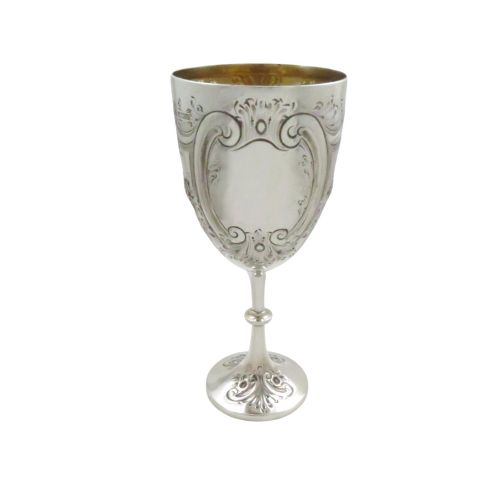
When searching for antique silver communion, buyers encounter sacred vessels and ceremonial implements created for Christian worship across the eighteenth, nineteenth, and twentieth centuries. These objects include chalices, pyx boxes, patens, flagons, and travelling communion sets used for administering the sacraments.
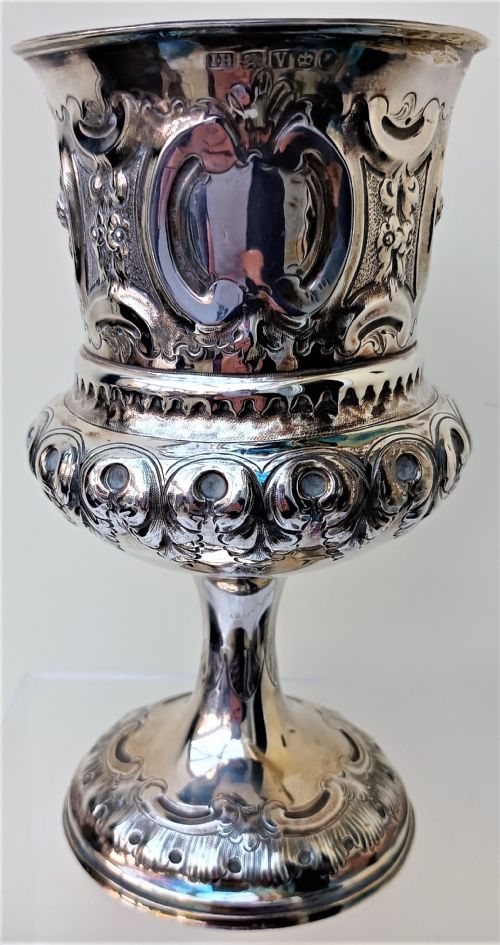
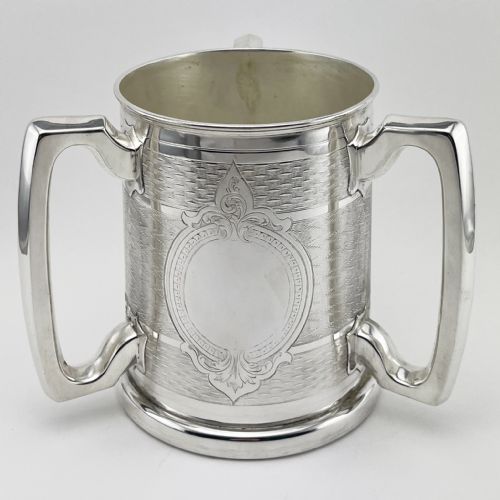
The material form spans solid sterling silver, silver gilt, and silver plate alongside Old Sheffield plate, copper, pewter, and gilt variants. Forms range from tall church chalices and loving cups to portable boxed communion sets designed for clergy travelling to parishioners.
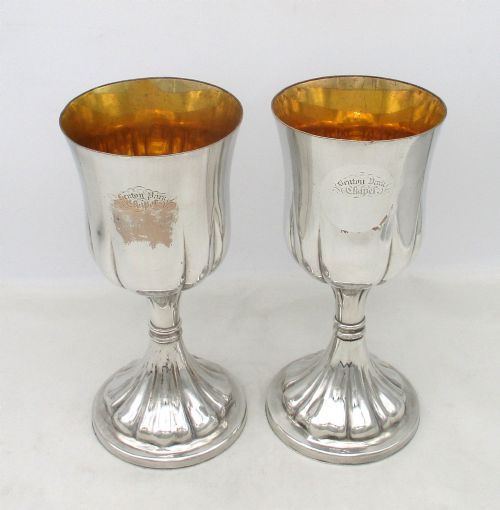
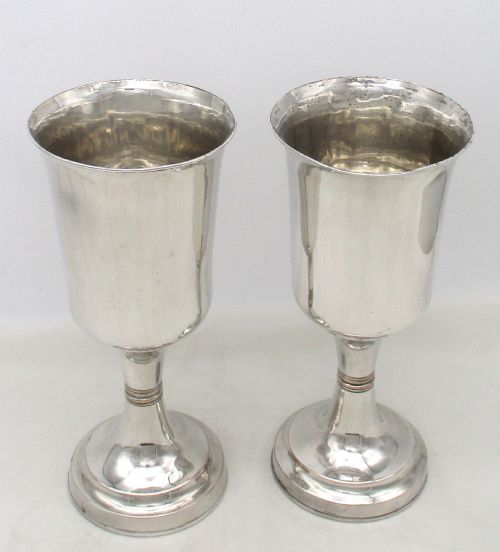
Originating predominantly from English and Irish workshops, these pieces reflect periods from George I and Georgian eras through Victorian gothic revivals and mid-century ecclesiastical design. Chalices and goblets dominate the available forms, often found as pairs or matching sets alongside fitted pyx boxes.
How they were made
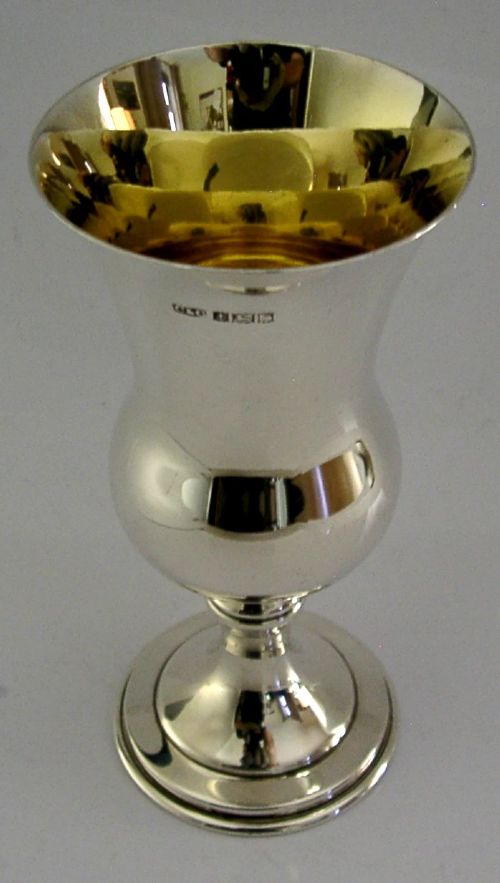
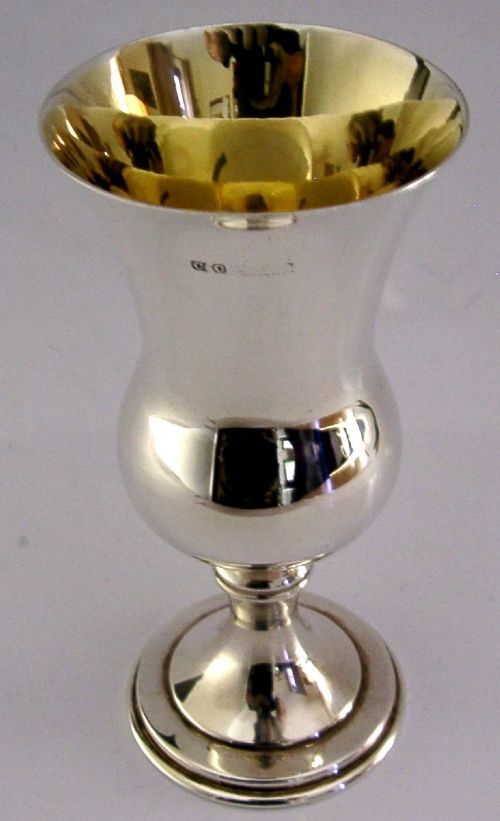
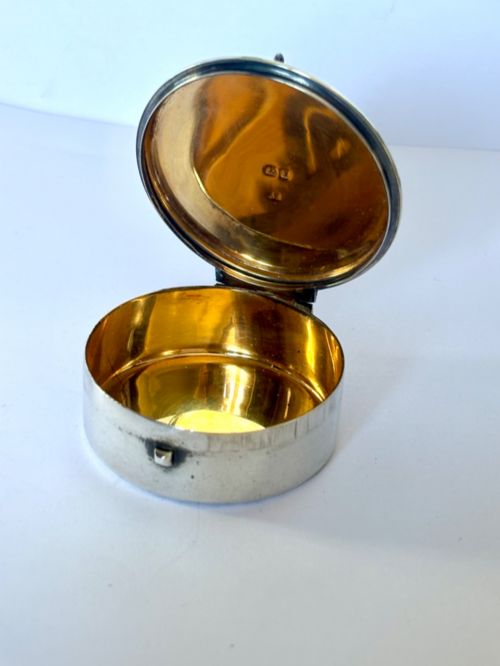
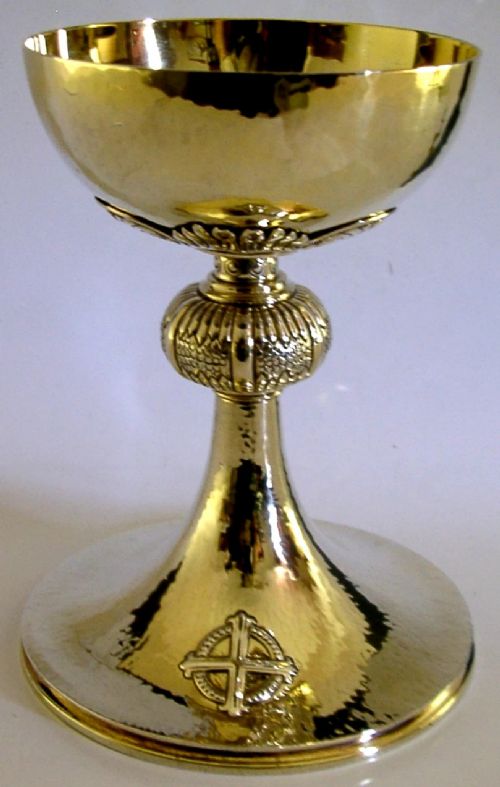
Silversmiths shaped solid sterling silver and silver gilt using traditional hammering, raising, and casting techniques, frequently applying parcel gilt finishes to the interior bowls of chalices. Sterling components bear hallmarks detailing assay office origins and maker marks.
Old Sheffield plate and silver plating utilise fused metal layers or electroplating over base metals like copper, creating durable ecclesiastical vessels with rich metallic lustre. Pewter items rely on alloy casting to achieve substantial capacity and weight.
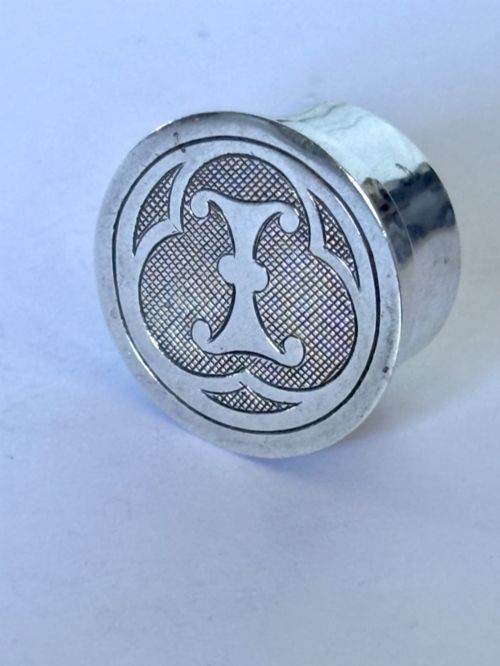
Internal gilding protected the silver from corrosive sacramental wine, while engraved bright-cut decoration and structural collars added architectural detail to nineteenth-century Gothic revival pieces.
Antique Silver Communion Retail Price Guide 2026
Typical asking prices for silver communion among the pieces listed under this phrase on Sellingantiques today, from the lower quarter to the upper quarter. They describe what is for sale here now, not the wider market.
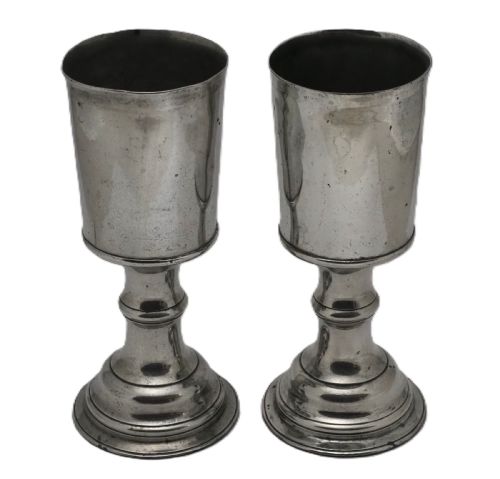
Irish pewter chalices from seventeen-fifty hold exactly one pint of capacity for thirsty congregations.
What varies in quality
Quality rests upon the integrity of the maker and the weight of the metal, distinguishing standard ecclesiastical production from master silversmith commissions. Comprehensive hallmarks and original fitted boxes elevate the historical standing of a set.
The preservation of original gilding inside chalice bowls and crispness in chased or bright-cut ornamentation separate superior examples from worn pieces. Balance, proportion, and the seamless fusion of Old Sheffield plate edges further define craftsmanship at the highest tier.
F. OSBOURNE & CO LONDON·BURNS OATS & WASHBOURNE·FA BARRETT·GEORGE UNITE·ELKINGTON MASON·WILLIAM EATON·JAMES DEAKIN & SONS
The Antique Silver Communion Glossary
- Chalice
- A large stemmed cup used for consecrated wine during communion services. These vessels often feature deep bowls and prominent knops on the stem.
- Pyx Box
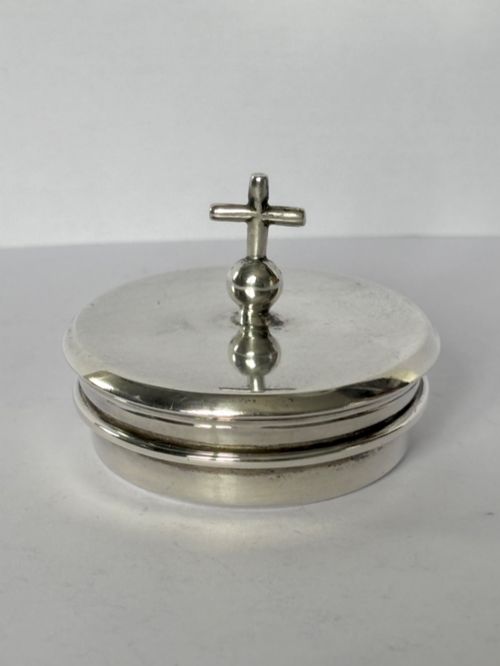
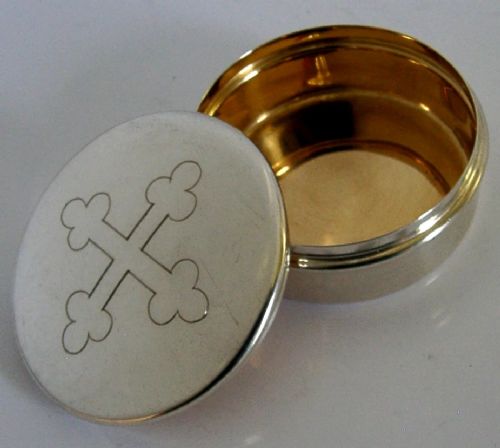
- A small round container utilised for carrying the consecrated host to the sick or absent. They are frequently fashioned in sterling silver with gilt interiors.
- Paten
- A small shallow plate or dish used for bread during the Eucharist, sometimes designed to fit the top of a matching chalice.
- Old Sheffield Plate
- A composite material formed by fusing a sheet of silver to a copper core before shaping. It represents an early precursor to electroplating.
- Silver Gilt
- Silver that has been coated with a thin layer of gold on its surface. This technique prevents tarnishing and protects the metal from acidic liquids.
Antique Silver Communion: Frequently Asked Questions
What is a pyx box used for?
A pyx box serves as a small portable container for carrying the consecrated bread. Clergy transported these secure vessels to administer the sacrament outside consecrated church buildings.
Most examples feature tight-fitting lids and gilt interiors to preserve the elements safely during travel.
How do I identify Old Sheffield plate?
Old Sheffield plate exhibits a copper seam or edge where the underlying base metal shows through wear. This fusion method predates nineteenth-century electroplating.
Items from this category display deep weight and a soft metallic glow distinct from standard silver plate.
Were communion sets made for travel?
Travelling communion sets were manufactured in compact fitted boxes containing miniature chalices, patens, and cruets. These allowed clergy to perform services in private homes.
Victorian examples often retain fitted velvet or leather interiors designed to hold each component securely.
What is parcel gilt?
Parcel gilt describes an object where only specific sections are covered in gold leaf while the rest remains bare silver. Communion chalices commonly feature this treatment inside the bowl.
The contrast highlights decorative exterior elements while protecting vulnerable interior surfaces.