



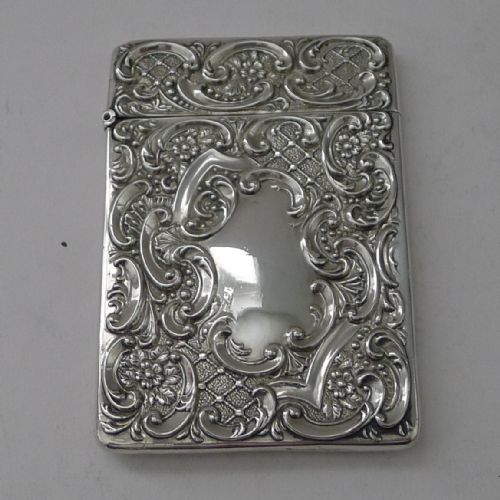
Antique Silver Calling Card
An antique silver calling card case is a pocket-sized repository of social etiquette, holding the thin pasteboard cards once used for formal visits.
Antique Silver Calling Card
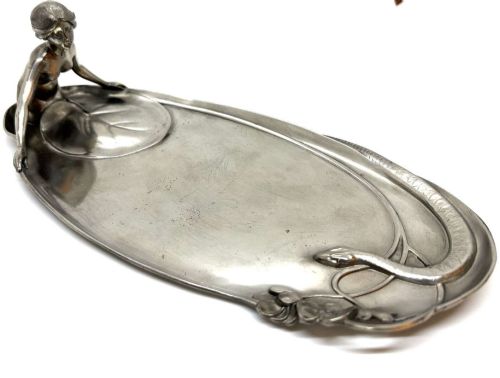
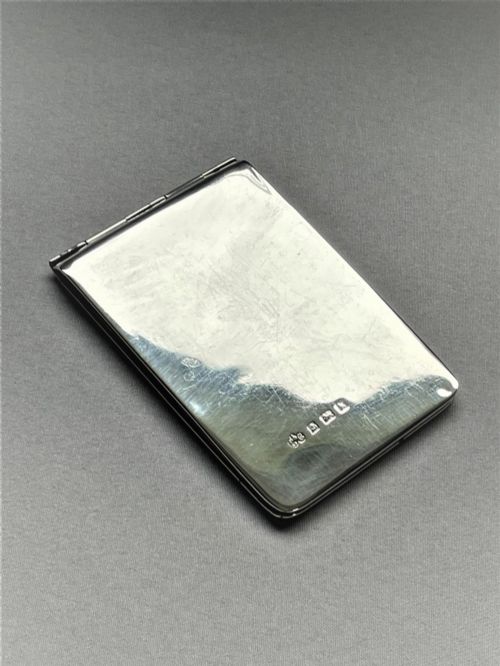
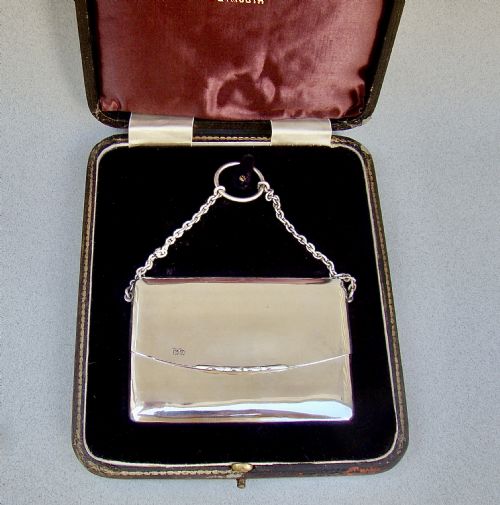
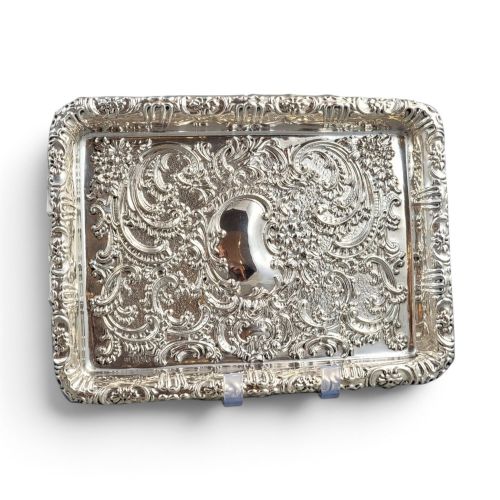
When searching for an antique silver calling card case, you are looking at small, hinged containers designed to protect visiting cards in the pocket or reticule. The selection spans distinct forms, including slim cases, folding variants, compartmentalised boxes, and small trays known as salvers.
Materials and Techniques
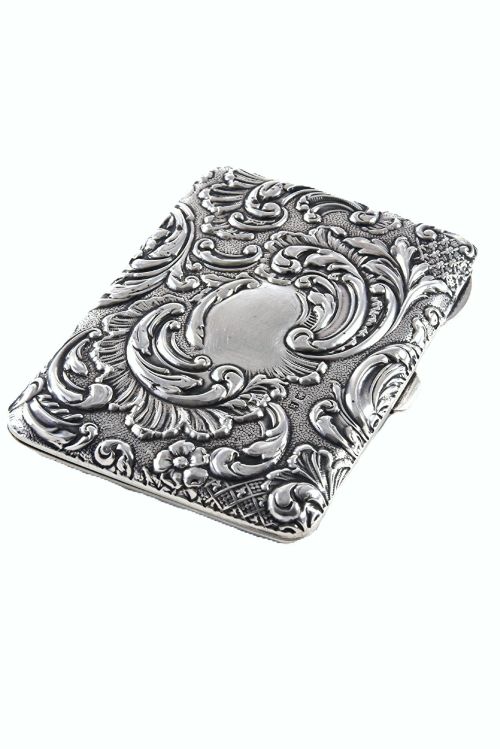
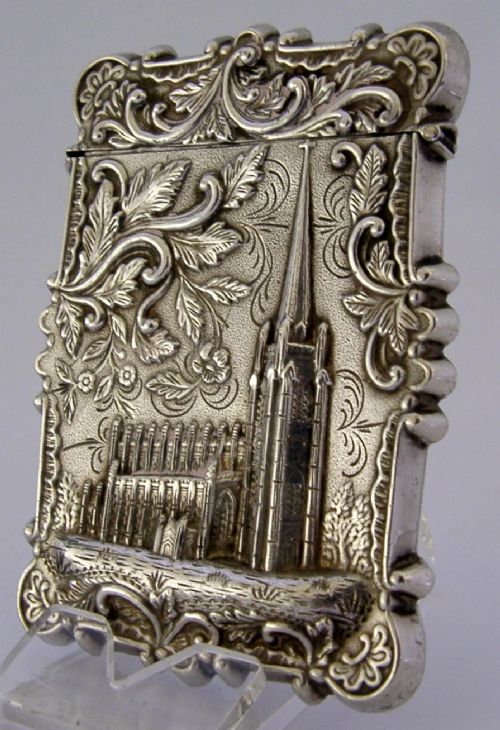
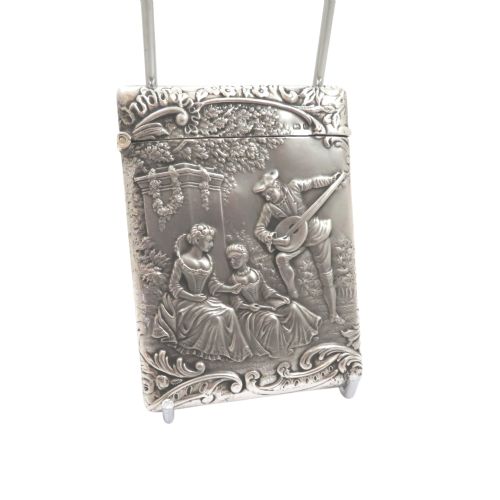
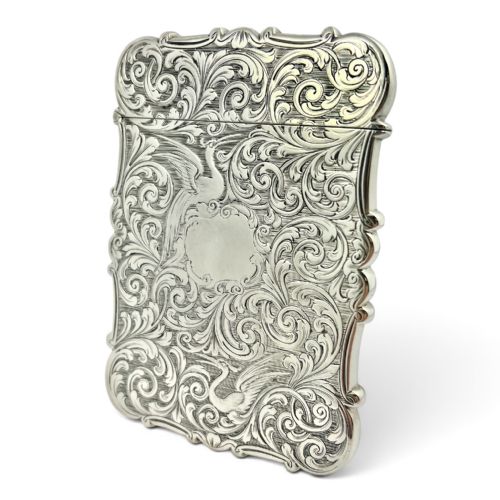
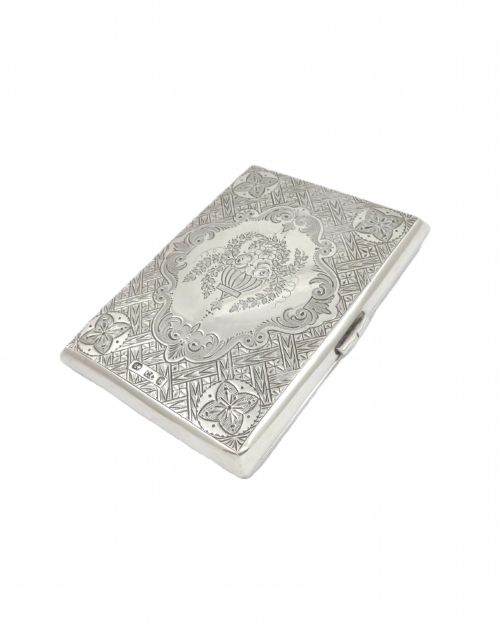
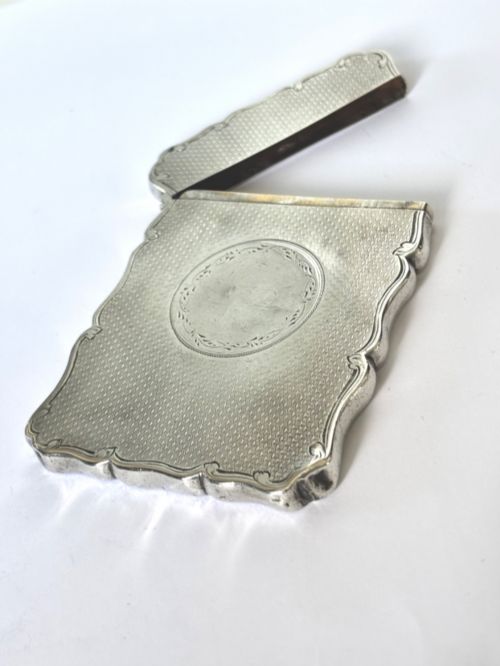
The primary material is sterling silver, shaped by stamping, casting, or hammering. Many Victorian pieces utilise intricate engine-turning and surface engraving to create textured patterns, while others display high-relief repoussé work depicting architectural landmarks or figural scenes.
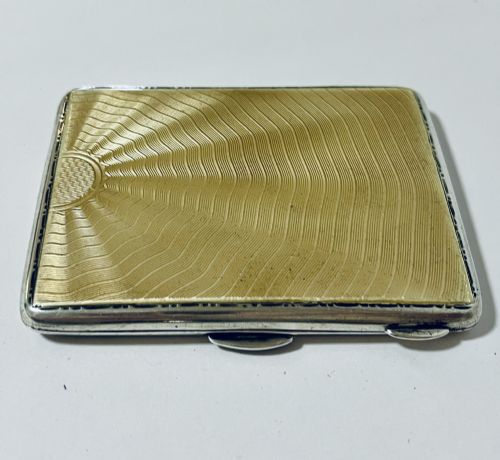
Specialised variations incorporate contrasting mediums. Enamel adds colour to metal surfaces, while organic substances such as mother of pearl, tortoiseshell, and Connemara marble form decorative panels on the exterior walls of the cases.
Materials span sterling silver, silver plate, pewter, and enamel, combined with organic accents like mother of pearl and tortoiseshell.
Craftsmanship and Detail
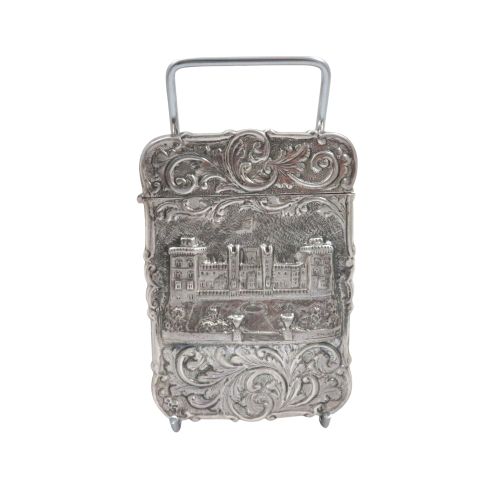
Quality separates by the crispness of the chasing and the depth of the engraving. Pieces depicting architectural views, such as castle top designs, achieve higher distinction through the precision required to render recognisable buildings on a miniature scale.
Structural integrity also defines the tier of a piece. Well-made examples retain a secure closure on the spring or push-button catch, crisp hallmarks on the interior rim, and hinges that align without play when closed.
Nathaniel Mills·George Unite·Robert Pringle And Sons·Joseph Gloster
The Antique Silver Calling Card Glossary
- Castle top
- A style of card case featuring a high-relief depiction of a famous building or landmark on the cover. These architectural scenes are frequently associated with master silversmiths like Nathaniel Mills.
- Repoussé
- A metalworking technique where the artisan hammers the design from the reverse side to form a raised relief on the front. This method creates tactile, three-dimensional scenes of deities, foliage, or figures.
- Aide memoire
- A small notebook or memorandum case, often combined with a card holder and a tiny pencil. They were utilised for keeping track of social engagements and calling schedules.
- Salver
- A flat tray used for presenting calling cards upon a visitor's arrival at a residence. These range from small domestic silver trays to larger antique plated pieces.
- Hallmark
- An official stamp impressed into the metal to indicate the standard of silver, the assay office, and the year of manufacture. British pieces generally display a lion passants, a date letter, and a maker's mark.
Antique Silver Calling Card: Frequently Asked Questions
What were antique silver calling cards used for?
Calling cards served as formal introductions or notifications of social calls during the nineteenth and early twentieth centuries. A visitor left a card upon arriving at a home if the resident was not receiving guests.
The case protected these fragile paper cards from bending or soiling while being carried in pockets or handbags. Leaving a card was a strict social obligation within polite society to maintain networks and acknowledge relationships.
Are these cases still practical to use today?
While the original social rituals have vanished, the dimensions of these small cases lend themselves well to modern uses. They make suitable holders for credit cards, business cards, or folded notes.
The slim profile allows them to slip easily into a modern pocket or evening bag. Care must be taken with the delicate hinges and catches on nineteenth-century mechanisms.
How do I date an unmarked or foreign silver case?
Dating relies on stylistic clues, manufacturing techniques, and any accompanying foreign assay marks or stamps. Victorian and Edwardian pieces often reflect the prevailing aesthetic movements of their decade, such as Art Nouveau or Gothic Revival.
Material combinations like tortoiseshell or specific clasp mechanisms also point to particular manufacturing eras. Comparing the construction to hallmarked pieces helps narrow down the period.