

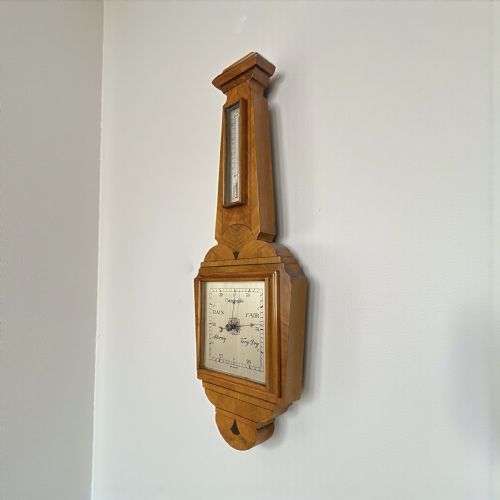
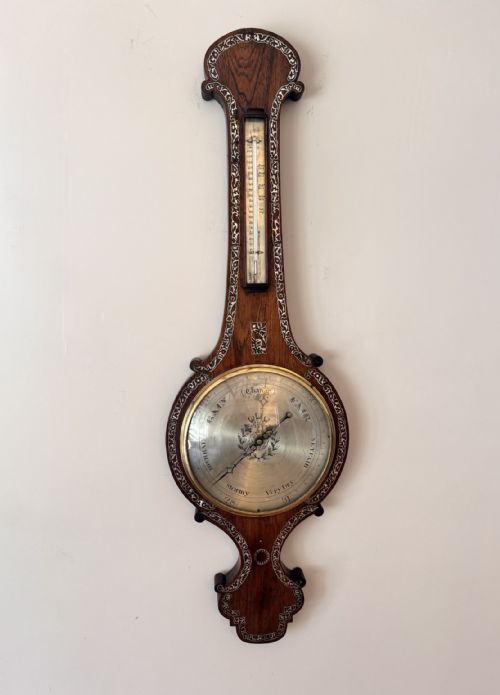
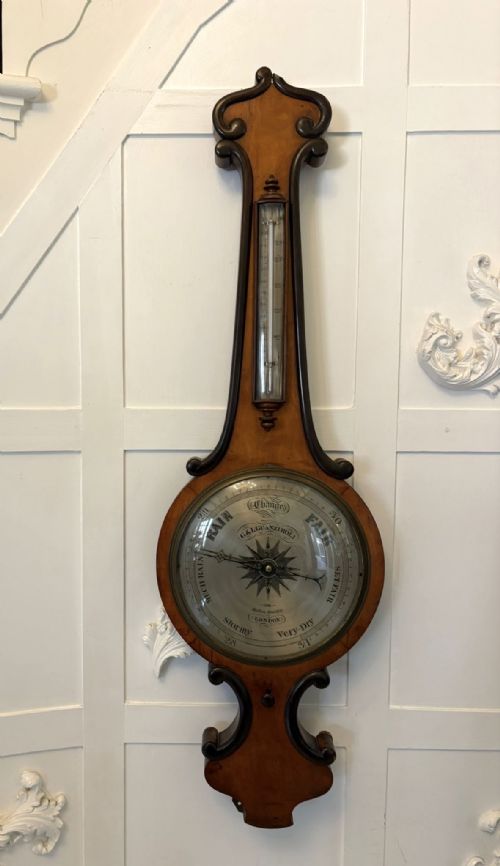


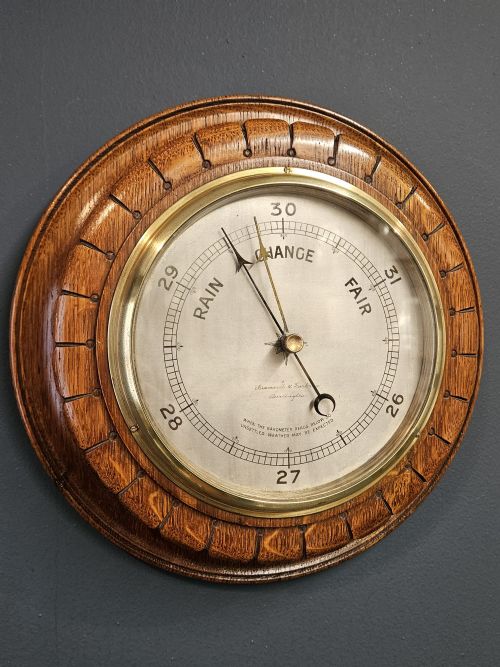


Antique Silver Barometer
An antique silver barometer measures atmospheric pressure through delicate mercury columns or aneroid movements, housed in handsome period timber cases with metallic dials.
Antique Silver Barometer
An antique silver barometer combines precise meteorological instrumentation with fine cabinetmaking from the eighteenth and nineteenth centuries. These instruments appear most frequently in mahogany, rosewood, and walnut cases, often featuring silvered brass or silvered metal dials.
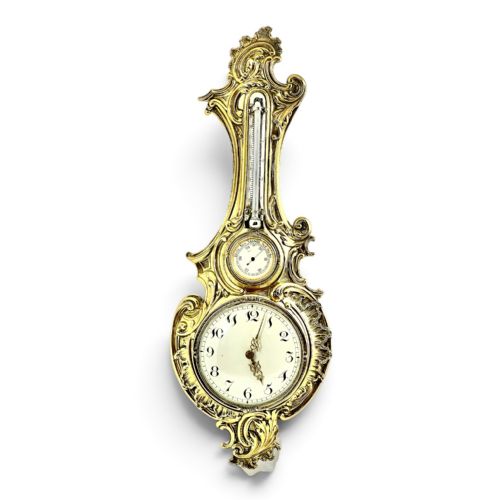
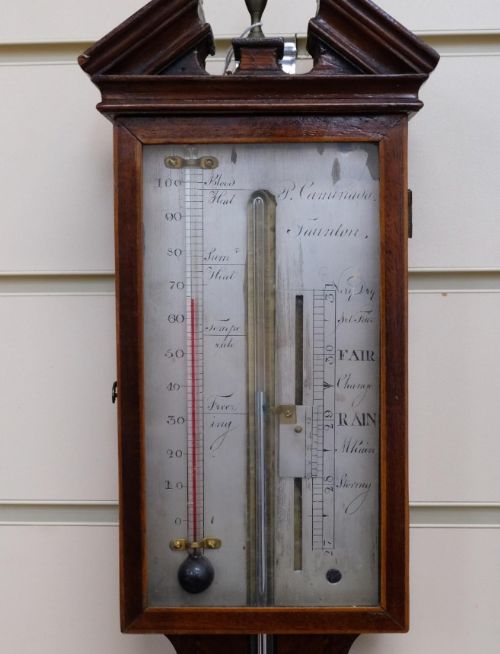
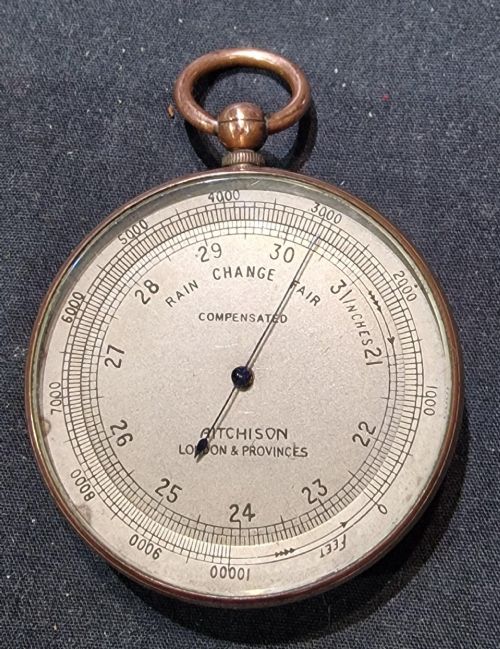
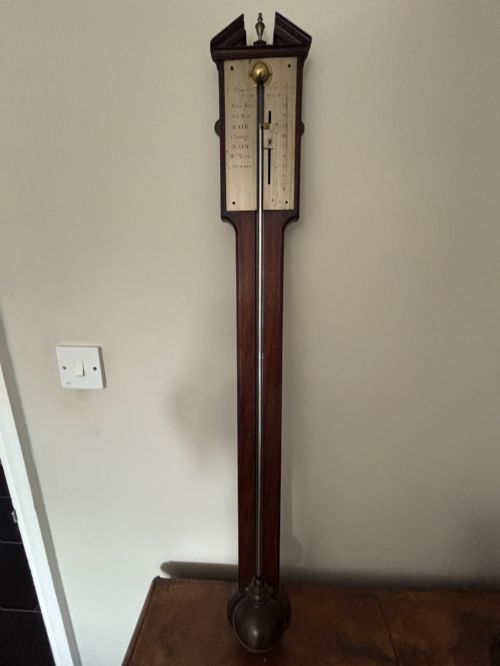
Makers shaped these pieces into stick barometers, wheel barometers, and pocket instruments, sometimes pairing the barometer tube with a thermometer or clock. The examples seen on this page span the Georgian, Regency, and Victorian eras, reflecting the domestic utility and scientific curiosity of those periods.
Buyers encounter wall-hanging banjo and stick formats alongside desk compendiums and travel pieces. Each configuration relies on the interaction between atmospheric pressure and mercury columns or sealed metal boxes to record weather changes.
Materials and construction methods
Cabinetmakers built the casework using dense tropical hardwoods like mahogany and rosewood, frequently incorporating boxwood stringing, mother of pearl inlay, or glass panels to protect the mechanism. These timbers provided the stable housing necessary to protect the sensitive internal components from environmental warping.
Instrument makers engraved the measurement scales onto silvered brass or silvered metal plates, using fine black wax to fill the etched characters for legibility. Enamel, brass, and glass elements completed the visible face, while mercury provided the responsive fluid medium within the barometer tubes.
Antique Silver Barometer Retail Price Guide 2026
Typical asking prices for silver barometer among the pieces listed under this phrase on Sellingantiques today, from the lower quarter to the upper quarter. They describe what is for sale here now, not the wider market.
Makers occasionally hid small alcohol thermometers beside the main dial so the room temperature could be judged alongside the impending rain.
Evaluating craftsmanship and execution
The distinction between standard production and superior work lies in the crispness of the dial engraving and the architectural refinement of the case. Master makers integrated swan-neck pediments, delicate stringing, and well-proportioned cistern covers that elevate a utilitarian instrument into a decorative centrepiece.
Execution also shows in the signature engraving and the precision of the mechanical linkages connecting the barometer tube to the pointer on wheel models. Finer examples retain their original mercury columns, glass tubes, and secondary instruments such as thermometers or hygrometers.
George Adams London·Short and Mason London·James Murray·Pillischer London
The Antique Silver Barometer Glossary
- Stick barometer
- A vertical instrument where atmospheric pressure moves a column of mercury directly in a glass tube. This form offers the most direct reading of barometric pressure.
- Wheel barometer
- A banjo-shaped instrument using a siphon tube and a float connected to a pulley and pointer. This design translates vertical mercury movement into circular dial readings.
- Silvered brass
- A brass plate treated with a silver compound to produce a bright, matte metallic surface. Instrument makers used this material for legible, non-reflective barometer scales.
- Aneroid barometer
- A sealed metal capsule that expands and contracts with pressure changes, driving a mechanical linkage. This design eliminated the need for liquid mercury.
- Cistern
- The open reservoir at the base of a barometer tube that holds the reserve mercury. Georgian makers enclosed these in decorative wooden or brass covers.
Antique Silver Barometer: Frequently Asked Questions
How do stick and wheel barometers differ?
Stick barometers display the mercury column directly against a vertical scale, offering a straightforward scientific read. Wheel barometers use a pulley mechanism to turn a needle on a circular dial, presenting the data in a more decorative format.
Both types record atmospheric pressure accurately, but wheel models frequently incorporated additional instruments like thermometers and hygrometers into their broader wooden frames.
Are these barometers still accurate today?
These instruments continue to respond to local atmospheric pressure changes when properly calibrated and maintained. The underlying physics of mercury columns and aneroid capsules remain entirely consistent over the centuries.
Minor adjustments to the pointer or resetting the mercury column may be necessary after moving the instrument to a new location.
How should I hang an antique barometer?
Mount the instrument securely to a solid wall stud using appropriate hardware that matches the weight of the dense hardwood case. Avoid placing barometers near direct heat sources, radiators, or in rooms with extreme humidity fluctuations.
Keep the instrument away from heavy foot traffic where vibrations might disturb the delicate internal glass tubes or mercury levels.
Can I move a mercury barometer safely?
Tilting or laying down a mercurial barometer requires tipping the instrument gently to force the mercury to the top of the tube, preventing air bubbles from entering. Securing the cistern prevents fluid loss during transport.
Professional transport is often recommended for sensitive nineteenth-century stick barometers to ensure the fragile glass components remain intact.