



Antique Silk Sofa
An antique silk sofa brings richness and historic form to a room, drawing the eye with carved frames and patterned textiles.
Antique Silk Sofa
An antique silk sofa encompasses seating forms ranging from grand Regency giltwood settees to Victorian chaises and low settees. These pieces combine robust timber frames with delicate upholstered surfaces.
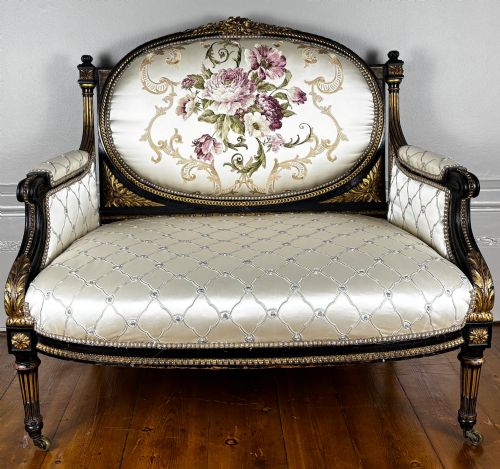
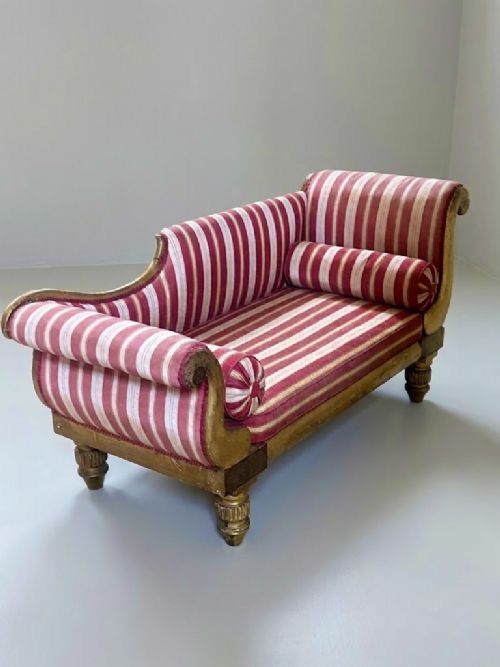
The versions most commonly met on this page date from the nineteenth century and the Georgian period, often reflecting French or Italian styling such as Louis XV, Rococo Revival and Venetian Rococo. Forms include canapes, love seats and miniature chaises alongside standard sofas.
Makers and workshops of the period utilised various regional aesthetics, producing items like the early nineteenth-century German settee in the rococo taste and the George III Hepplewhite mahogany settee.
How they were made
Makers built the structural frames of an antique silk sofa from solid woods such as mahogany, wood, and giltwood, frequently incorporating brass details for structural or decorative reinforcement.
Upholstery techniques of the era relied on luxury textile coverings, notably silk, silk damask, fabric, and damask fabric, secured over padded interiors to shape the curves of settees and daybeds.
Antique Silk Sofa Retail Price Guide 2026
Typical asking prices for silk sofa among the pieces listed under this phrase on Sellingantiques today, from the lower quarter to the upper quarter. They describe what is for sale here now, not the wider market.
Listings span the Georgian, Regency, and Victorian periods, incorporating materials like mahogany, brass, giltwood, and silk damask.
What varies in quality
The calibre of carving on the timber frame separates standard examples from exceptional ones, particularly where giltwood or polychrome decoration shows distinct depth and hand execution.
The grade and weave of the silk or damask upholstery dictate the textural richness of the surface, distinguishing simple recovered pieces from those retaining sophisticated textile integrity.
Miles & Edwards
The Antique Silk Sofa Glossary
- Giltwood
- Wood that has been treated with gold leaf or gold paint to create a lustrous surface finish. This method is frequently observed on decorative nineteenth-century frames.
- Silk Damask
- A reversible figured fabric created on a loom, combining warp-faced and weft-faced satin to form patterns. It provides a dense, patterned sheen suitable for formal seating.
- Chaise Longue
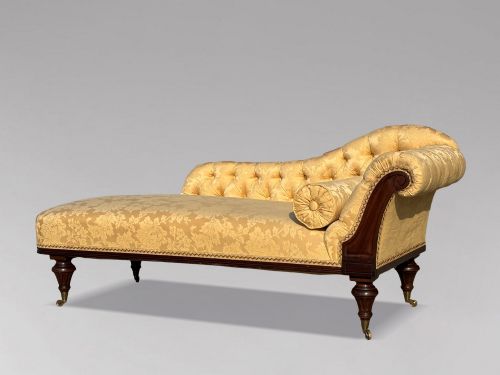
- An upholstered long chair designed for reclining, combining the characteristics of a chair and a sofa. These pieces appear in various nineteenth-century styles.
- Canape
- A decorative French-style settee with an exposed wooden frame and upholstered seat and back. They often feature carved giltwood or polished woodwork.
- Knole Sofa
- A traditional English settee style characterised by high, adjustable arms that can be tied upright with cords. This form is represented here in gold damask.
Antique Silk Sofa: Frequently Asked Questions
What is an antique silk sofa?
An antique silk sofa is a historic seating piece featuring a wooden frame, such as mahogany or giltwood, upholstered in silk or damask fabrics. These items date from periods including the Georgian and Victorian eras.
Such furniture often reflects specific historical styles like Regency or Louis XV, serving as both functional seating and decorative room centerpieces.
How were these sofas used?
These settees and daybeds functioned as formal seating in reception rooms and boudoirs during the Georgian and nineteenth-century periods. They provided comfortable places for conversing, reading, or resting.
Many designs, such as the chaise longue, were specifically intended for reclining during leisure hours while displaying the homeowner's taste in textiles.
How do I care for silk upholstery?
Protecting silk upholstery involves keeping the fabric away from direct sunlight to prevent fading and degradation of the delicate fibres. Gentle dusting helps maintain the surface without disturbing the weave.
Professional textile conservation methods are typically required for deeper cleaning to preserve the historic fabric integrity.