




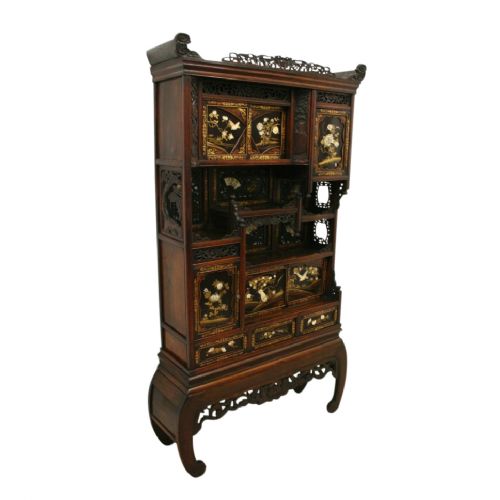

Antique Shibayama
Antique shibayama pieces are intricate Japanese decorative works inlaid with mother-of-pearl and bone, bringing exquisite craftsmanship and natural motifs into a room.
Antique Shibayama
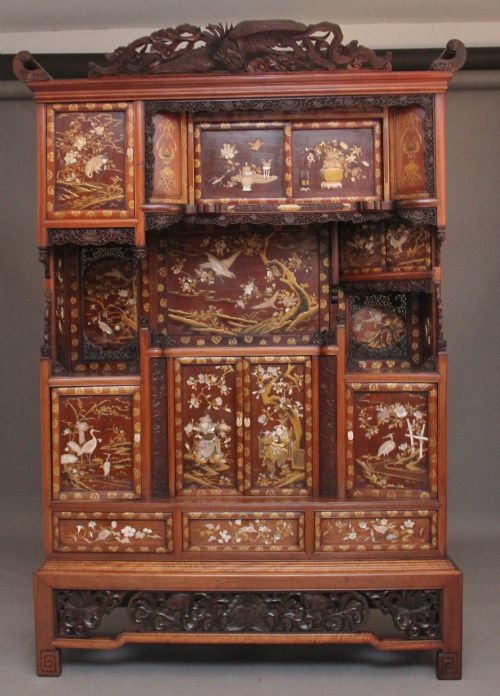
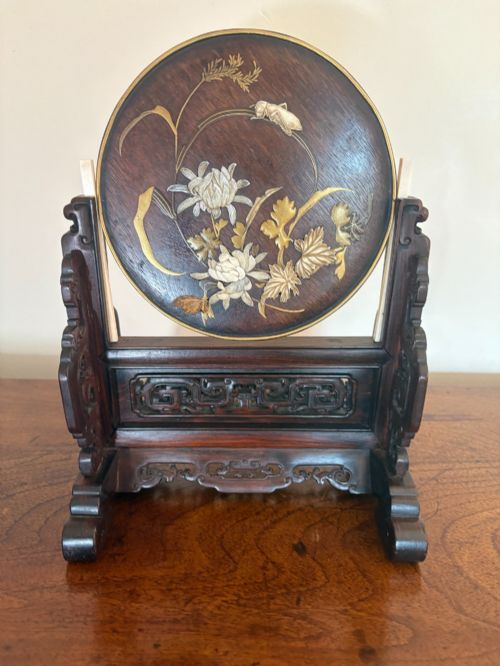
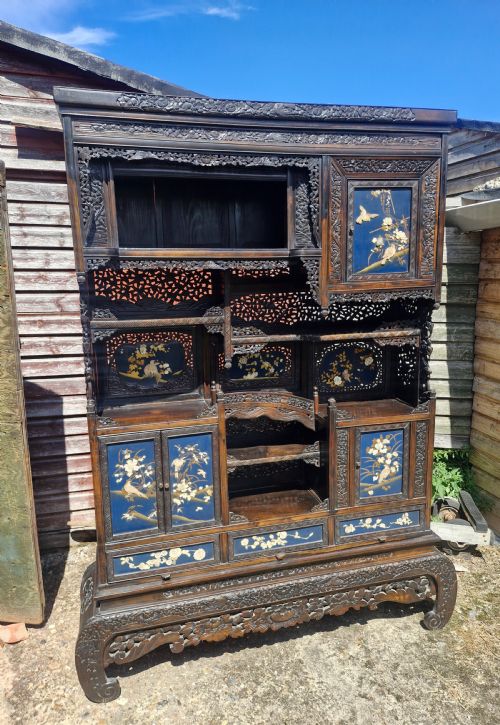
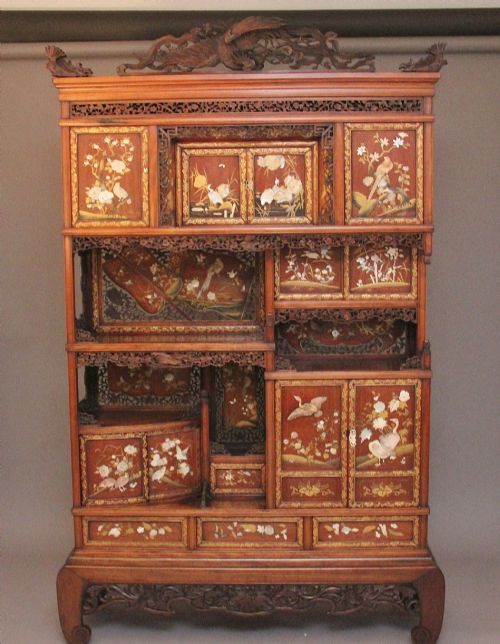
When you search for antique shibayama, you encounter a specialised form of Japanese decorative art originating primarily from the Meiji period. These pieces span folding screens, table screens, wall plaques, brush pot lamps, and elaborate shodana cabinets.
The objects most frequently met on this page are cabinets, folding screens, and table screens executed in lacquer, carved wood, and hardwood. They showcase detailed narrative scenes and natural subjects rendered in relief.
Originating from Japanese export workshops and Meiji period artisans, these works combine traditional lacquer techniques with meticulous inlay. Buyers find items dating from the late nineteenth century through to the early twentieth century.
How they were made
Artisans built the foundation of these pieces using seasoned hardwoods or structural wood panels, finished with multiple layers of traditional lacquer. This smooth, polished surface provided the ideal dark background for contrasting inlaid materials.
Workers applied intricate inlay using carved bone, ivory substitutes, and iridescent mother-of-pearl to build up figures, foliage, and birds. These elements were painstakingly recessed into the lacquer or wood base and secured with adhesive and tiny pins.
Secondary details were often added through fine painting, gold hiramaki-e dust, and deep wood carving around the borders. Brass mounts and hinges completed functional items such as folding screens and shodana cabinets.
Antique Shibayama Retail Price Guide 2026
Typical asking prices for shibayama among the pieces listed under this phrase on Sellingantiques today, from the lower quarter to the upper quarter. They describe what is for sale here now, not the wider market.
Materials documented across the inventory include lacquer, hardwood, bone, mother-of-pearl, brass, and carved wood.
What varies in quality
The distinction between standard commercial output and superior craftsmanship lies in the depth and precision of the inlay work. Finer examples feature multi-layered bone and mother-of-pearl that create a convincing sense of perspective and relief.
The quality of the lacquer ground and the integration of the carved elements determine the durability and visual depth of the surface. Expertly handled pieces display seamless transitions between the polished background and the raised decorative subjects.
Compositional balance across panels, screens, and cabinets separates exceptional works from simpler production pieces. The best items maintain crisp carving and secure inlays without visible gaps or excessive later repairs.
The Antique Shibayama Glossary
- Shibayama
- A Japanese decorative technique involving the inlay of precious materials such as mother-of-pearl, shell, and bone into a lacquer or wood ground. The term derives from the family of Ōgoshi Shibayama who popularised the style.
- Shodana
- A type of Japanese tabletop or floor cabinet featuring asymmetrical shelving, cupboards, and sliding doors. These intricate storage pieces often display elaborate lacquerwork and metal fittings.
- Meiji Period
- The era in Japanese history spanning from eighteen sixty-eight to nineteen twelve, characterised by rapid modernisation and an explosion of decorative arts destined for export. Pieces from this time are noted for technical virtuosity.
- Hiramaki-e
- A Japanese lacquer technique where design motifs are sprinkled with metal powder and flattened into the lacquer surface. It provides a subtle metallic sheen behind raised inlays.
Antique Shibayama: Frequently Asked Questions
What is an antique shibayama cabinet?
An antique shibayama cabinet is a Japanese storage piece, such as a shodana, decorated with inlaid bone and mother-of-pearl figures on a lacquered wooden surface. These items served both functional storage and decorative display purposes.
They often feature asymmetrical shelving and detailed relief work depicting traditional Japanese scenes and flora.
How do I care for lacquer and inlay?
Keep these pieces away from direct sunlight and dramatic humidity changes to protect the delicate lacquer and prevent the wood from warping. Dust them gently with a soft, dry cloth without using liquid cleaners or polishes.
Secure placement on stable surfaces ensures that heavy folding screens and cabinets remain safe from tipping.
How do I identify Meiji period items?
Meiji period items are generally identified by their precise craftsmanship, the use of Japanese export styles, and materials like carved bone, hardwood, and lacquer. Dating relies on stylistic conventions typical of the late nineteenth and early twentieth centuries.
Most pieces from this era reflect the opening of Japanese trade markets to Western collectors.
Were these pieces made for export?
Many shibayama items and decorative cabinets were produced specifically for the international export market following the Meiji restoration. Western buyers developed a strong appetite for Japanese decorative arts during this period.
As a result, objects ranged from domestic items adapted for foreign tastes to large exhibition pieces.