




Antique Sewing Thimble
An antique sewing thimble is a small functional garment protector turned into an object of fine decorative art, prized for intricate metalwork and novelty appeal.
Antique Sewing Thimble
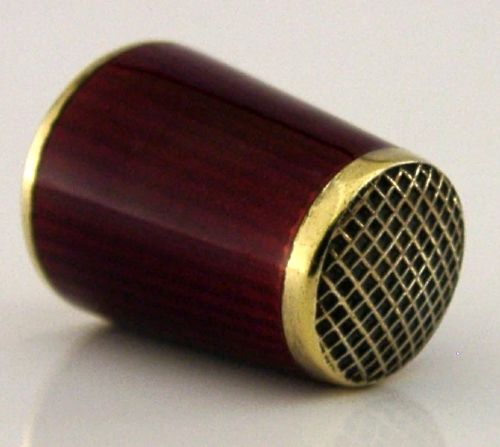
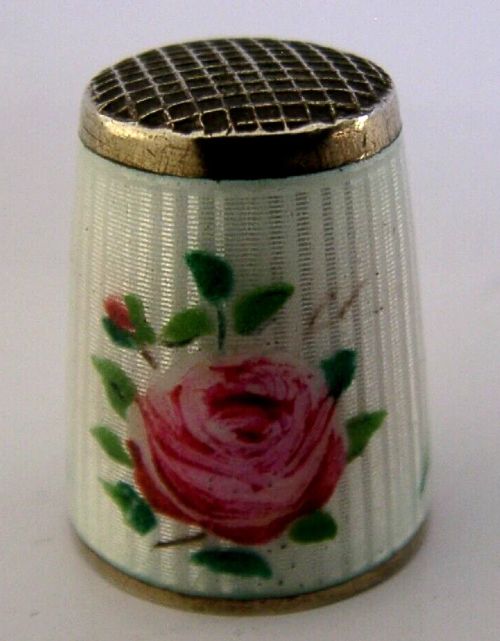
When you search for an antique sewing thimble, you encounter small domestic tools that often survive alongside fitted cases, chatelaines, and larger sewing companions. The pieces on this page span several periods, with Victorian and Edwardian examples appearing most frequently alongside mid-century Scandinavian enamel work.
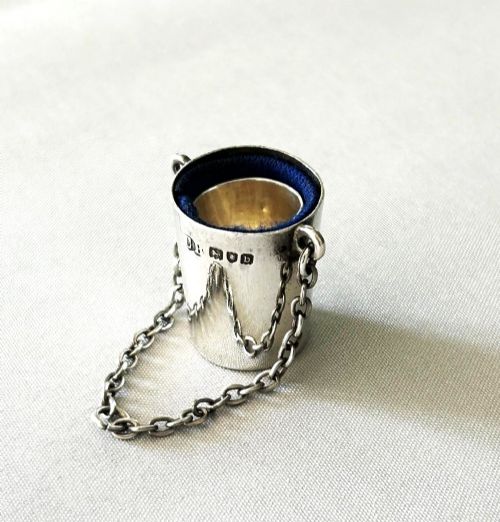
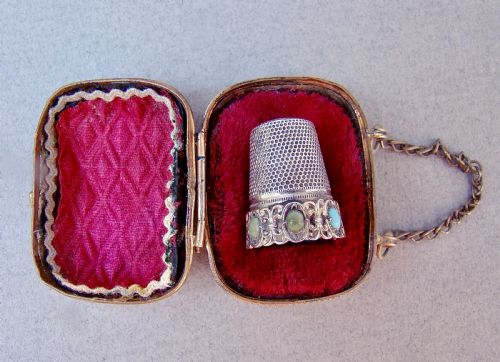
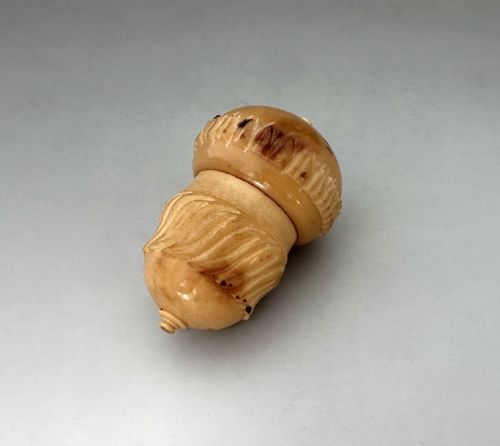
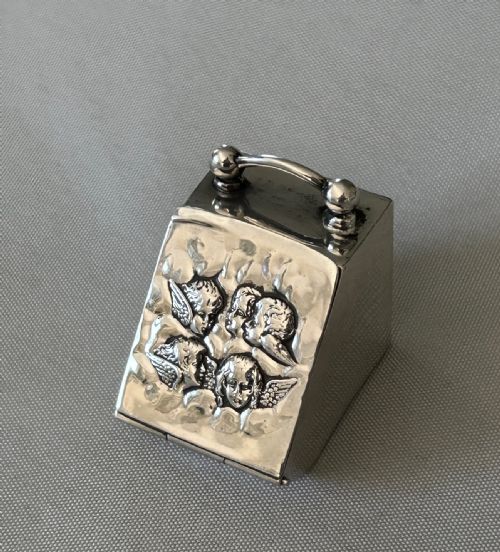
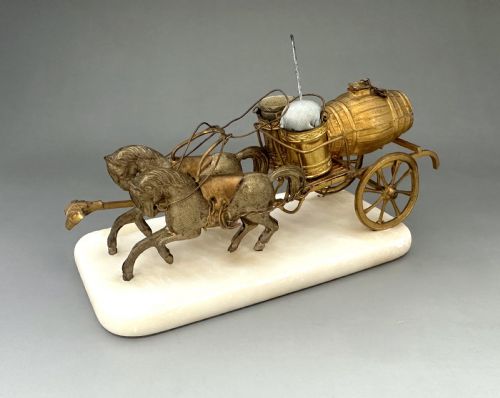
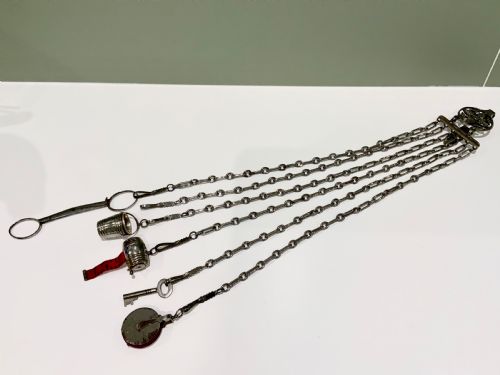
Forms range from simple sterling silver finger guards to elaborate novelty pieces shaped as buckets, coal scuttles, and egg-shaped or ormolu chatelaine holders. These objects frequently emerge from English, French, and Norwegian workshops, reflecting diverse regional tastes in domestic haberdashery.
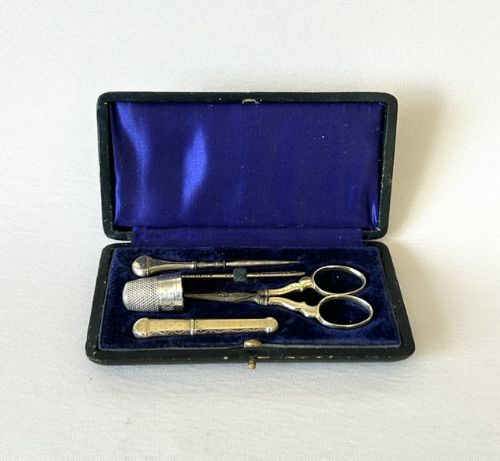
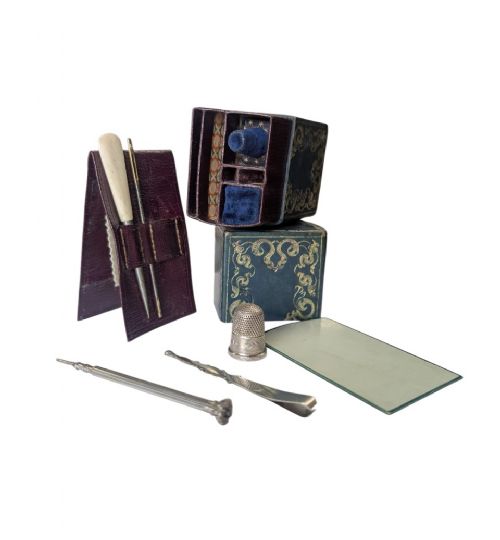
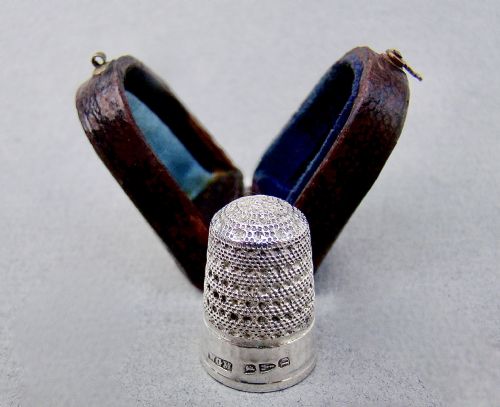
Many listings pair the thimble itself with bespoke housing, including tortoiseshell boxes, corozo nut cases, and silk-lined leather containers. Such groupings demonstrate how utilitarian items transformed into decorative dressing table accessories and pocket collectibles.
Materials and construction methods
Makers utilised precious metals such as sterling silver and silver gilt, frequently applying chasing, embossing, and enamel work to the exterior surface. Natural organic materials also appear extensively, including bone, corozo nut, tortoiseshell, ebony, and carved fruit wood.
Specialised techniques distinguish these objects, from the guilloche enamel of Scandinavian pieces to the delicate gilt ormolu mounts on French chatelaine cases. Makers combined metalworking with woodworking and textiles, lining fitted velvet and silk interiors to secure each delicate implement.
Listings feature sterling silver, velvet, leather, silk, bone, ormolu, and metal across Victorian, Edwardian, and mid-century periods.
Distinguishing quality across examples
Quality rests on the crispness of the dimpling and the precision of any applied decoration, such as hand-painted enamel or chased motifs. Finer examples retain their original gilding and show minimal wear to the textured surface designed for pushing needles.
David Andersen·Walter and George Myers·Charles Horner·Laurence Emanuel
The Antique Sewing Thimble Glossary
- Chatelaine
- A decorative belt hook worn with suspended chains carrying household and sewing implements. It kept essential tools close to hand during daily domestic tasks.
- Etui
- A small ornamental box or case for holding needles, thimbles, and other small sewing items. These portable containers often featured hinged lids and fitted interior compartments.
- Ormolu
- Gilded bronze or brass applied to decorative mounts and small cases. This technique provided a bright golden finish that complemented polished silver and stones.
- Treen
- Small handmade wooden household objects turned or carved from fruit wood and other timbers. Collectors use this term to describe utilitarian wooden items with a smooth, waxed finish.
- Haberdashery
- Small articles used in sewing and dressmaking, including threads, pins, and thimbles. These items formed the contents of traditional dressing table sets and sewing boxes.
Antique Sewing Thimble: Frequently Asked Questions
What materials were antique sewing thimbles made from?
Makers used sterling silver, silver gilt, and enamel, alongside organic substances like bone, corozo nut, tortoiseshell, and carved fruit wood.
These materials often matched the construction of accompanying cases, chatelaines, and fitted dressing table boxes.
How were novelty thimbles and cases used?
Novelty thimbles were functional sewing tools housed in decorative containers shaped as coal scuttles, buckets, or eggs.
Owners carried them on chatelaines or displayed them on dressing tables as part of broader sewing compendiums.
How do I identify a Victorian sewing thimble?
Victorian examples often bear English hallmarks indicating specific assay offices and dates, combined with traditional chasing or maker marks.
They frequently appear alongside velvet-lined leather cases, tortoiseshell boxes, or ornate silver chatelaine attachments.
What is a Palais Royal sewing companion?
This term refers to luxury decorative items originating from French arcades, often featuring intricate figural or architectural carved elements.
They served as portable sewing sets for affluent travellers and collectors of fine haberdashery.