

Antique Settee Furniture
Antique settee furniture brings together centuries of seating forms, from mahogany parlour suites to cast iron garden benches.
Antique Settee Furniture
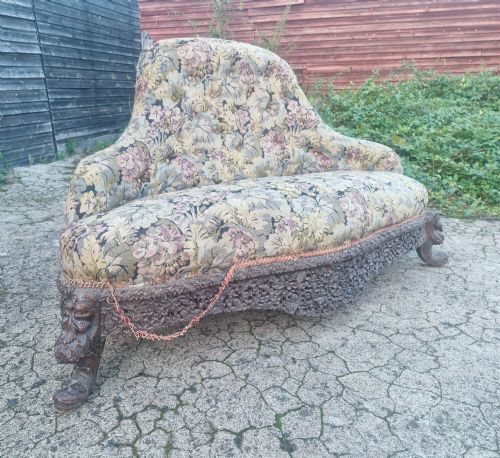
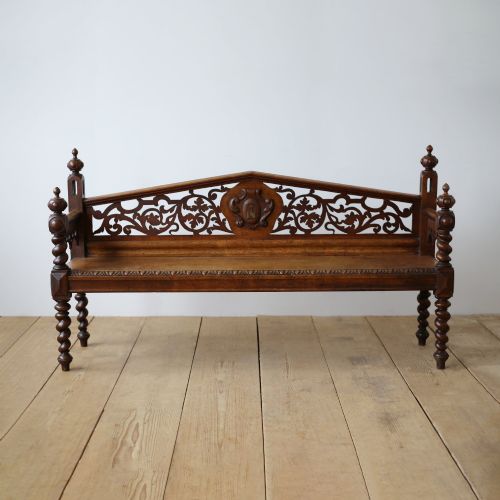
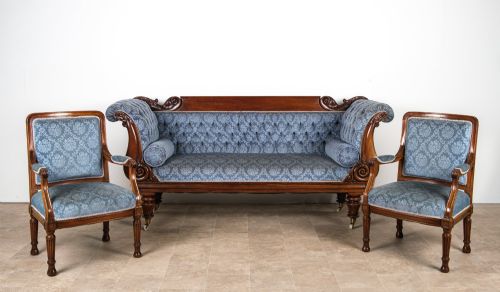
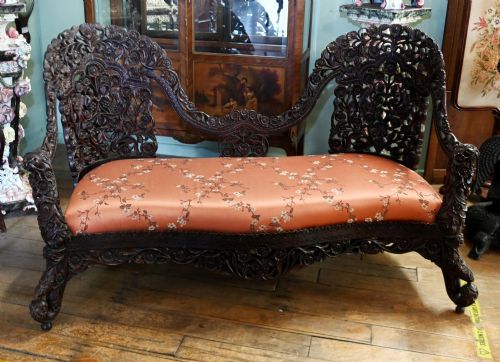
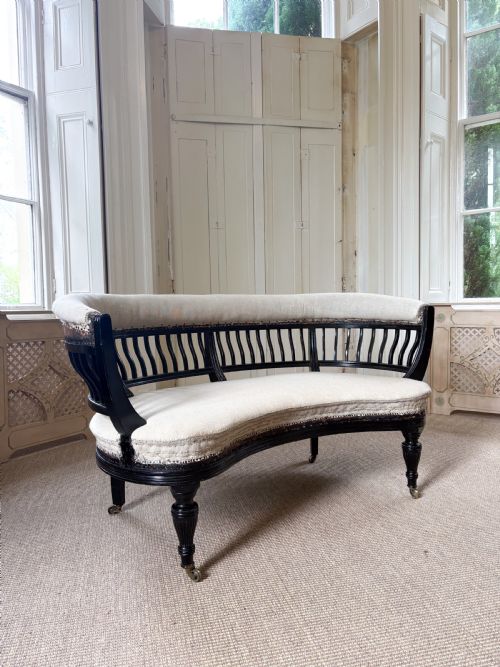
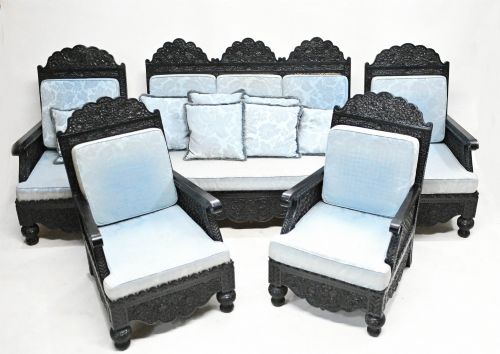
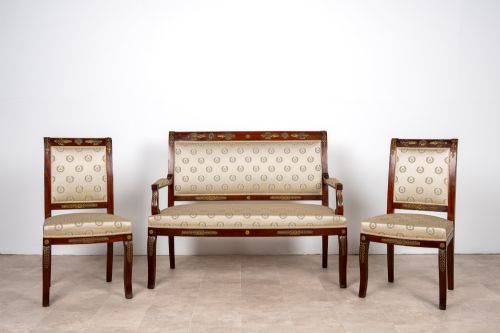
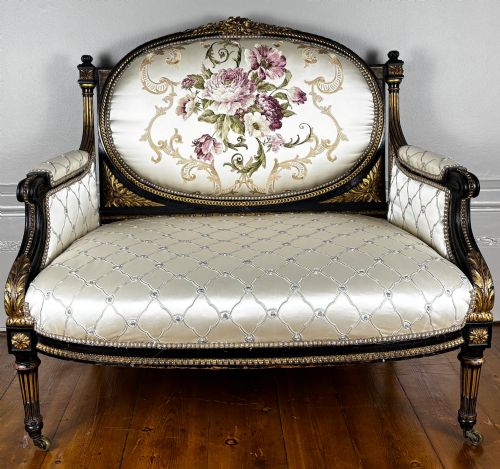
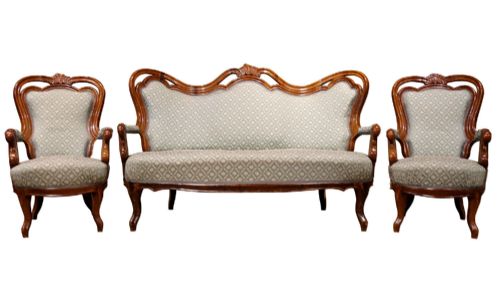
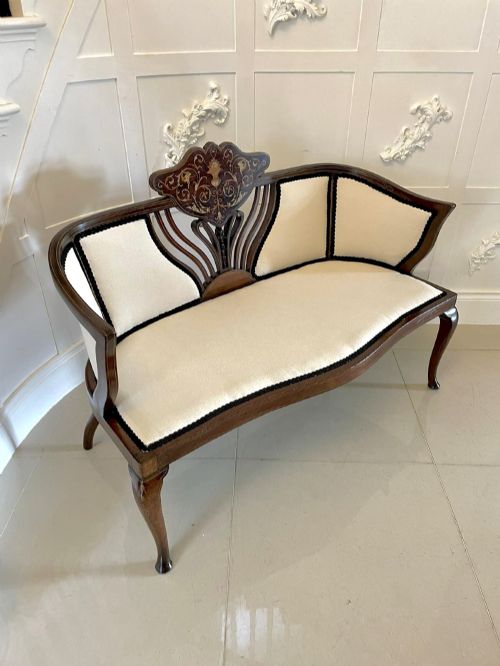
Antique settee furniture encompasses diverse seating forms including two-seater sofas, chaise longues, salon suites, and benches spanning the eighteenth, nineteenth, and early twentieth centuries. Pieces range from formal Victorian mahogany frames and Edwardian inlaid satinwood to regional items such as Anglo-Indian Bombay sofas and carved Burmese conservatory suites.
Buyers frequently encounter Victorian and Edwardian examples alongside earlier Regency and William IV pieces, often formed as part of larger salon suites or paired with matching chairs. Garden seating appears in cast iron, wrought iron, and painted wood, reflecting diverse domestic and outdoor traditions.
Materials and construction
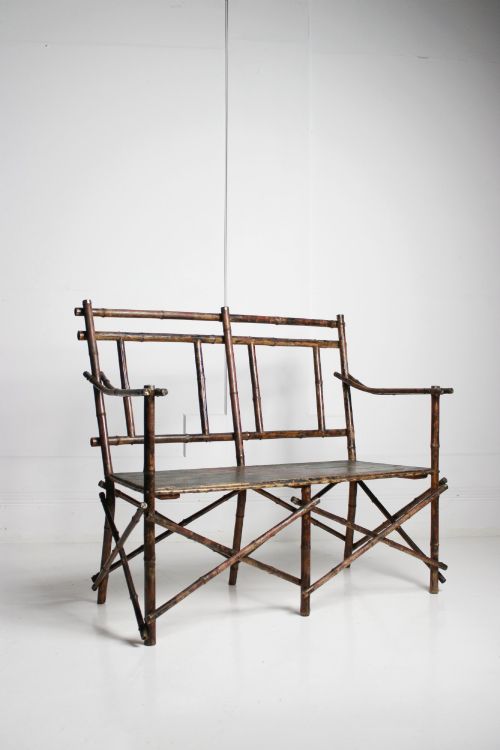
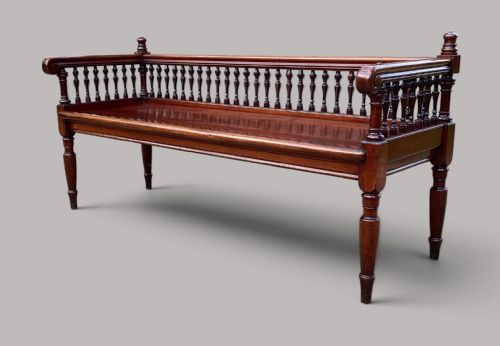
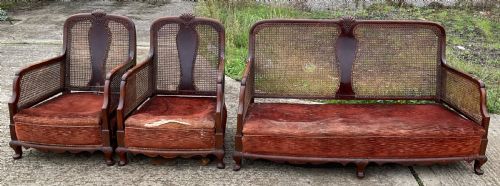
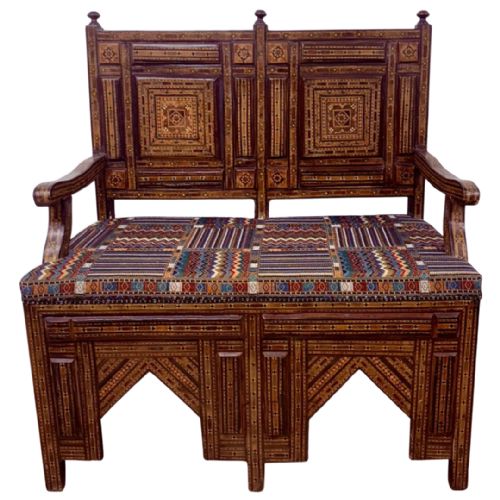
Frames are constructed from hardwoods such as mahogany, walnut, oak, satinwood, and stinkwood, supplemented by metal in garden benches and cane work in French bergères. Inlay, carving, ebonising, and polychrome paint define the decorative surface treatments applied to timber structures.
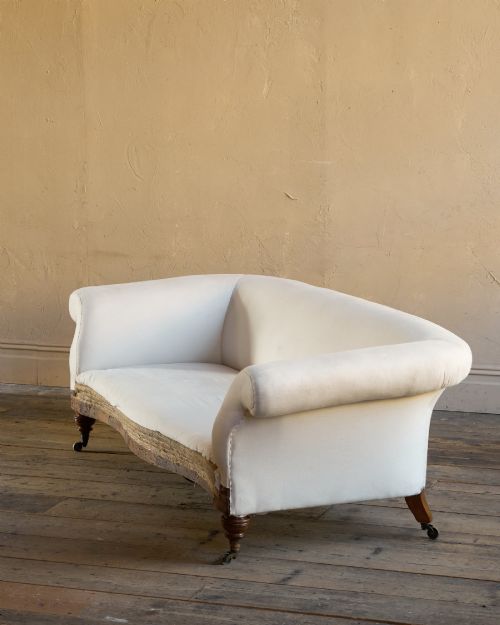
Upholstery incorporates traditional webbing, horsehair, and springs beneath coverings of leather, velvet, fabric, or silk, while specialised forms utilise intricate cane panels or pierced hardwood carvings.
Antique Settee Furniture Retail Price Guide 2026
Typical asking prices for settee furniture among the pieces listed under this phrase on Sellingantiques today, from the lower quarter to the upper quarter. They describe what is for sale here now, not the wider market.
Black Forest bears carved into wooden bench arms stand ready to hold hats and coats.
Gradations of quality
Quality rests upon the crispness of timber carving, the precision of marquetry inlay, and the structural integrity of the frame joints. Hand-carved details, balanced proportions, and robust joinery distinguish superior cabinetwork from simpler commercial production.
The sophistication of the secondary materials, such as finely graded cane work, embossed leather, and substantial cast iron or hardwood frames, separates exceptional pieces from standard workshop output.
C. Hindley & Sons·Holland & Sons·Epstein
The Antique Settee Furniture Glossary
- Bergère
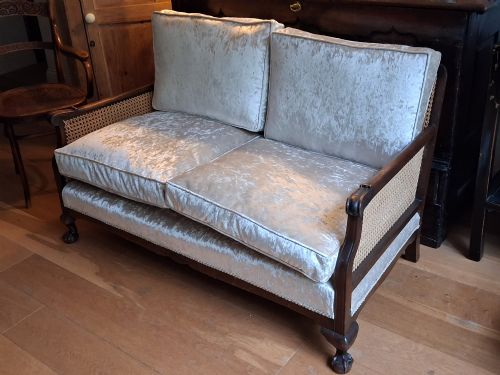
- An enclosed upholstered armchair or sofa featuring exposed wooden framing and woven cane sides or backs. This French seating style gained popularity across various nineteenth-century periods.
- Chesterfield
- A large padded sofa characterised by deep button tufting and rolled arms of equal height. Traditional versions are typically upholstered in brown or dark leather.
- Salon suite
- A coordinated set of seating furniture comprising a settee and matching armchairs designed for reception rooms. These suites reflect unified stylistic periods like the Victorian, Edwardian, or Arts and Crafts movements.
- Satinwood
- A pale, durable timber yielding a lustrous golden sheen, frequently utilised for inlaid decorative furniture during the eighteenth and nineteenth centuries. It provides a striking contrast when combined with darker woods.
Antique Settee Furniture: Frequently Asked Questions
How do I identify a Victorian settee?
Victorian settees typically employ dense hardwoods like mahogany and walnut, often displaying carved ornamentation, button-tufted upholstery, or suites that include matching armchairs.
Construction from this era relies on robust nineteenth-century joinery techniques, distinguishing them from lighter Edwardian or later twentieth-century seating.
Where were salon suites placed?
Salon suites were designed for formal reception rooms and drawing rooms to accommodate guests during social gatherings. The matching settee and chairs created a cohesive interior aesthetic.
Later suites also found placement in large conservatories or parlours, reflecting the shifting domestic architecture of the period.
How do I care for antique leather furniture?
Antique leather requires maintenance with appropriate conservation waxes and leather dressings to prevent the natural material from drying out. Keeping pieces away from direct heat sources preserves the historic hide.
Gentle dusting with a soft cloth prevents abrasive particles from damaging the surface finish and patina.