





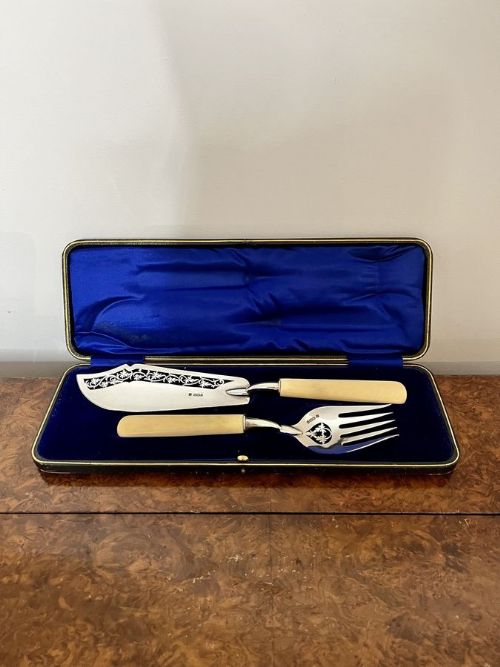
Antique Serving Knife
An antique serving knife is a specialist implement designed for the dining table, combining practical utility with fine craftsmanship.
Antique Serving Knife
An antique serving knife encompasses specialist implements like fish slices, carving knives, fruit knives, and cake slices originating from the nineteenth and twentieth centuries. These pieces emerge in styles ranging from the Victorian and Edwardian eras through to Art Deco and Mid-Century Modern designs.
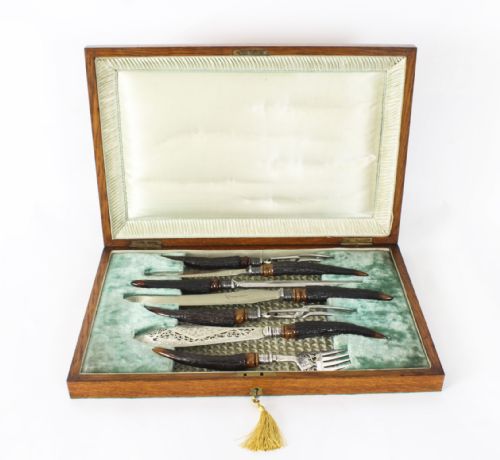
Buyers will encounter silver-plated and solid sterling silver blades paired with handles fashioned from bone, mother of pearl, horn, or silver. Many examples arrive as dedicated pairs or part of boxed sets intended for specific culinary tasks at the table.
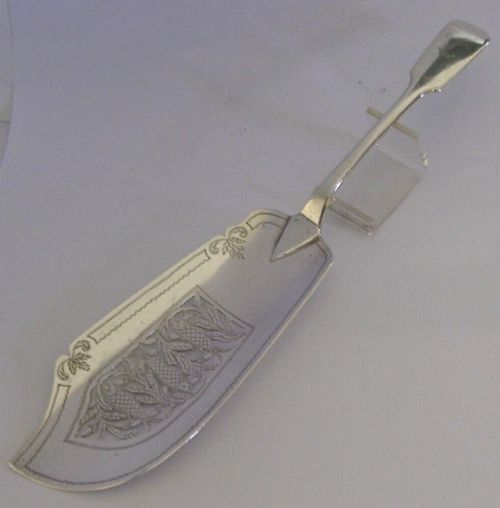
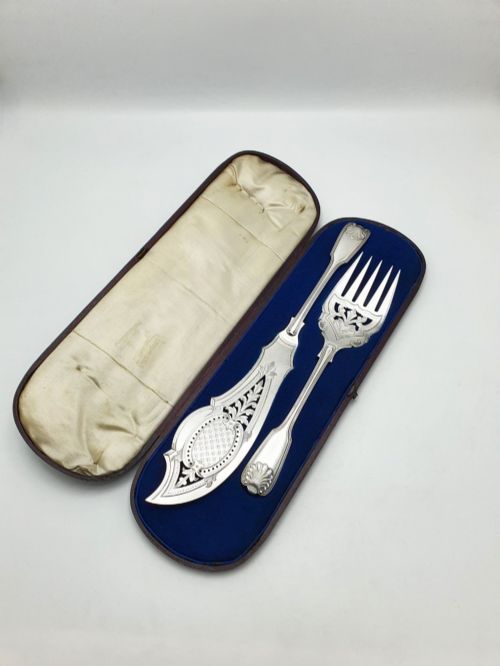
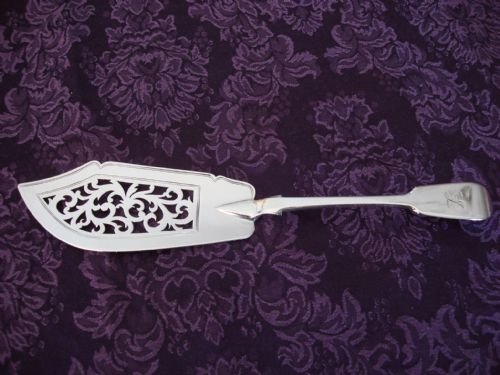
The selection on this page demonstrates the wide variety of forms produced across different decades, from George IV fiddle patterns to Jensen silver handles.
How they were made
Makers utilised solid sterling silver and silver plate for blades and trays, often embellishing the metal with hand engraving, piercing, or family crests. Handles were constructed from organic materials such as bone, mother of pearl, antler horn, and silk-lined presentation boxes.
Techniques varied from traditional silversmithing in London and Sheffield workshops to mid-century modern silversmithing methods. Blades were shaped, pierced for fish service, and mounted securely to natural material handles using traditional pinned or cemented joints.
Antique Serving Knife Retail Price Guide 2026
Typical asking prices for serving knife among the pieces listed under this phrase on Sellingantiques today, from the lower quarter to the upper quarter. They describe what is for sale here now, not the wider market.
Golf enthusiasts can serve cake with a specialised Edwardian knife shaped specifically like a golf club from nineteen-ten.
What varies in quality
Quality rests upon the weight of the silver or silver plate utilised in the blade and the crispness of any engraved or pierced decoration. Pierced fish slices with deep, deliberate hand-carving represent a higher standard of craftsmanship than simpler machine-pressed alternatives.
The choice of handle material and its preservation also define the grade of the piece, with unblemished mother of pearl, well-matched antler horn, and robust sterling silver mounts commanding greater respect among collectors.
Georg Jensen·Creswick·George Adams·Charles Boyton
The Antique Serving Knife Glossary
- Fish slice
- A wide, often pierced blade specifically shaped for lifting portions of fish cleanly from a platter. This implement forms a central part of many Victorian dining sets.
- Sterling silver
- An alloy consisting of pure silver and other metals, usually copper, to increase durability. Items bearing this designation meet specific legal fineness standards.
- Old Sheffield plate
- An early method of fusing a thin sheet of silver to a thicker copper base. This technique preceded modern electroplating.
- Fiddle pattern
- A traditional nineteenth-century flatware handle design characterised by a narrow stem that broadens into a shoulder and flares at the terminal in the shape of a fiddle.
- Silver plate
- A base metal coated with a thin layer of silver through an electroplating process. This method provided a bright finish at a lower cost than solid silver.
Antique Serving Knife: Frequently Asked Questions
What is an antique serving knife used for?
These implements were created for serving specific courses at the formal dining table, including fish, cake, fruit, and roast meats. Each design relates directly to the food it was meant to portion.
Today, they function both as decorative table settings and practical utensils for modern dinner parties.
How do I identify a Victorian fish slice?
Victorian fish slices often feature broad, heavily pierced blades decorated with engraved fish, foliage, or scrollwork. They typically bear hallmarks indicating the year of production and the silversmith's mark.
Handles from this period commonly utilise bone, ivory, antler horn, or solid silver matching the blade.
What is the difference between solid silver and silver plate?
Solid sterling silver pieces consist entirely of silver alloy throughout the metal structure, usually accompanied by official hallmarking stamps. Silver plate involves a base metal core coated with a superficial layer of silver.
Both materials appear frequently across nineteenth and twentieth-century serving cutlery.