

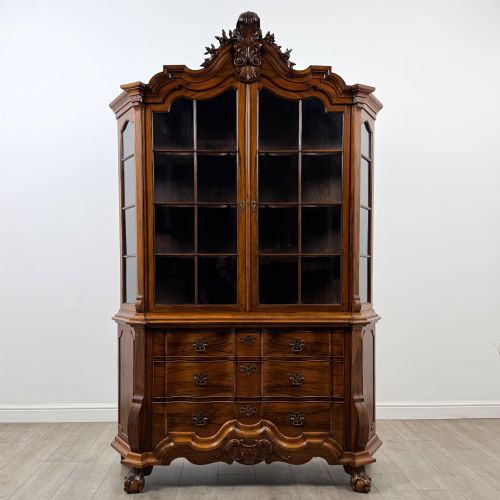
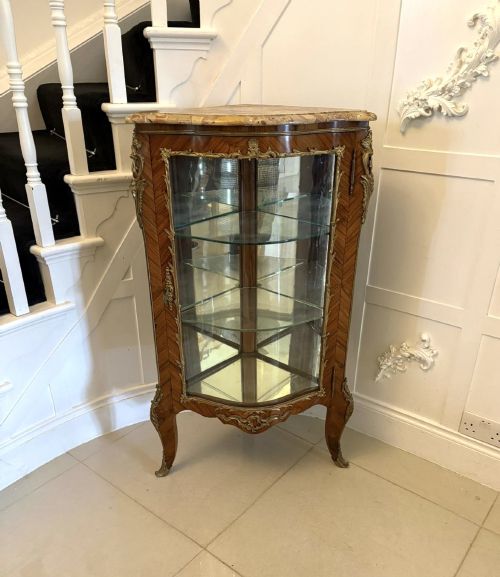
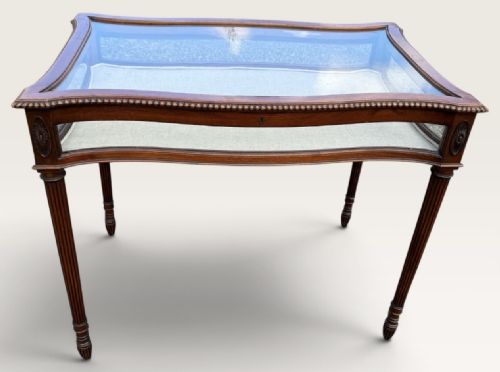
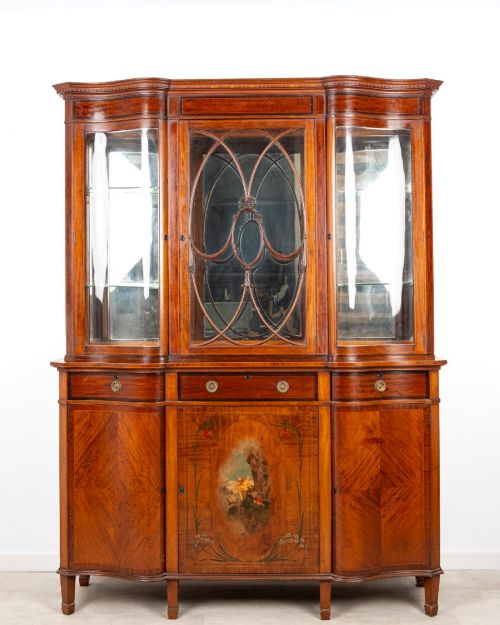

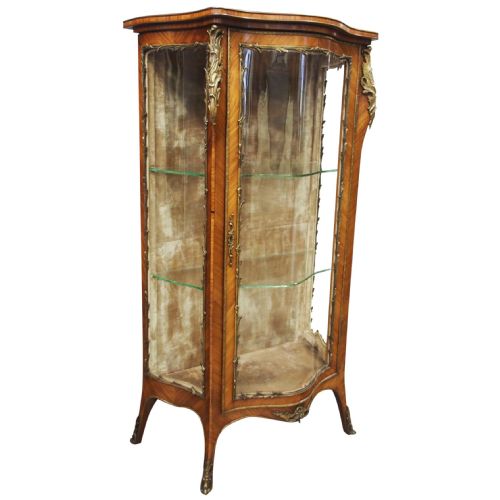


Antique Serpentine Display Case
An antique serpentine display case brings flowing French curves and glass to a room, designed to show off porcelain and silver.
Antique Serpentine Display Case
An antique serpentine display case presents a distinctive curved front with a gentle convex centre flanked by concave sides, creating fluid movement across the facade. These pieces encompass corner cabinets, freestanding vitrines, and table vitrines designed to hold treasured objects.
Most examples found on this page date from the Victorian and Edwardian eras, with a strong presence of late nineteenth century French Revival pieces. Makers utilised exotic timbers and glass panels to frame collections while keeping dust at bay.
The form ranges from tall double-height corner cupboards to low bijouterie tables with glazed tops. Each variation shares that signature undulating line which softens the rigidity of traditional rectangular furniture.
How these cabinets were constructed
Craftsmen built these cases using dense foundational timbers such as mahogany, walnut, and oak, then applied decorativeveneers of kingwood, satinwood, and rosewood. Intricate marquetry and parquetry patterns frequently adorn the surfaces alongside hand-painted Vernis Martin panels.
Gilded bronze ormolu mounts accentuate the curved contours and corners, highlighting the serpentine shaping of the woodwork. Glass panels are fitted into doors and sides to maximise visibility, often secured with brass hardware.
Antique Serpentine Display Case Retail Price Guide 2026
Typical asking prices for serpentine display case among the pieces listed under this phrase on Sellingantiques today, from the lower quarter to the upper quarter. They describe what is for sale here now, not the wider market.
Listings feature walnut, mahogany, kingwood, and satinwood, frequently paired with glass, marble tops, and cast ormolu mounts.
What separates the finest pieces
Quality rests upon the crispness of the timber matching and the subtlety of the serpentine curve. Superior examples exhibit continuous grain flow across undulating drawer fronts and cabinet doors without distortion.
The weight and chasing of the ormolu mounts also dictate grade, where hand-finished cast bronze displays sharper detail than standard factory hardware. Interior linings of fabric and the precision of the marquetry inlay further distinguish exhibition pieces from standard workshop output.
Edwards And Roberts·Thomas Justice And Sons
The Antique Serpentine Display Case Glossary
- Serpentine
- A shape featuring a convex centre curving outwards between two concave ends. This contour requires skilled carpentry to execute across wood veneers.
- Ormolu
- Gilded bronze mounts applied to furniture for decoration and edge protection. The finish provides metallic contrast to dark kingwood and walnut.
- Vitrine
- A glass-fronted cabinet designed for displaying porcelain, curiosities, and fine objects. These cases protect fragile collections while offering all-round visibility.
- Marquetry
- Decorative veneer patterns formed by fitting together thin pieces of various coloured woods. Craftsmen use this technique to create floral or geometric designs on cabinet doors.
- Vernis Martin
- A simulated Japanese lacquer technique developed in eighteenth century France and revived later. It involves multiple layers of translucent varnish over painted scenes.
- Bijouterie table
- A glass-topped display table intended for small valuables and jewellery. The glazed compartment sits at waist height for close inspection.
Antique Serpentine Display Case: Frequently Asked Questions
What is a serpentine display case?
A serpentine display case is a glazed cabinet with a wavy front edge that curves outward in the middle and inward at the sides. These pieces were built to showcase porcelain, silver, and small collections.
Cabinetmakers adopted this curved profile during the nineteenth century revival periods to add elegance to drawing rooms and reception spaces.
Where should I place a corner cabinet?
Corner cabinets fit neatly into unused room angles, turning awkward junctions into display focal points. Tall standing versions draw the eye upward and make use of vertical space.
Ensure the spot receives indirect light to protect delicate interior fabrics and contents from fading while keeping the glazed panels clear of heavy foot traffic.
How do I clean wood and ormolu?
Dust wood surfaces regularly with a soft, dry cloth and feed the timber occasionally with appropriate wax. Avoid silicone sprays which build up and dull the polish.
Clean ormolu mounts very carefully with a dry brush to remove dust from the crevices, avoiding metal polishes that can strip the original gilding.
How can I tell Victorian from Edwardian?
Victorian pieces often feature darker timbers like walnut and heavy ormolu mounts with deep French Revival styling. Marquetry tends to be elaborate and dense.
Edwardian cabinets frequently employ lighter satinwood and mahogany with more restrained inlay work, reflecting a shift towards brighter domestic interiors.