
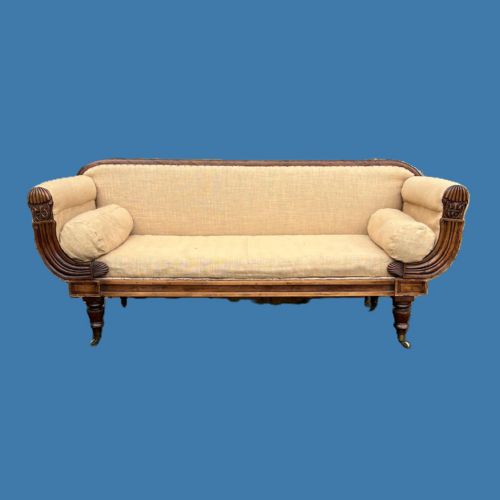


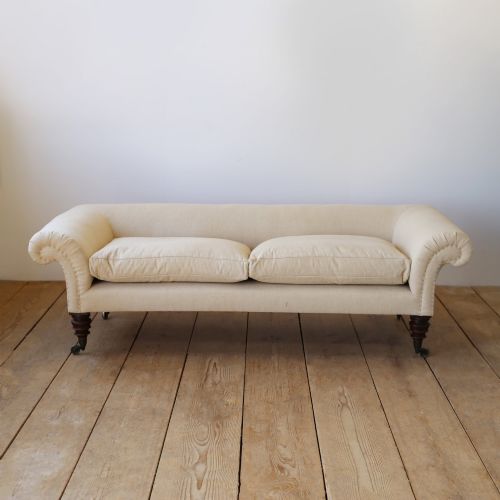
Antique Scroll Arm Daybed
An antique scroll arm daybed offers elegant reclining, merging classical forms with nineteenth-century comfort.
Antique Scroll Arm Daybed
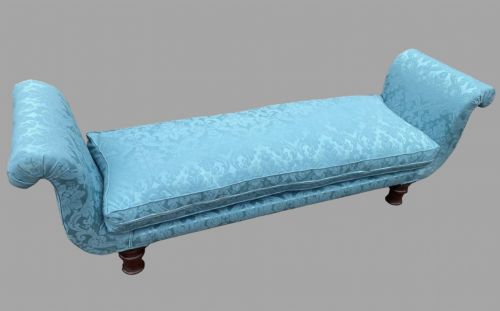
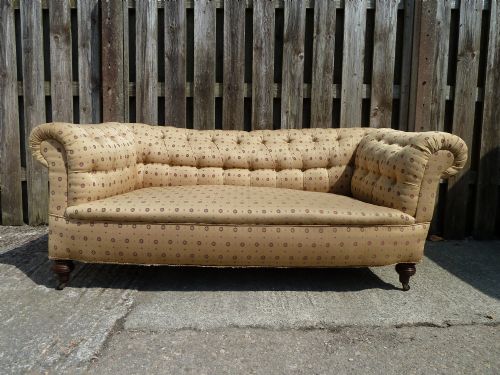
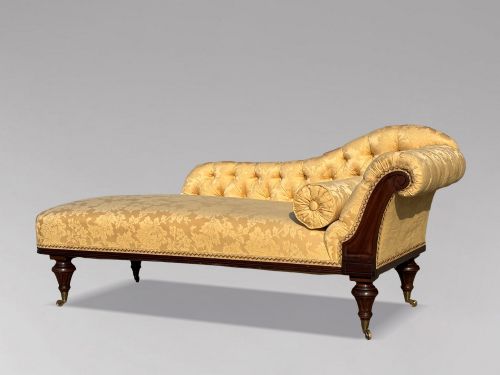
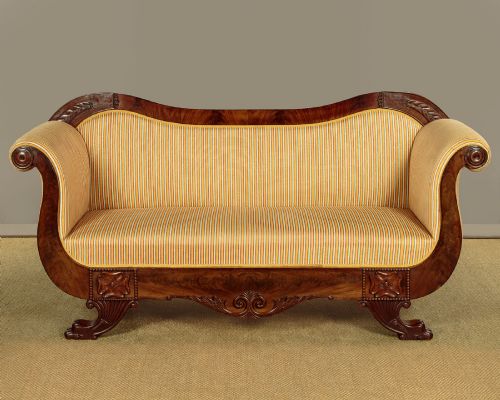
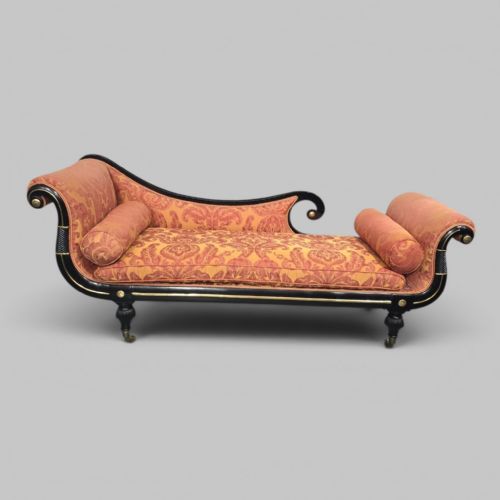
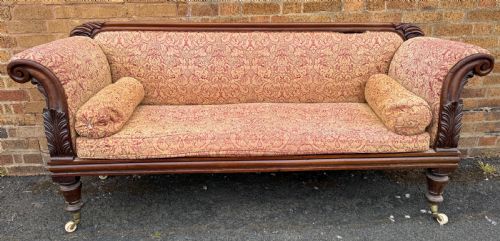
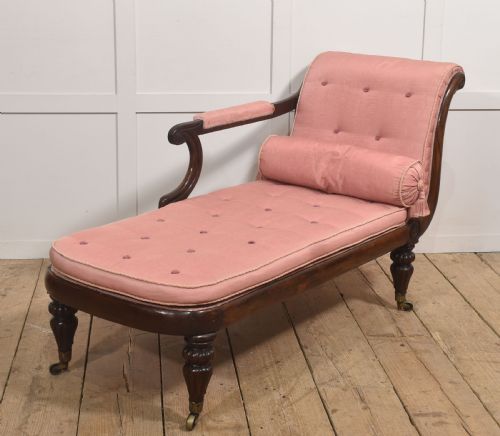
When seeking an antique scroll arm daybed, buyers encounter nineteenth-century seating forms that double as day beds and couches. These pieces span Regency, William IV, and Victorian periods, manifesting as scroll end sofas, double ended settees, and chaise longues. Regional variations include Irish examples alongside English country house pieces and French lit bateau designs.
The typical forms range from single-ended scroll couches to grand four-seater settees and miniature variants. Makers working in the manner of Gillows produced substantial mahogany frames, while simpler country house models utilised various native timbers. These day beds and chaises served as sophisticated lounging furniture in drawing rooms and boudoirs.
Materials and construction methods
Frames rely heavily on solid mahogany and rosewood, alongside ebonised wood and simulated rosewood finishes. Cabinetmakers carved structural woodwork by hand, creating sweeping scroll ends and decorative rails. Brass details and castors often complete the lower framework of finer pieces.
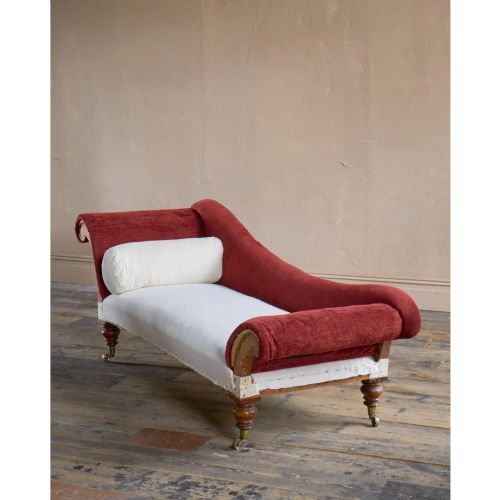
Upholstery relies on traditional fabrics including damask, velvet, and various period-appropriate textiles. Webbing and stuffing support the sprung or padded seats, enclosed beneath decorative outer covers secured with careful stitching and trim.
The inventory spans Regency, William IV, and Victorian periods, including miniature chaise longues alongside full-size settees.
Factors of quality and craftsmanship
Superior examples exhibit crisp, deep carving along the show wood frames, particularly on scroll ends and feet. The choice of timber dictates the baseline, with finely figured mahogany and rosewood sitting above simpler ebonised or softwood carcases.
Proportion and symmetry separate standard output from pieces associated with premier workshops. The integration of the scroll arm into the main rail determines the visual harmony of the finished day bed or sofa.
Holland and Sons·Willian Trotter·Gillows
The Antique Scroll Arm Daybed Glossary
- Scroll end
- A sweeping, curved wooden terminal on a sofa or day bed frame. This distinctive feature defines the silhouette of Regency and William IV seating.
- Chaise longue
- An upholstered long chair designed for reclining. It combines the backrest of a sofa with the seat length of a bed.
- Lit bateau
- A French bed style featuring parallel high head and foot boards resembling a boat. Nineteenth-century variants often double as day beds.
- Simulated rosewood
- Painted or stained timber mimicking the grain and colour of genuine rosewood. Cabinetmakers utilised this technique on alternative woods to achieve an expensive look economically.
- Double ended settee
- A sofa with matching raised ends allowing a person to recline at either side. These pieces often feature symmetrical scroll arms.
Antique Scroll Arm Daybed: Frequently Asked Questions
What is an antique scroll arm daybed used for?
These pieces functioned historically as sophisticated daytime resting places in drawing rooms and boudoirs. They allowed occupants to recline without retiring to a full bedroom.
Today, they serve as statement seating in studies, bedrooms, and living spaces, combining decorative presence with practical lounging.
How do I identify a Regency scroll end sofa?
Regency pieces typically feature classical architectural lines, scroll-carved wooden terminals, and rich timbers such as mahogany or rosewood. Cabinetmakers often incorporated brass inlay or sabre legs during this era.
Proportions remain balanced and restraint governs the ornamentation, setting them apart from later, heavier Victorian designs.
How should I care for antique upholstery fabrics?
Protect delicate textiles like silk damask and velvet from direct sunlight to prevent fading and fibre degradation. Regular gentle vacuuming with a low-suction attachment removes dust without abrading the weave.
Professional specialist cleaning remains essential for addressing deeper marks on historic fabric coverings.