




Antique Scottish Sideboard Table
An antique scottish sideboard table brings solid regional timber and purposeful proportion into a dining room or hall.
Antique Scottish Sideboard Table
When you search for an antique scottish sideboard table, you are looking at substantial pieces of dining room furniture designed for serving and storage. The examples on this page span several distinct periods including Georgian, Regency, and the nineteenth century.
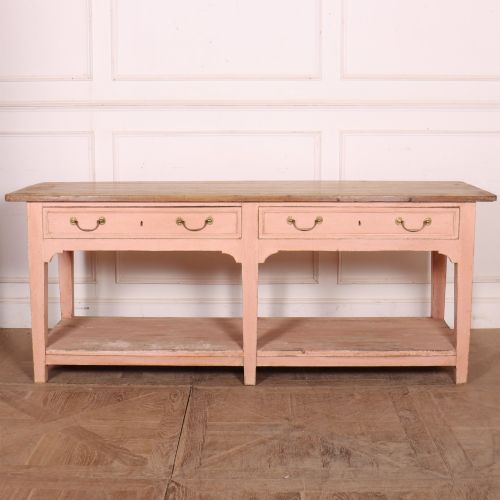
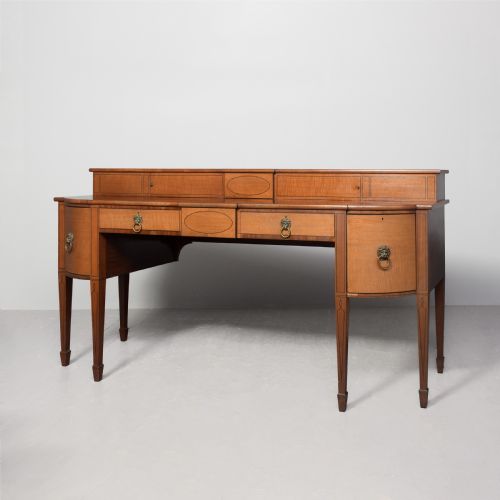
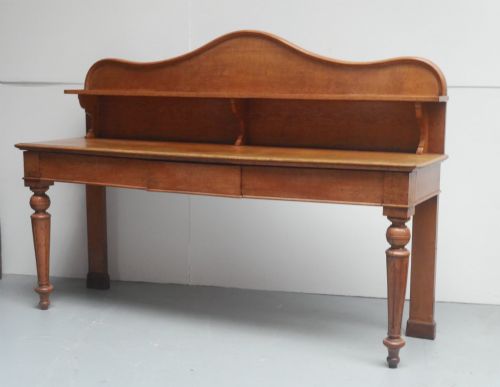
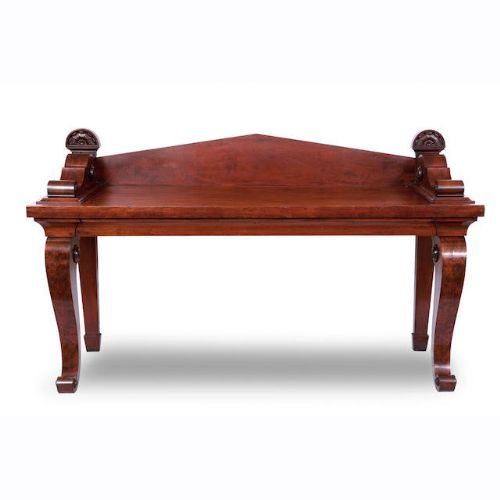
You are most likely to meet large mahogany stage-back sideboards, oak serving tables, and rustic farmhouse dresser bases. These forms reflect both formal dining traditions and country house practicalities across Scotland.
The selection ranges from grand flame mahogany pieces with boxwood and satinwood inlay to simpler pine and painted timber country furniture. Each object carries the specific regional design traits of its maker and period.
Materials and construction methods
Makers relied heavily on solid mahogany and flame mahogany for formal items, often enhancing the surfaces with delicate boxwood and satinwood inlay. Oak and pine served as the primary timbers for sturdier country pieces and dresser bases.
Brass hardware provided functional handles and mounts, while skilled joinery ensured that large serving tables and stage-back sideboards remained stable under heavy use. Secondary timbers like pine were frequently employed for internal drawer construction.
Antique Scottish Sideboard Table Retail Price Guide 2026
Typical asking prices for scottish sideboard table among the pieces listed under this phrase on Sellingantiques today, from the lower quarter to the upper quarter. They describe what is for sale here now, not the wider market.
Listings feature items spanning the eighteenth century through to nineteen-twenty, incorporating mahogany, oak, pine, and rosewood alongside brass fittings.
Judging quality in regional furniture
Quality rests primarily in the selection of timber, such as deeply figured flame mahogany versus plain or secondary woods. The crispness of inlay work and the retention of original brass fittings also separate standard items from superior examples.
Proportion and scale dictate the success of the piece, with larger stage-backs and serving tables requiring balanced design to avoid heaviness. Maker attribution, such as the output associated with Whytock and Reid, elevates the standing of a piece within the market.
Whytock & Reid·James Mein of Kelso
The Antique Scottish Sideboard Table Glossary
- Stage-back
- A raised rear superstructure on a sideboard providing shelves or small compartments for display. This tiered arrangement is particularly characteristic of finer Scottish dining furniture.
- Serving table
- A large rectangular table designed for holding food and dishes before service, lacking the drawers or cupboards typical of a full sideboard. They often feature robust timber legs and restrained carving.
- Dresser base
- A lower cabinet featuring drawers and sometimes an open potboard beneath, used originally in kitchens and dairies. These sturdy pieces are typically fashioned from oak or pine.
- Flame mahogany
- Timber cut from the fork of the mahogany tree to reveal a fiery, undulating grain pattern. Cabinet makers used these veneers on prominent drawer fronts and tabletops for maximum visual impact.
- Bowfront
- A curved convex front profile that softens the rectangular geometry of a sideboard. This curved shaping requires advanced carpentry skills to fit drawers and framing precisely.
Antique Scottish Sideboard Table: Frequently Asked Questions
How do serving tables differ from sideboards?
Serving tables are essentially large tables built specifically for dishing up meals before service, generally lacking the enclosed cupboards found on standard sideboards. They prioritize surface area and structural leg support.
In Scottish country and formal houses, they fulfilled the central dining room duties.
What woods were used in Scottish pieces?
Mahogany and flame mahogany dominate the formal items, often accented with satinwood and boxwood inlay. Oak, pine, and painted timber appear frequently in the regional farmhouse and dairy pieces.
Brass hardware provides the primary metal detailing across these different material groups.
How do I identify a Georgian piece?
Georgian pieces typically display restrained classical proportions, premium mahogany construction, and refined decorative details like stringing or inlay. They date from the eighteenth or early nineteenth centuries.
Makers of this era focused heavily on architectural balance and quality timber selection.