


Antique School Print
These antique school print examples span botanical studies, anatomical charts and college scenes, bringing educational history and traditional draughtsmanship into domestic interiors.
Antique School Print
An antique school print covers a wide array of educational and institutional imagery, ranging from botanical studies and architectural drawings to anatomical charts and college scenes. These works capture the visual methods of instruction and the architectural records of historic foundations from past centuries.
Buyers encountering this selection will find examples originating across the nineteenth and twentieth centuries, executed in watercolours, engravings and lithographic series. The assortment includes specialised institutional commissions alongside regional paintings and architectural drafts tied to specific schools.
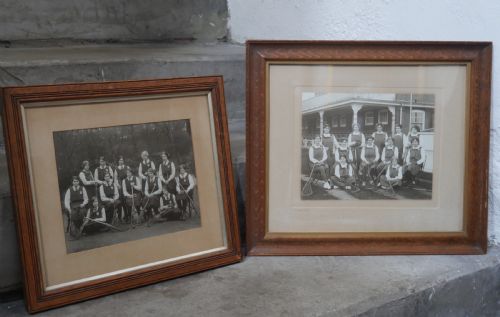
The material record includes works associated with specific educational contexts, such as botanical watercolours from English schools and institutional charts by recognised cartographic publishers. These pieces reflect the pedagogical tools and artistic exercises characteristic of their respective periods.
Materials and construction methods
The production of these works relies fundamentally upon paper supports combined with traditional printing inks, watercolours and gouache. Engravings and lithographs provide the mechanical basis for instructional charts and published plates, while original watercolours and architectural drawings employ hand-applied pigments.
Framing materials observed in the listings incorporate wood, glass and gold leaf or gilt finishes. These protective elements often reflect the period of framing or subsequent conservation choices designed to preserve fragile paper and canvas surfaces.
An architectural drawing records the precise hand of a seventeen-year-old draftsman at the South Kensington School.
Factors influencing quality and execution
Quality in these works is determined by the precision of the draughtsmanship, the clarity of the print impression and the preservation of the original pigments. Finer examples display meticulous hand-colouring or sharp tonal gradations in mezzotints and engravings.
The significance of the subject matter and the documentation associated with the piece, such as identified artists, publishers or institutional provenances, distinguish standard decorative plates from works of archival or artistic importance.
James Watson·Sir Joshua Reynolds·Thomas Gainsborough·W & A K Johnston·Tom M. Hemy·William Marlow·Henri Joseph Harpignies
The Antique School Print Glossary
- Mezzotint
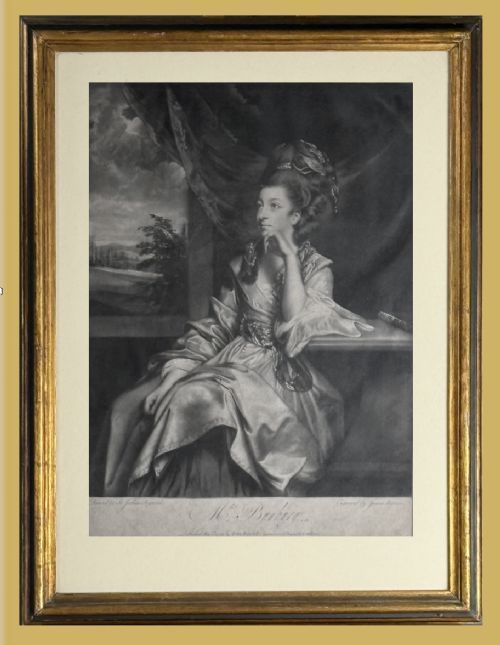
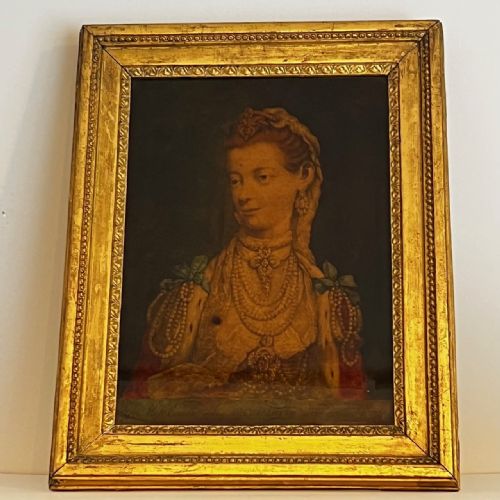
- A printmaking process of the intaglio family where the plate is roughened to produce dark tones and scraped to create light areas. This technique allows for subtle tonal variations suited to portraiture.
- Gouache
- An opaque water-soluble paint consisting of pigment, water and a binding agent such as gum arabic. It dries to a matte finish and provides dense colour coverage.
- Anatomical chart
- A scientific diagram utilised for educational instruction in human anatomy and physiology. These large-format plates were standard fixtures in nineteenth and twentieth-century classrooms.
- Engraving
- A printmaking technique where an image is incised directly into a metal plate with a burin. The resulting lines hold ink for transfer under pressure onto paper.
- Reverse glass print
- An image painted or transferred directly onto the back of a glass panel to be viewed from the front. This method imparts a glossy finish and protects the pigment from atmospheric degradation.
Antique School Print: Frequently Asked Questions
What subjects do these prints cover?
The selection includes botanical studies, anatomical charts, architectural drawings and collegiate scenes from various historic periods.
These subjects reflect nineteenth and twentieth-century educational curricula, institutional records and traditional artistic instruction.
How were anatomical charts utilized?
Anatomical charts served as visual aids in classrooms to teach students human biology and physiology through detailed plate illustrations.
Publishers such as W & A K Johnston produced these serialized diagrams for institutional study.
How should I frame and display paper works?
Paper works require protection behind glass, ideally with UV-filtering properties, to prevent fading from light exposure over time.
Keeping them away from direct sunlight and damp environments ensures the longevity of watercolours, inks and gouache.
How do I identify the age of a print?
Dating relies on paper characteristics, printing techniques, publisher stamps and stylistic markers associated with specific periods like the Victorian era or Georgian period.
Inscriptions detailing institutions, dates or artists also provide chronological context for individual pieces.