

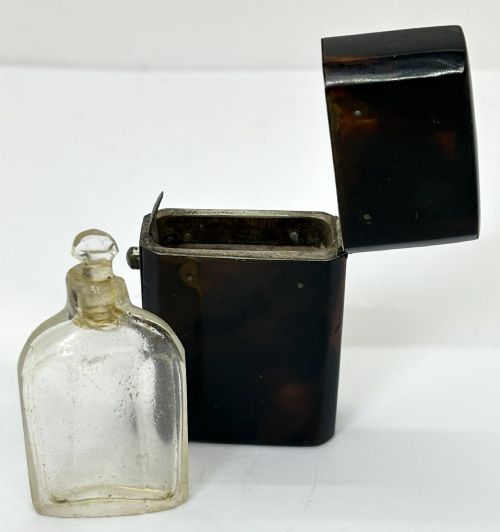


Antique Scent Bottle Case
An antique scent bottle case houses precious glass and silver in miniature, offering portable luxury from Georgian, Victorian, and Edwardian dressing tables.
Antique Scent Bottle Case
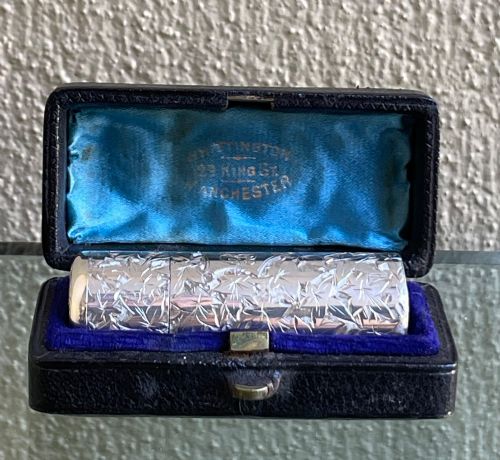
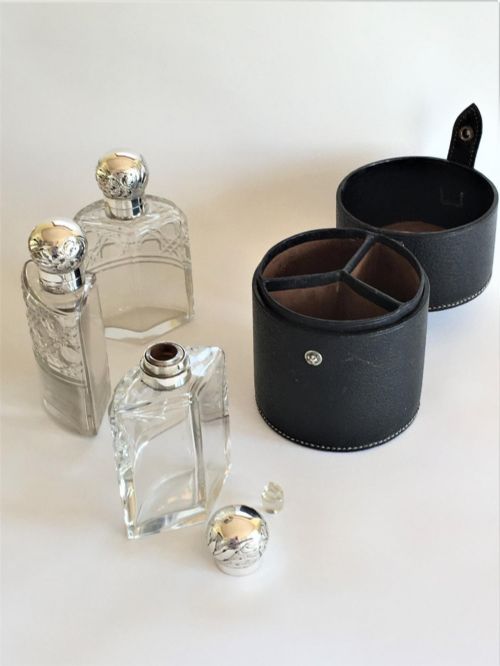
An antique scent bottle case encompasses small caskets, fitted wooden boxes holding multiple bottles, leather-covered caskets, and travelling holders. These pieces emerge predominantly from the Georgian, Victorian, and Edwardian eras, alongside French nineteenth-century workshops.
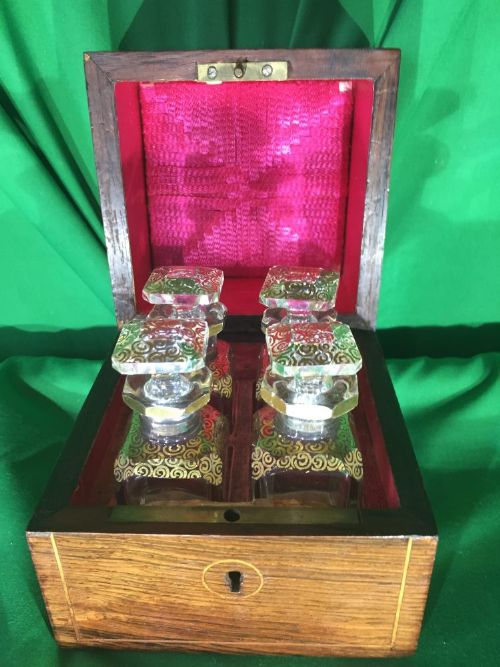
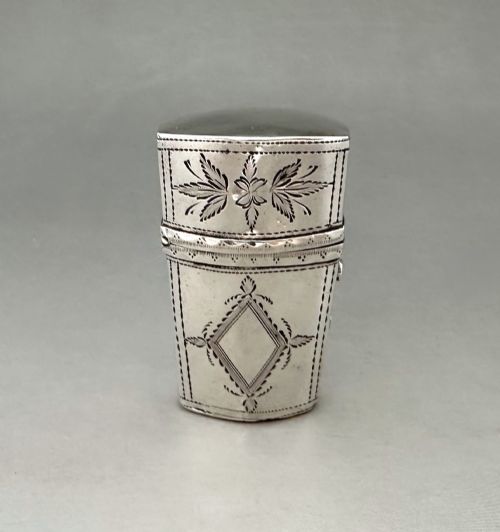
Buyers most frequently encounter rosewood or coromandel boxes fitted with sets of glass bottles, as well as standalone silver-cased or tortoiseshell holders. Formations range from simple cylindrical etuis to complex combination vanity boxes and miniature caskets.
Origins span English provincial silversmiths and French makers producing elaborate gilt and enamel pieces. Each survival reflects the changing domestic and travelling habits of past centuries.
Materials and construction
Workshops utilised dense exotic timbers like rosewood and coromandel, lining the interiors with silk and velvet to cradle fragile glass. Exteriors frequently combined sterling silver, brass mounts, and occasionally tortoiseshell or carved fruitwood.
Glass components involved heavy cutting, blue overlay, or opaline finishes, while metal elements utilised sterling silver, silver gilt, and vermeil. Etuis and caskets incorporated fine hinges, clasps, and engine-turned guilloche decoration.
Several survival cases still retain microscopic funnels once used to decant precious oils without losing a single drop.
Standards of craftsmanship
Quality rests in the precision of the interior fitting and the integrity of the housing material. Finer examples maintain complete sets of matching glass bottles within purpose-built velvet or silk channels.
The artistry of the exterior metalwork or woodwork dictates distinction, separating standard production pieces from those bearing detailed silver embossing, specialised Tunbridge Ware, or intricate engine-turning.
Horton & Allday
The Antique Scent Bottle Case Glossary
- Etui
- A small ornamental case used for holding needles, tweezers, bodkins, or small scent bottles. These portable containers reflect refined personal grooming habits of the Georgian period.
- Guilloche
- A decorative engraving technique producing precise, intricate repetitive patterns upon metal surfaces. This method appears frequently on nineteenth-century silver gilt boxes.
- Tantalus
- A locking security box displaying decanters or bottles while preventing unauthorized access without a key. In smaller formats, this describes combination scent and jewellery caskets.
- Opaline glass
- An opaque, slightly translucent glass developed in various pastel shades during the nineteenth century. It provides a striking contrast against silver mounts.
- Tunbridge Ware
- Woodworking craftsmanship characterised by minuscule mosaic tiles forming pictorial or geometric surface decoration. Such technique adorns specific nineteenth-century scent cases.
Antique Scent Bottle Case: Frequently Asked Questions
What fits inside an antique scent bottle case?
These cases hold specially shaped glass bottles, cologne flasks, or small vanity jars, often accompanied by matching stoppers. Some configurations also incorporate small tools such as tweezers or bodkins.
Interiors typically feature custom compartments lined with silk or velvet to secure the fragile glass components during travel.
How do I distinguish Georgian from Victorian cases?
Georgian examples often favour natural materials like tortoiseshell and straightforward etui designs with modest silver mounts. Victorian pieces frequently expand into multi-bottle rosewood or coromandel caskets with heavier sterling silver hardware.
Stylistic shifts also point towards the later Edwardian era, which introduced lighter travel sets and alternative silver forms.
Were these cases meant for travel?
Many examples served specifically as travelling sets, designed to protect fragile perfume containers in luggage or carriages. Robust leather dome-topped caskets and fitted wooden boxes were built for this portable purpose.
Other more delicate variants remained stationary on dressing tables as part of a larger vanity set.
How do I care for velvet and silk interiors?
Protect delicate fabric linings by keeping them away from direct sunlight and excessive humidity. Gentle dusting with a soft brush helps maintain the material without causing disruption.
Avoid liquid cleaners entirely, as older textiles degrade rapidly when exposed to moisture.