
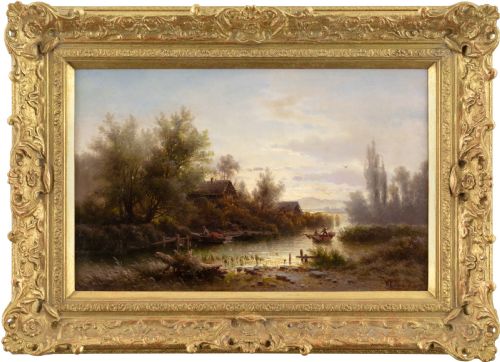
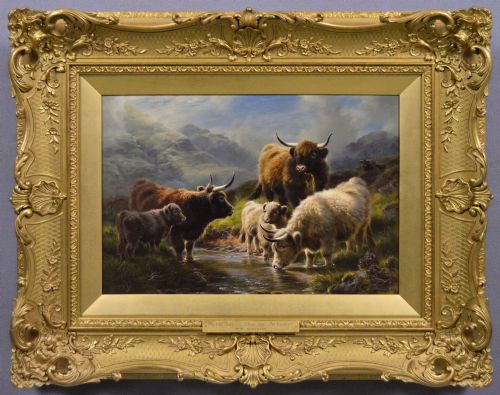
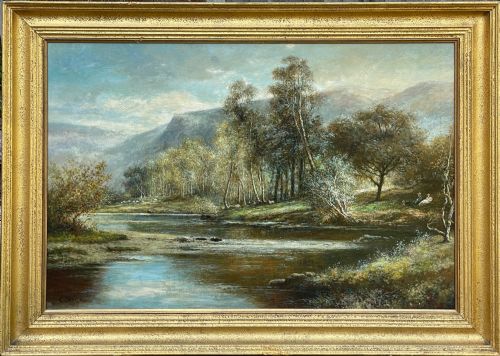
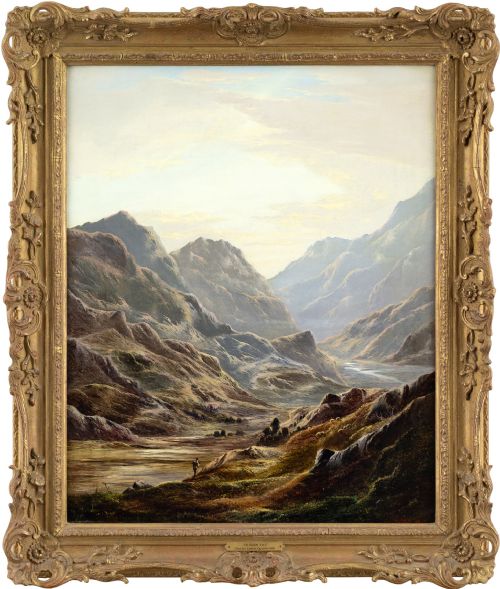
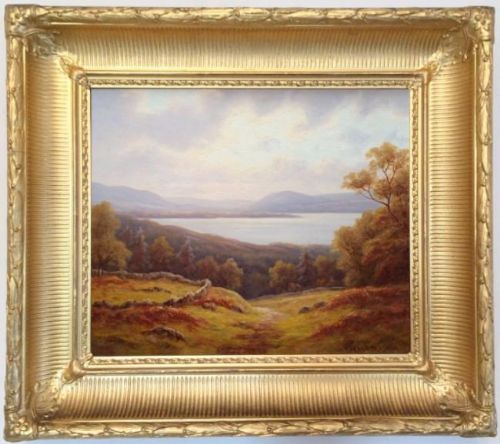


Antique Scenery Canvas Painting
These antique scenery canvas painting works bring nineteenth-century rivers, mountains, and woodlands straight to your wall.
Antique Scenery Canvas Painting
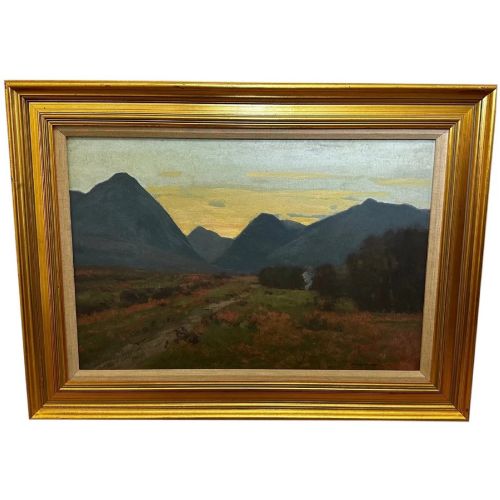
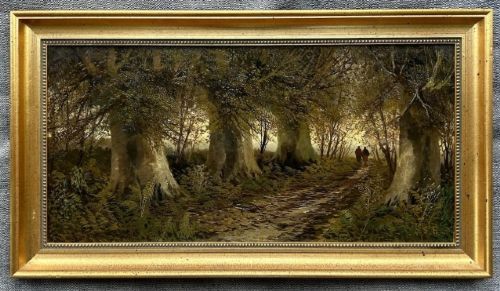
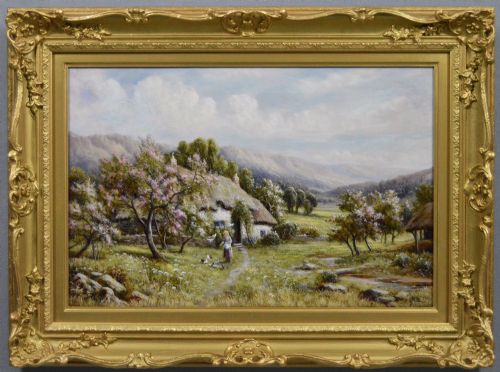
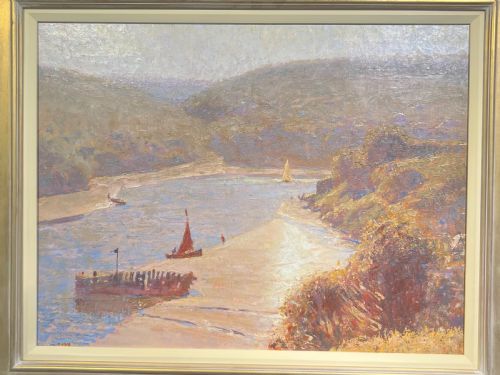
An antique scenery canvas painting captures rural vistas, highland cattle, and misty lakes through the eyes of Victorian and Edwardian artists. These works range from intimate studies of Welsh valleys to expansive views of Scottish lochs painted during the nineteenth and early twentieth centuries.
Most pieces encountered here belong to the Victorian period, British Impressionism, and Victorian Romanticism. They typically depict pastoral scenes, mountain streams, and forest pathways rendered in oils on woven fabric stretched over wooden frames.
How They Were Made
Painters applied oil paint directly onto stretched canvas, often building texture with thick impasto or smoothing thin glazes to capture atmospheric light. The resulting surface sits within timber frames, sometimes enriched with moulded gesso detailing.
The underlying support relies on wooden stretchers that hold the canvas taut, paired with heavy giltwood frames designed to project the depth of the painted landscape.
Listings span the nineteenth and twentieth centuries, featuring British Impressionism, Victorian Romanticism, and Scottish Impressionism across oil on canvas works.
What Varies in Quality
Quality rests upon the artist's command of light, atmosphere, and natural proportions within the landscape. Finer works convey a convincing sense of weather and depth, whereas lesser examples rely on repetitive formulas for foliage and skies.
The preservation of the paint surface and the originality of the matching frame heavily influence the standing of each piece. Intact brushwork without excessive retouching elevates the character of the canvas.
George Houston·Thomas W Lascelles·Robert John Hammond·Albert Rieger·William Watson Jnr·Charles Leslie·Everett Watson Mellor·John Grenville Fennell·Owen Bowen·Sidney Richard Percy·John Wright Oakes·Karl Herrle·John Falconar Slater·Stephen Enoch Hogley·Alfred de Breanski·Alexis De Leeuw·Frederick Golden Short·Ernest Higgins Rigg·Jack R Mould·Arthur Walker Redgate·James Poole·Thomas E Francis·Fred Merriman·Percy Lancaster·Hubert Sattler
The Antique Scenery Canvas Painting Glossary
- Impasto
- Paint applied thickly to a canvas, standing out in relief from the surface. This technique adds tactile depth to highlights on water or rock.
- Giltwood
- Timber carved and coated with gold leaf or gilt finish. Frames of this material frequently accompany nineteenth-century fine art.
- Gesso
- A plaster-like mixture applied to wooden frames before gilding. It provides a smooth base for intricate moulded ornament.
- Stretcher
- The wooden frame that holds a canvas under tension. Original stretchers help confirm the age of an antique painting.
- Realism
- An artistic movement focusing on everyday scenes painted without idealisation. Many nineteenth-century landscape works reflect this direct approach to nature.
Antique Scenery Canvas Painting: Frequently Asked Questions
Should these paintings be kept out of direct sunlight?
Strong sunlight fades oil pigments and dries out both the canvas and the wooden stretcher behind it.
Position the artwork away from south-facing windows and keep it clear of active radiators or damp walls.
How can I tell a Victorian landscape from a later one?
Victorian works often feature dramatic Romantic lighting or precise Realism, focusing on narrative details like figures or cattle.
Later Edwardian and early twentieth-century pieces lean towards looser Impressionist brushwork and softer tonal palettes.
Are original frames important for these paintings?
Original giltwood frames complete the historical context of the artwork and suit the proportions of the canvas.
Matched frames from the same period maintain the integrity and visual balance of the piece on your wall.