

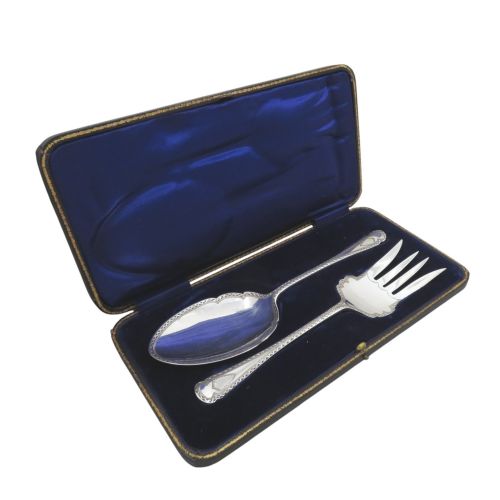


Antique Salad Servers
These antique salad servers bring proper craftsmanship to the table, combining silver, glass and horn for everyday use or display.
Antique Salad Servers
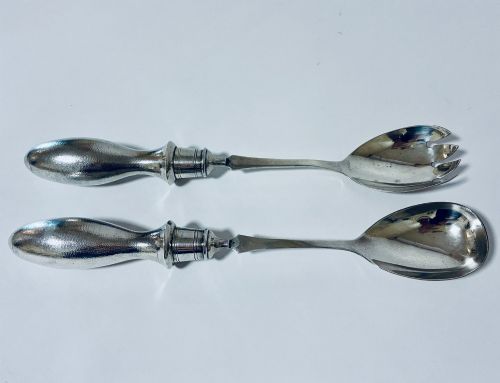
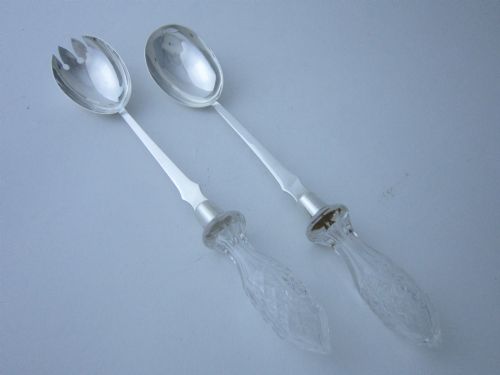
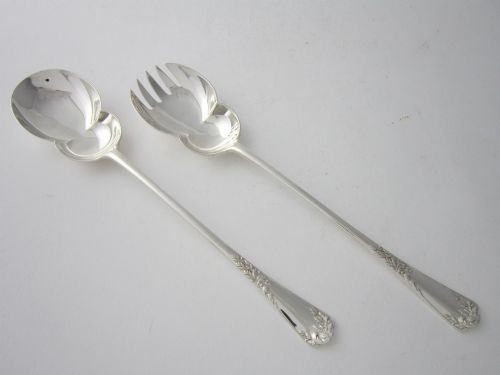
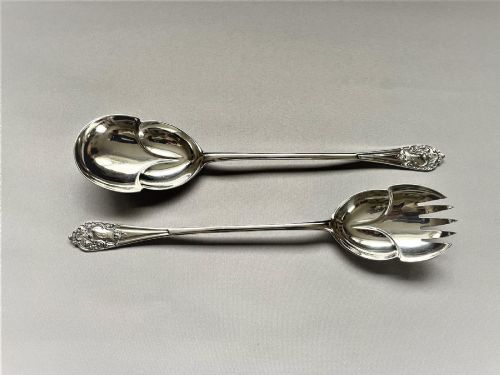
When you search for antique salad servers, you encounter paired serving implements designed specifically for tossing and portioning greens, typically comprising a large spoon and a matching fork. The material combinations range from solid sterling silver and silver plate to pairs incorporating carved horn, polished oak or cut crystal handles.
The examples most commonly met on this page span the Victorian, Edwardian and George III periods, alongside later Arts and Crafts and Art Deco pieces. Makers often produced them as standalone cased sets or paired them directly with matching stoneware and majolica salad bowls.
Materials and Construction
Silversmiths utilised sterling silver and silver plate for the bowls and tines of the implements, often hammering, piercing or chasing the metal with traditional patterns like Old English or Ribbon and Reed. Handles frequently incorporated organic materials such as antler horn, ebony or polished oak, secured with pins.
Makers also combined cut crystal and glass with silver mounts, or paired ceramic bodies with metal utensils, requiring precise joinery to ensure the balanced weight necessary for practical service.
Antique Salad Servers Retail Price Guide 2026
Typical asking prices for salad servers among the pieces listed under this phrase on Sellingantiques today, from the lower quarter to the upper quarter. They describe what is for sale here now, not the wider market.
Listings incorporate sterling silver, silver plate, cut crystal, stoneware, oak, velvet, leatherette and ceramic across multiple eras.
Distinctions in Quality
The distinction between standard utensils and superior examples rests upon gauge and balance, where heavier silver content and substantial handles provide a reassuring weight in the hand. Master silversmiths applied finer chasing, crisper crests and more deliberate piercing to the metal bowls.
The integration of materials also defines the grade of the piece, as tightly fitted horn, unblemished crystal and fully marked sterling components indicate superior workshop output compared to simpler plated wares.
Georg Jensen·Doulton Lambeth·Frank Butler·Wilkes Booth·Daniel and Arter
The Antique Salad Servers Glossary
- Sterling silver
- A silver alloy containing 92.5 percent pure silver by mass, frequently hallmarked on these utensils to indicate standard purity and origin.
- Silver plate
- A layer of silver applied to a base metal core, common in nineteenth-century serving sets.
- Rat tail
- A strengthening ridge running down the back of a spoon bowl, seen on early serving pieces.
- Majolica
- A type of colourful glazed earthenware often used for the bowls that accompanied these servers.
- Serving tongs
- A hinged utensil used for grasping food, occasionally found among the broader serving cutlery groups.
Antique Salad Servers: Frequently Asked Questions
How were antique salad servers used?
These implements served the dining table during formal meals, specifically for mixing and distributing leaf salads from large ceramic, wooden or crystal bowls.
The paired fork and spoon allowed guests or hosts to lift greens cleanly without damaging the tender leaves or scratching the accompanying bowl.
How do I identify an Edwardian set?
Edwardian serving pieces typically bear hallmarks dating from 1901 to 1910, often displaying lighter, more refined Arts and Crafts influences or delicate floral piercing.
They frequently appear in fitted leatherette cases lined with velvet, reflecting the period's preference for presentation gift sets.
Why do some sets include bowls?
Many nineteenth and early twentieth-century makers produced matched table services where the servers shared materials with the central vessel.
Oak, cut crystal, majolica and Doulton Lambeth stoneware bowls were frequently paired directly with matching silver or plated utensils at the point of manufacture.