
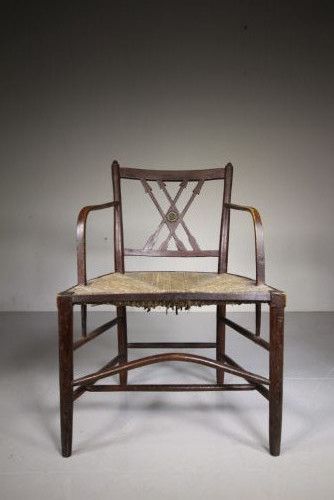

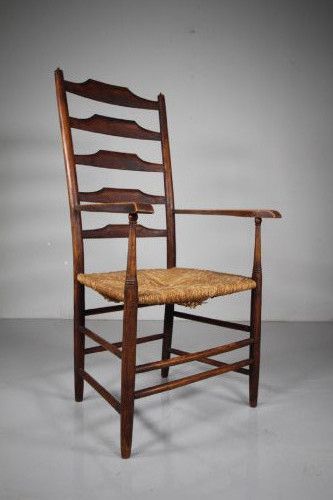
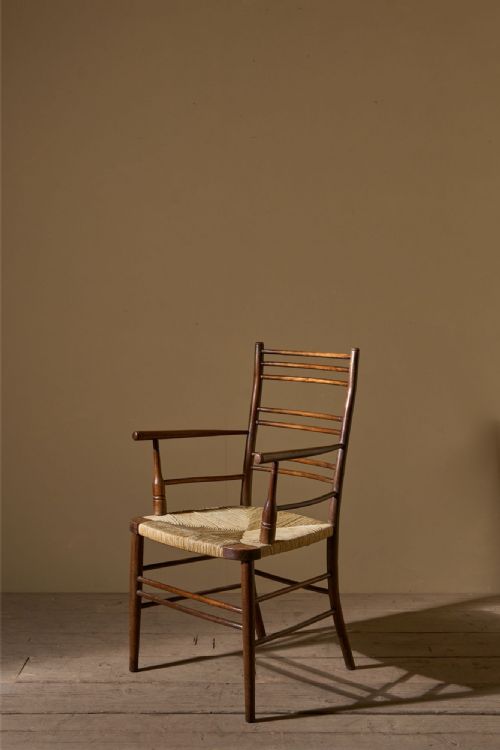
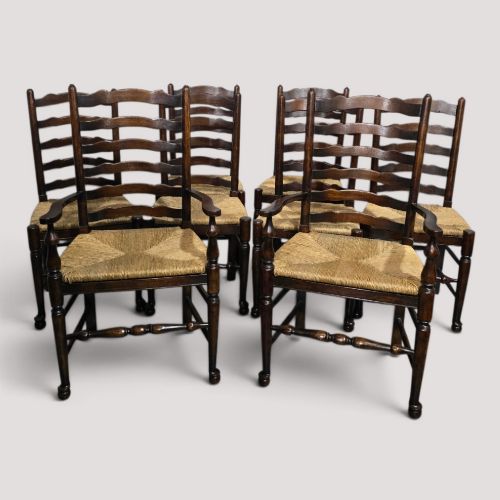
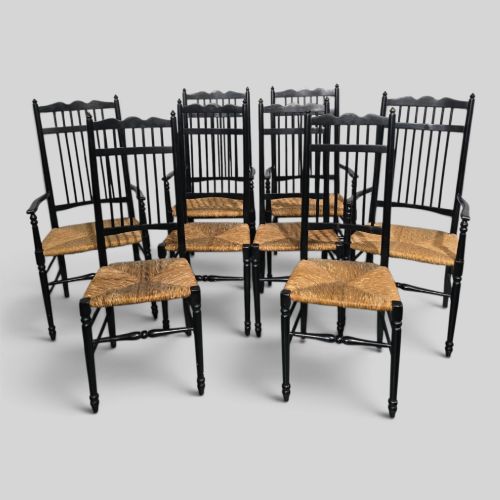
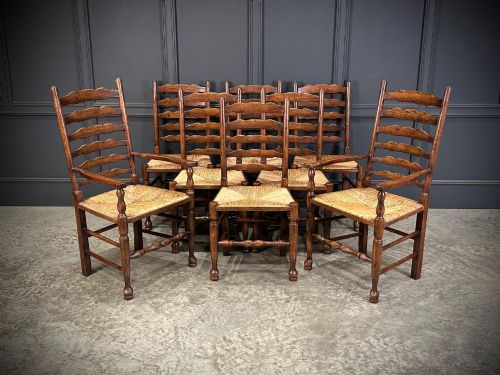
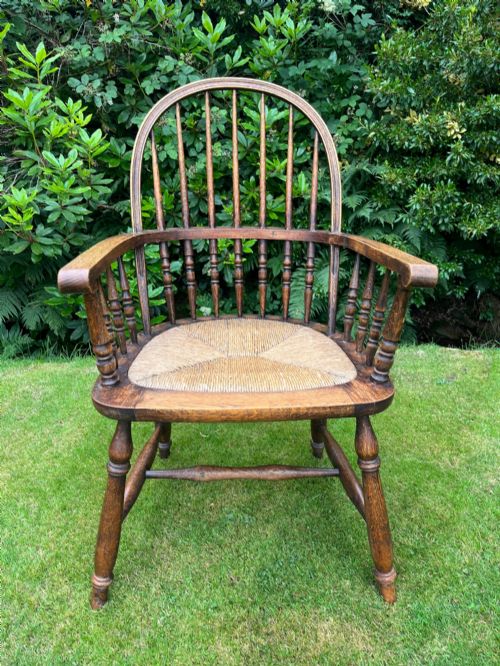
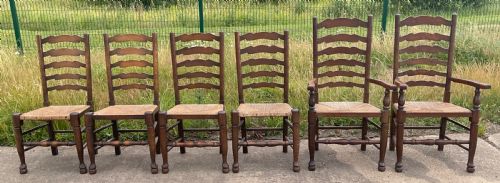


Antique Rush Seated Carvers
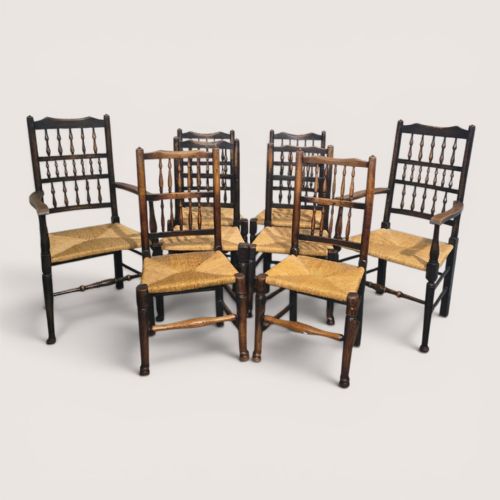
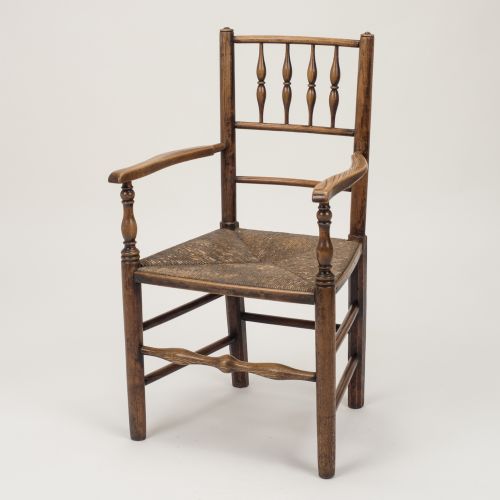
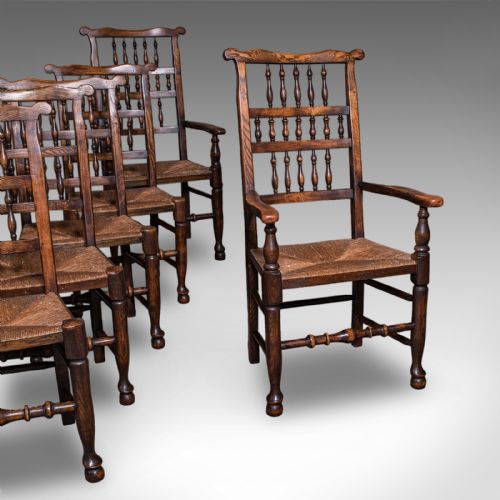
These antique rush seated carvers bring vernacular regional character and woven texture into a room, offering sturdy elbow support and traditional country form.
Antique Rush Seated Carvers
Antique rush seated carvers encompass sturdy vernacular armchairs and dining seating originating from regional English, French, and Scottish traditions. These seating pieces typically feature woven rush pads combined with timber frames built for daily domestic use.
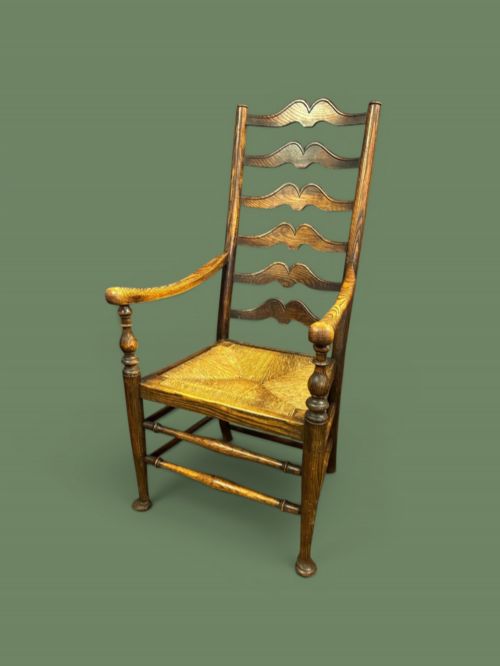
Buyers browsing this selection encounter ladder-backs, spindle-backs, and low armchairs spanning the Georgian era through the Arts and Crafts movement and the early twentieth century. These domestic forms range from simple farmhouse kitchen chairs to architect-designed studio seating.
What varies in quality
Quality rests upon the integrity of the timber frame, the tightness of the original joinery, and the skill involved in the rush weaving. Well-preserved frames retain their original turning profiles without excessive wear or replacement components.
Provenance and maker attribution elevate certain pieces, distinguishing standard regional workshop production from documented pieces associated with prominent design firms or known vernacular makers.
Listings feature oak, ash, elm, beech, and fruitwood frames alongside natural rush seating spanning the Georgian period to the 1930s.
Philip Clissett·Morris & Co·Liberty & Co·E W Godwin·Dicon Nance
The Antique Rush Seated Carvers Glossary
- Carver
- An armchair designed with elbow rests, traditionally used at the head of a dining table or as a fireside seat. These pieces match or complement sets of smaller side chairs.
- Rush
- The dried stems of marsh plants woven tightly over a frame to create a resilient seating surface. Natural rush provides a textured, flexible pad that supports the sitter.
- Ladder-back
- A chair back construction featuring horizontal arched slats or rails stacked between upright posts. This traditional form appears widely in English and French regional country seating.
- Spindle-back
- A chair design utilising multiple slender turned wooden vertical rods set into the backrail. This construction provides lightweight yet sturdy support for the back.
- Vernacular
- Objects built by local craftspeople using regional traditions and native materials rather than adhering to formal high-style metropolitan designs. These pieces reflect the practical needs of rural households.
Antique Rush Seated Carvers: Frequently Asked Questions
Can I use carvers at a dining table?
Armchairs serve well at the head and foot of a dining table, provided the arm height clears the underside of the table top. Checking the exact dimensions ensures the arms slide underneath easily when pushed in.
Mixing armed carvers with simpler side chairs follows a long-standing tradition in country dining arrangements. This approach adds visual variety while offering comfortable seating for hosts.
How do I date a ladder back chair?
Examine the turning style of the legs and upright posts, alongside the type of timber used in the frame. Elm, ash, and fruitwood often point towards earlier regional production, while later Arts and Crafts examples display specific maker traits.
Tool marks left by drawknives and lathes offer clues regarding manufacturing age. Hand-shaped components usually indicate an earlier date than standardised machine-turned elements.
Are these chairs suitable for daily use?
Solid timber frames and tightly woven rush provide robust support suited for everyday seating. Checking that the joints remain firm ensures the chair handles regular domestic activity.
Placing felt pads beneath the legs helps protect wooden floors and prevents unnecessary strain on the feet. Regular inspection of the joints keeps the structure stable over decades of use.