





Antique Runner Fragment
An antique runner fragment is a surviving piece of a larger textile or rug, offering collectors a concentrated study in historical weave and design.
Antique Runner Fragment
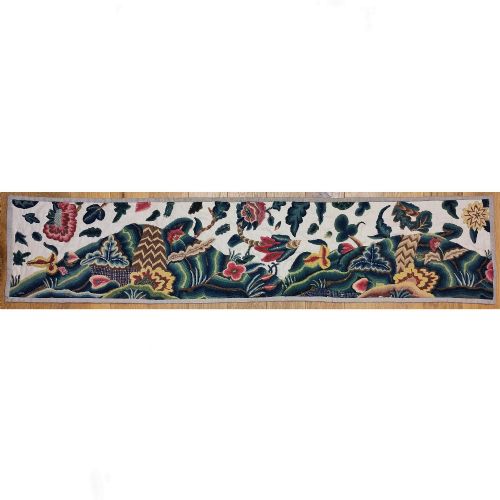
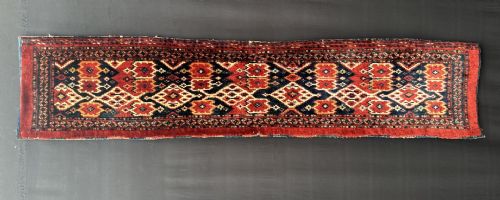
When you search for an antique runner fragment, you encounter cut or surviving sections of longer carpets, torbas, tent bands, and tapestries originating from nomadic, tribal, and regional weaving traditions. These pieces span the nineteenth century, including specific dates from eighteen hundred through nineteen twenty, and encompass styles such as Ottoman, Central Asian tribal, Caucasian, and French chateau.
The objects on this page include embroidered panels, piled tent bands, wedding-camel trappings, and soumak mafrash panels rather than complete floor coverings. Their elongated or sectional formats make them suitable for wall display or specialised textile collections, preserving historic pattern work in a manageable scale.
Materials and construction methods
The pieces rely on natural foundations of wool and cotton, occasionally enriched with silk and metallic thread to add texture and reflectivity to the surface design. Weavers utilised traditional techniques ranging from fine pile knots and soumak flatweaving to complex embroidery and tapestry weaving.
Regional workshops and nomadic groups structured these textiles using local animal fibres and vegetable dyes, resulting in durable foundations that survived the partitioning of larger carpets and trappings over generations.
Antique Runner Fragment Retail Price Guide 2026
Typical asking prices for runner fragment among the pieces listed under this phrase on Sellingantiques today, from the lower quarter to the upper quarter. They describe what is for sale here now, not the wider market.
Listings feature nineteenth-century pieces incorporating wool, cotton, silk, and metallic thread across Ottoman, Caucasian, and Central Asian styles.
Judging quality in textile fragments
Quality rests upon knot density, the integrity of the remaining structure, and the clarity of the dye palette within styles like Shirvan, Ersari, and Khotan. A finer weave and intact original selvages or borders elevate a fragment, showing greater technical mastery by the original weaver.
The visual impact depends on the balance of the surviving design, whether it is a schemle gul motif, a French pastoral scene, or geometric tribal patterning. Well-preserved wool lustre and crisp drawing separate standard remnants from exceptional collector examples.
The Antique Runner Fragment Glossary
- Fragment
- A surviving portion of a larger textile, carpet, or hanging that has been separated from its original complete format.
- Soumak
- A flatweave technique utilising wrapping warps to create a durable, textured surface often seen on panels and storage sacks.
- Torba
- A small Turkmen wall pocket or bag face traditionally used for domestic storage within a yurt or tent.
- Gul
- A medallion or repeated octagonal guls motif characteristic of Central Asian tribal rug design.
- Mafrash
- A Caucasian or Persian storage chest panel, frequently woven in soumak technique and later preserved as a flat textile.
Antique Runner Fragment: Frequently Asked Questions
What is an antique runner fragment?
An antique runner fragment is a surviving section of a historic long carpet or tribal trapping, preserved for its artistic merit and textile history.
These pieces allow collectors to own authentic regional weaving without needing the floor space required for a full-length runner.
How were these fragments used originally?
Many fragments originated as tent bands, storage bag faces, camel trappings, or larger floor carpets before being reduced by wear or damage over time.
Nomadic and village communities utilised these textiles for daily domestic storage, transport, and interior tent decoration.
How do I display an antique fragment?
Collectors typically mount these textiles on neutral fabric backings or frame them behind glass to protect the delicate wool, cotton, and silk fibres from further stress.
Keeping them away from direct sunlight preserves the natural dyes found in nineteenth-century Ottoman, Caucasian, and Central Asian pieces.
How can I tell the age of a fragment?
Age is determined by examining the material composition, dye palette, structural tightness, and regional design motifs characteristic of nineteenth-century production.
Comparing the weave style to documented examples from specific groups like the Ersari, Tekke, or Shirvan helps narrow down the period of origin.