

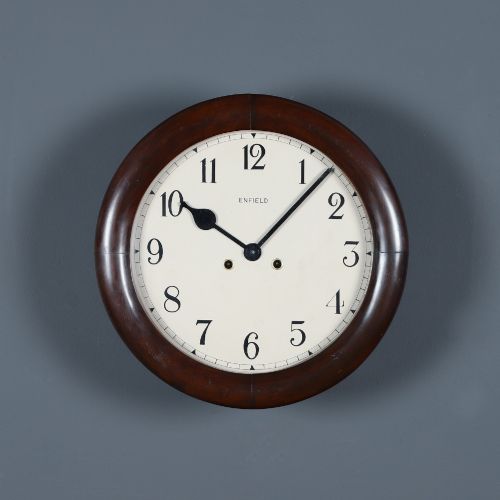
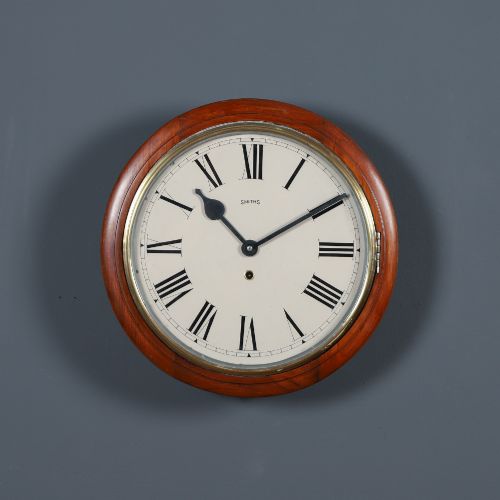
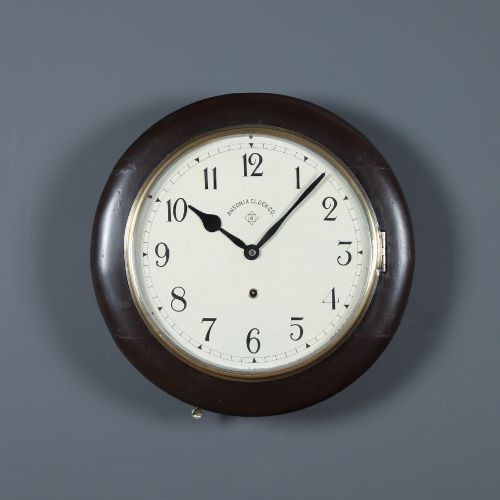
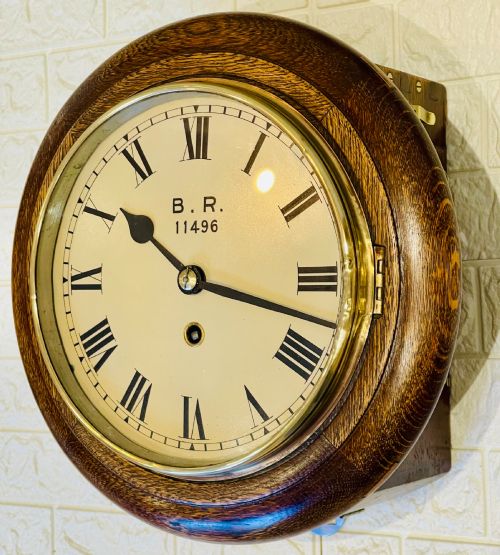


Antique Round Clock
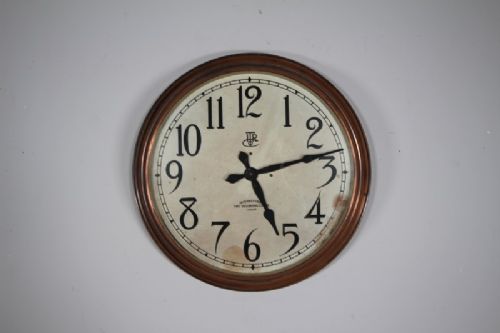
An antique round clock brings architectural presence to a wall, offering steady mechanical movement housed in traditional timber or metal circular cases.
Antique Round Clock
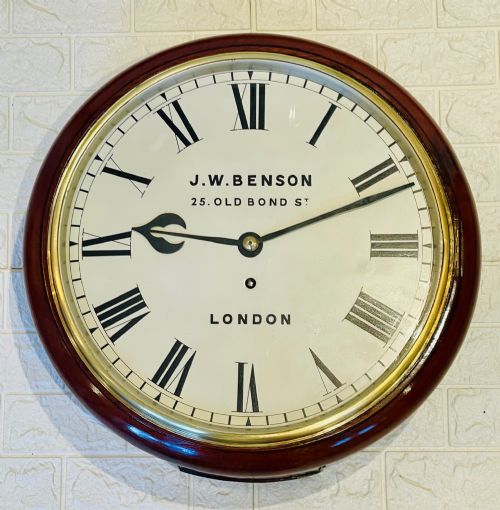
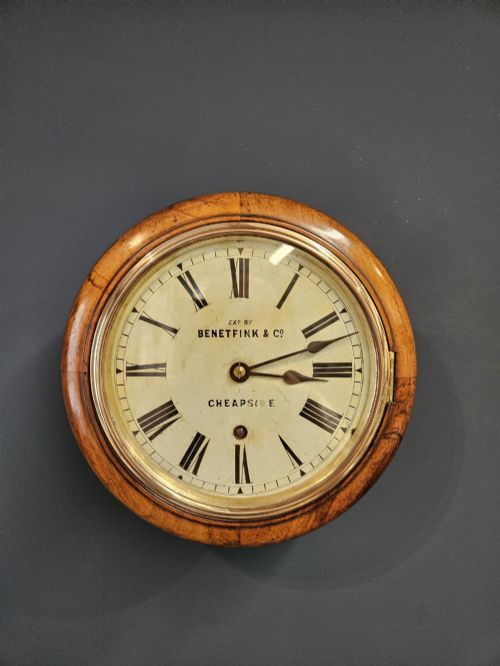
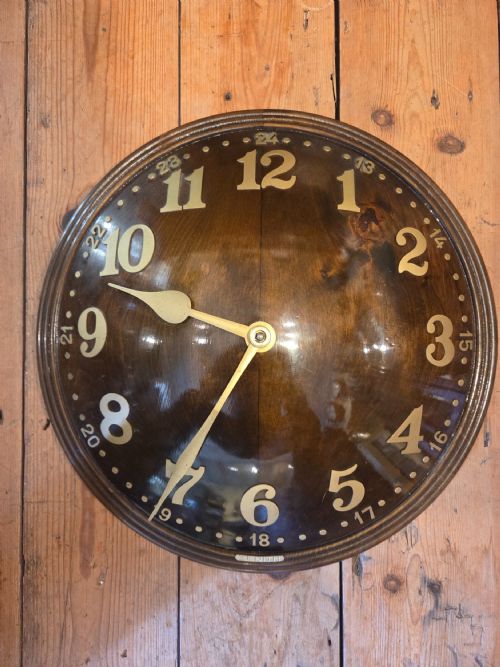
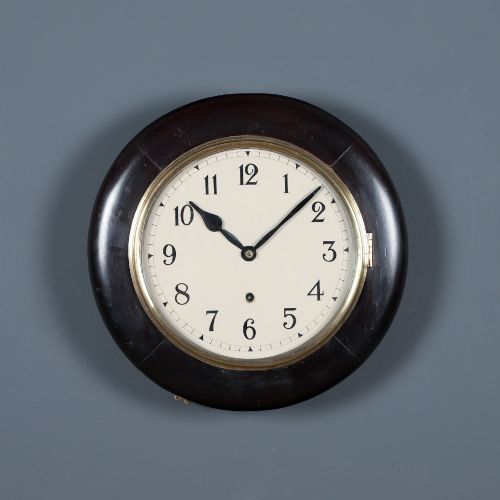
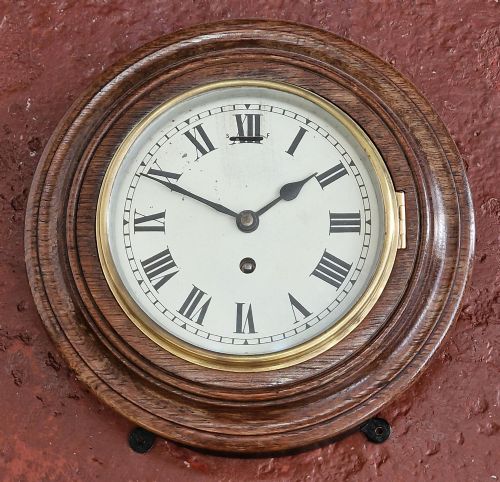
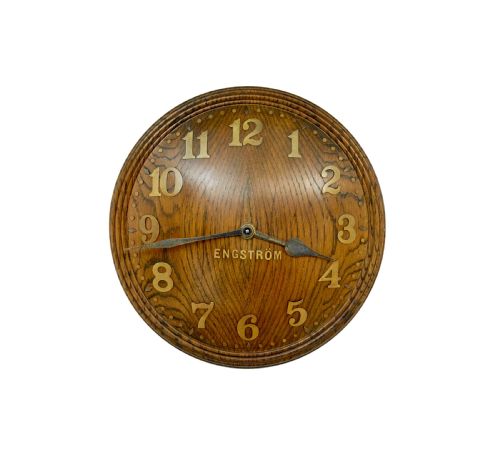
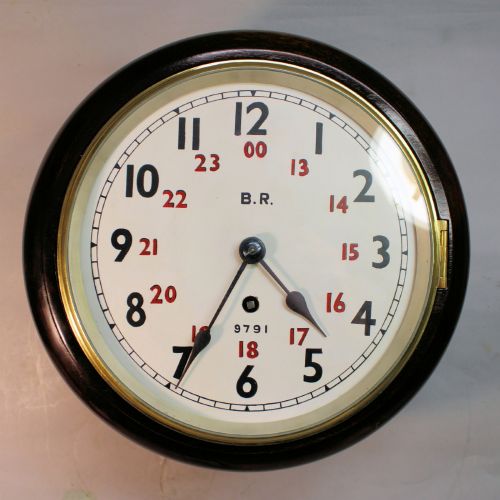
When searching for an antique round clock, buyers encounter circular timepieces spanning the Victorian, Edwardian, and mid-twentieth-century periods. The selection on this page leans heavily toward wall-mounted station and school dial clocks alongside desk models.
Most examples originate from British railway systems, factories, and schools, housing mechanical movements inside mahogany or oak surrounds. Circular wall clocks range from compact six-inch dials up to large industrial faces designed for public spaces.
Materials and construction
Cases utilise dense timbers such as mahogany, oak, and walnut, turned or carved into solid circular frames to protect the internal mechanics. Brass and iron components form the dial surrounds, bezels, and structural plates within the movement.
Fusee movements regulate power delivery using a conical pulley and chain or cord, maintaining steady tension as the mainspring winds down. Painted enamel or metal dials display clear numerals behind protective glass panels fitted into hinged brass bezels.
Several railway station clocks kept trains running on time while enduring decades of coal smoke and hurried platform footsteps.
Assessing quality
The standard of a circular timepiece rests upon the complexity and original purpose of its movement, such as a precision fusee mechanism rather than a standard spring-driven setup. Heavy cast brass bezels and robust mahogany or golden oak cases indicate superior workshop production.
Makers' signatures inscribed directly onto painted dials or engraved plates elevate the standing of a piece. Original matching components, clean dial lettering, and substantial timber depth differentiate standard utilitarian models from higher-grade railway and institutional clocks.
Zenith·Enfield·Ansonia·Smiths·John Walker·Whitelaw of Edinburgh
The Antique Round Clock Glossary
- Fusee
- A conical pulley connected to the mainspring by a chain or cord, designed to equalise the torque as the spring unwinds. This mechanism improves timekeeping consistency throughout the running cycle.
- Dial
- The face of the clock where the numerals and minute tracks are painted or applied. On these pieces, dials are typically circular and protected by a glass-fronted bezel.
- Bezel
- The brass or metal ring that holds the glass cover over the dial. Many are hinged to allow easy access for hand-setting and winding.
- Timepiece
- A clock movement that indicates hours and minutes without a striking mechanism. Such models focus solely on accurate timekeeping rather than hourly chimes.
- Drop-dial
- A clock case featuring a circular dial section at the top with an extended lower wooden trunk or box below. This downward extension accommodates a longer pendulum swing.
Antique Round Clock: Frequently Asked Questions
How do I wind a fusee wall clock?
Open the glass bezel or side door of the timber case and insert the winding key into the aperture on the dial. Turn the key steadily clockwise until resistance indicates the spring is fully tensioned.
Take care not to over-wind the mechanism, stopping as soon as the tension increases. Ensure the pendulum hangs evenly and swings freely once the clock is secured to the wall.
Where were railway station clocks placed?
Railway clocks hung in prominent positions across platforms, booking halls, and station master offices. They coordinated train departures and synchronized railway operations across the network.
Institutions relied on these robust circular clocks for strict timekeeping. Their clear painted dials ensured visibility from a distance for passengers and staff alike.
How do I date an antique round clock?
Examine the timber species, dial typography, and movement construction to narrow down the decade of production. Fusee movements and solid mahogany frames frequently point to nineteenth-century manufacture.
Maker signatures and railway company ciphers painted on the dial offer direct historical context. Simpler oak cases and specific dial layouts often indicate later Edwardian or mid-twentieth-century origin.
Can I hang a heavy dial clock on any wall?
Solid mahogany and oak dial clocks carry significant weight due to dense timber cases and thick glass bezels. Secure the clock directly into a wall stud or masonry using appropriate fixings.
Avoid hanging large timepieces on hollow plasterboard without adequate wall anchors. Proper wall mounting prevents vibration and ensures the pendulum maintains a steady beat.