



Antique Rosewood Console Desk
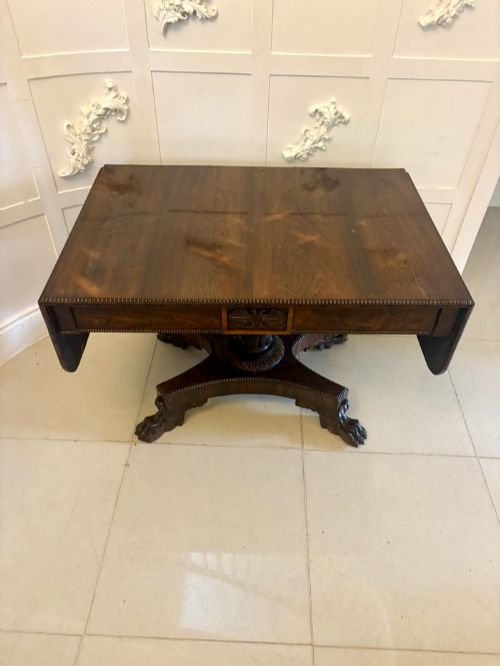
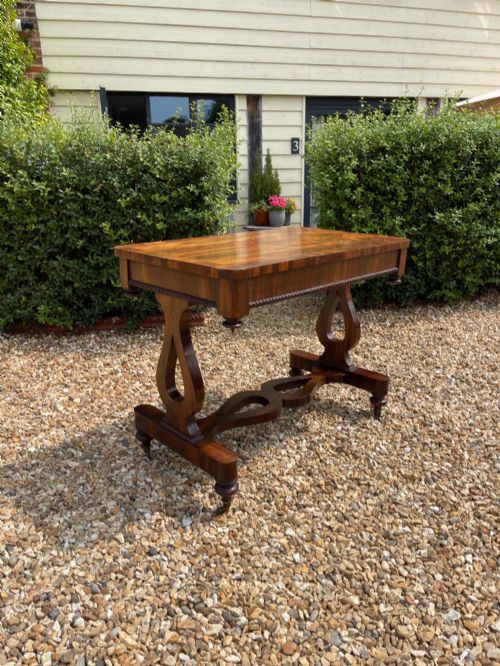
An antique rosewood console desk combines rich grain with practical surface space, offering an elegant focal point for a study or drawing room.
How they were made
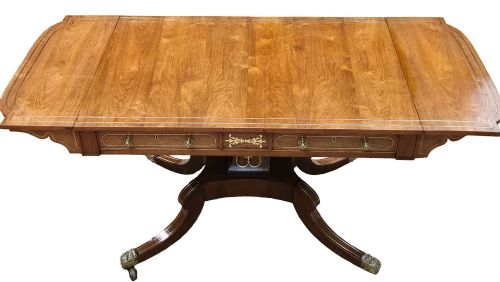
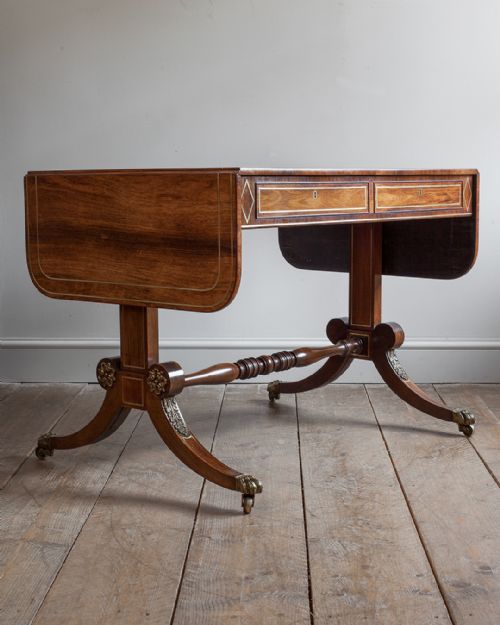
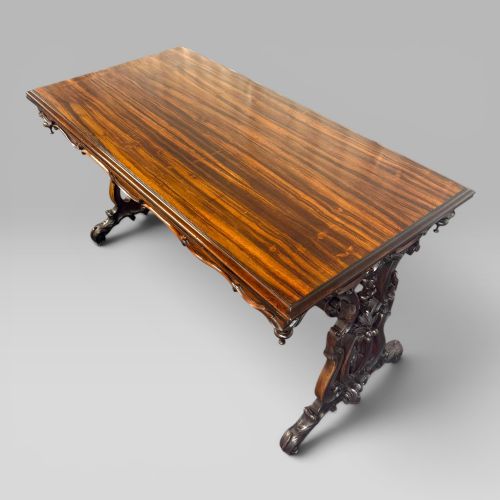
Cabinet makers constructed these desks using solid timbers and veneers of rosewood, occasionally combining them with zebrawood or goncalo alves to create striking contrast on the surfaces. Brass inlays, boxwood stringing, and ormolu mounts were applied meticulously to accentuate the architectural lines of the tables.
Writing surfaces were frequently inset with tooled leather to provide a durable medium for correspondence, while parcel gilding and marquetry decorated the more ambitious library and centre tables.
What varies in quality
The quality of an antique rosewood console desk rests on the selection and matching of the timber veneers, where symmetrical grain patterns and deep, unblemished colour distinguish superior examples from plain ones. The precision of the brass inlay, the crispness of the carved details, and the smooth operation of the drawers indicate the level of craftsmanship invested by the maker.
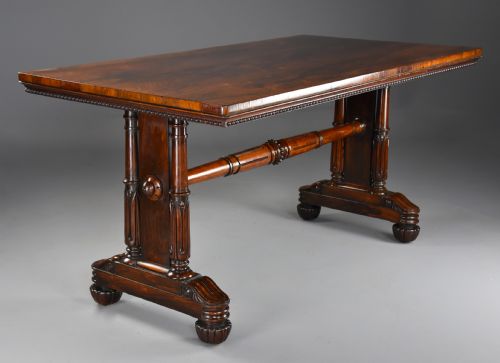
Proportion and structural integrity also separate fine pieces from ordinary ones, particularly in freestanding library and sofa tables designed to be viewed from all sides.
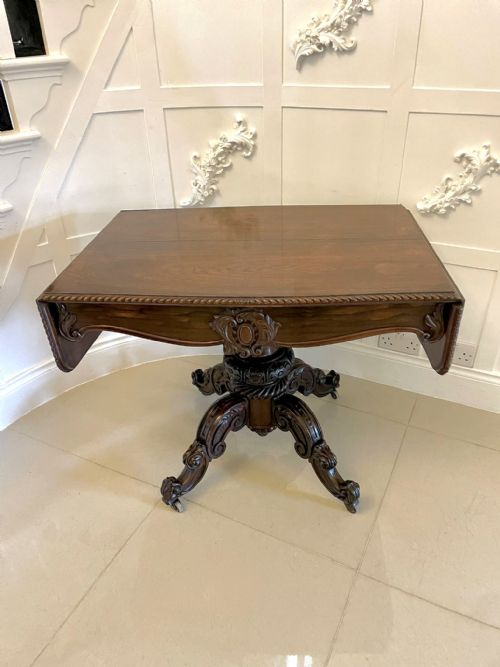
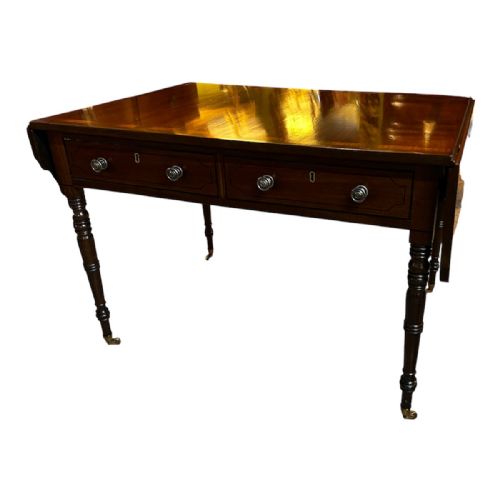
Some sofa tables feature clever drop leaves that transform a compact side piece into an expansive writing surface.
Gillows
The Antique Rosewood Console Desk Glossary
- Sofa table
- A rectangular table traditionally designed to stand in front of a sofa, featuring drop leaves at either end and usually two drawers.
- Library table
- A large freestanding table utilised for reading and writing, finished with fine timber veneers on all sides.
- Ormolu
- Gilded bronze mounts applied to furniture for decorative effect.
- Marquetry
- Decorative veneer patterns formed by fitting together small pieces of different coloured woods.
- Parcel gilt
- Portions of a piece highlighted or decorated with gold leaf.
Antique Rosewood Console Desk: Frequently Asked Questions
Where should I place a console desk?
These tables are designed to sit freestanding in the centre of a room or against a wall, depending on whether the back is finished with veneer.
Their finished backs make them ideal for placement behind a sofa or in the middle of a library.
How do I care for rosewood?
Rosewood benefits from regular dusting with a dry, soft cloth and should be kept away from direct sunlight and strong heat sources.
Avoid using silicone-based polishes, which can damage the antique finish over time.
Can I use these tables for writing?
Many of these pieces were specifically created as writing tables or library tables, featuring fitted drawers and sturdy tops.
Examples inset with leather offer a traditional and practical surface for daily correspondence.
How do I tell Regency from Victorian pieces?
Regency pieces often display restrained classical proportions, brass inlay, and saber legs dating from the early nineteenth century.
Victorian examples tend to feature heavier carved details, kidney shapes, or stretcher bases dating from around the middle to late nineteenth century.