


Antique Romantic Scene Painting
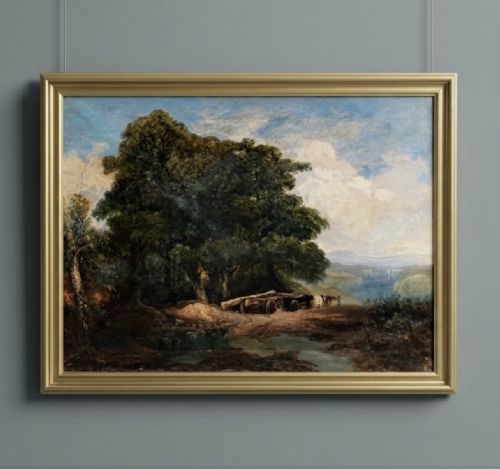
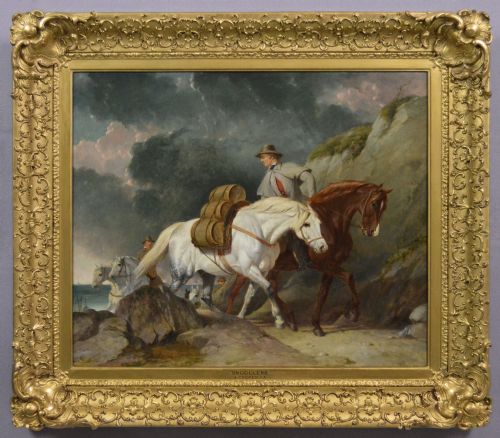
When you search for an antique romantic scene painting, you find works capturing historical figures, coastal paths, and dramatic landscapes.
Antique Romantic Scene Painting
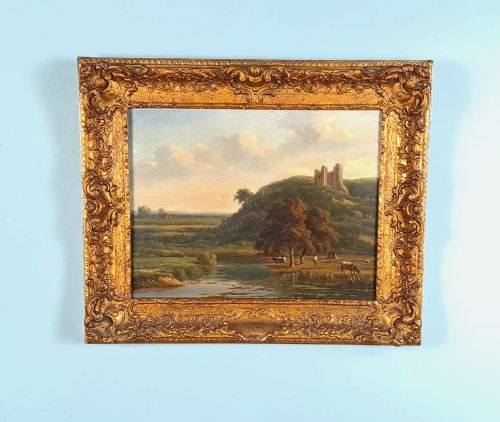
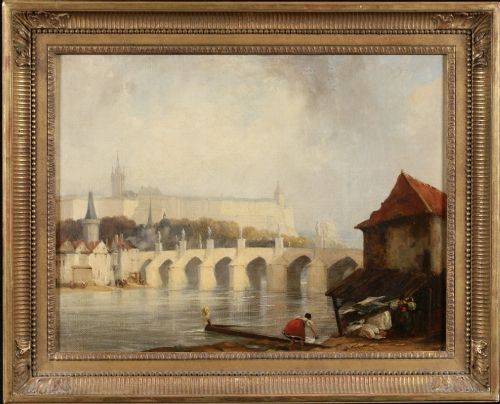
An antique romantic scene painting captures the dramatic, historical, and picturesque subjects favoured during the nineteenth century. These works depict coastal paths, alpine lakes, figures in conversation, and architectural vistas rendered with narrative depth.
The versions most commonly met on this page include framed oil paintings on canvas and board alongside watercolours and charcoal pieces. They range from intimate British landscapes to continental genre scenes involving multiple figures.
Makers and artists from British, French, and German schools appear throughout the selections, bringing distinct regional interpretations to the romantic movement. Works span from the early nineteenth century into the Edwardian period.
Materials and technique
Artists relied primarily on oil paint applied to canvas or wood board, building up rich colour harmonies and atmospheric light effects. Watercolours on paper and charcoal drawings also represent the medium, capturing finer linear details.
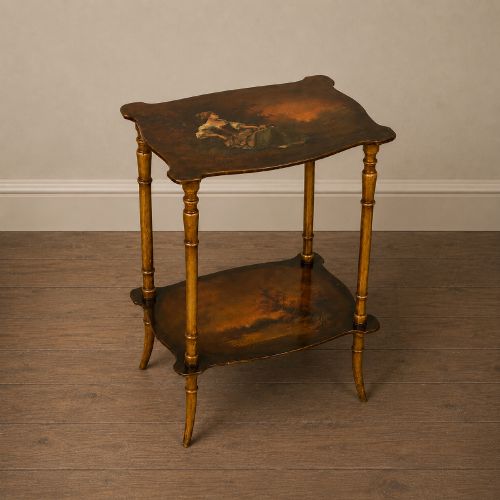
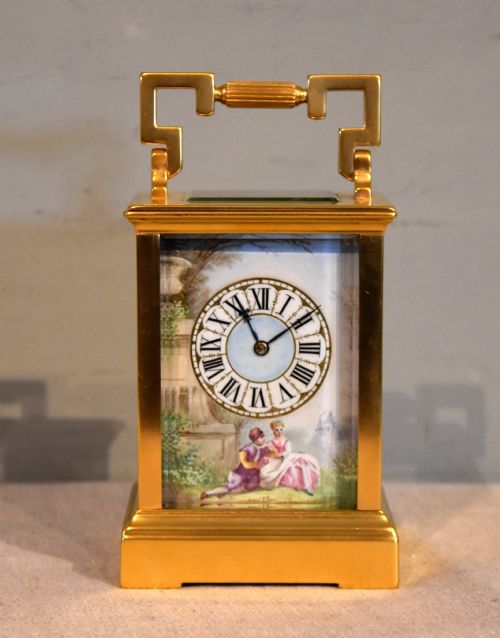
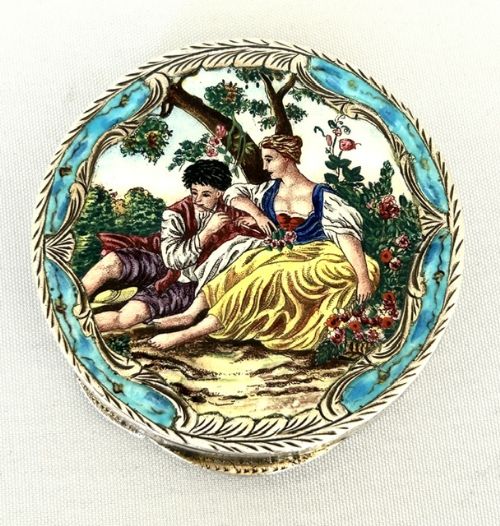
Frames play a crucial role in presentation, utilising materials such as giltwood, gesso, and wood to enclose and complement the painted surface. Porcelains and metal compacts also serve as miniature canvases for hand-painted scenic decoration.
Materials documented across the inventory include oil paint, canvas, gesso, giltwood, porcelain, and paper.
Distinctions in quality
The handling of light, shadow, and atmospheric perspective separates a compelling composition from a standard production. Superior examples demonstrate confident brushwork and anatomical or architectural precision in figure placement.
Condition of the pigment and the originality of the frame heavily influence the integrity of the piece. Works retaining their initial canvas support and untouched surface layers command greater attention from collectors.
Richard Sebastian Bond·Abraham Cooper RA·T C Hofland·Charles Zacharie Landelle·Willem Johannes Martens·Ludwig Hermann·James Bertrand·Leon Girardet·Belisario Gioja·George Cattermole
The Antique Romantic Scene Painting Glossary
- Genre scene
- A painting depicting aspects of everyday life by depicting ordinary people engaged in common activities. These works often carry subtle narrative or moral undertones.
- Oil on canvas
- Pigments bound in a drying oil applied to a woven fabric stretched across a wooden frame. This combination allows for rich blending and deep colour saturation.
- Gesso
- A paint mixture consisting of a neutral binder mixed with chalk, gypsum, or pigment used to prepare wood or canvas surfaces. It provides a smooth base for gilding and framing.
- Watercolour
- A painting method in which the paints are made of pigments suspended in a water-based solution. Artists use it on paper to achieve translucent layers and luminous washes.
- Provincial
- Pertaining to a region outside the capital cultural centre, often showing local materials and traditional techniques. These pieces reflect regional tastes rather than academic standards.
Antique Romantic Scene Painting: Frequently Asked Questions
What defines a romantic painting?
These works focus on emotion, dramatic natural scenery, and historical or genre narratives rather than strict classical restraint. They often use moody lighting and expressive brushwork to evoke a strong atmospheric mood.
Subjects range from stormy coastal paths and quiet riverbanks to intimate human interactions in historical settings.
How should I frame an antique painting?
Selecting a frame that matches the period of the artwork preserves its historical context and visual balance. Giltwood and gesso frames from the nineteenth century complement oil paintings effectively.
Avoid modern synthetic mouldings that clash with the aged patina of the canvas and the traditional pigments.
Can I hang these paintings in direct sunlight?
Direct sunlight damages oil paint, paper, and watercolour pigments over time, causing fading and cracking. Position these works away from south-facing windows to protect the delicate surface.
Stable indoor humidity and indirect light help preserve both the canvas and the original framing materials.
How do I identify nineteenth-century canvases?
Examine the reverse of the canvas and the stretcher bars for maker stamps, artist signatures, and old handwritten labels. Tightly woven fabrics and handmade wooden wedges inside the frame often indicate age.
Craquelure in the paint layer naturally develops over decades, offering further visual clues regarding the age of the oil application.