
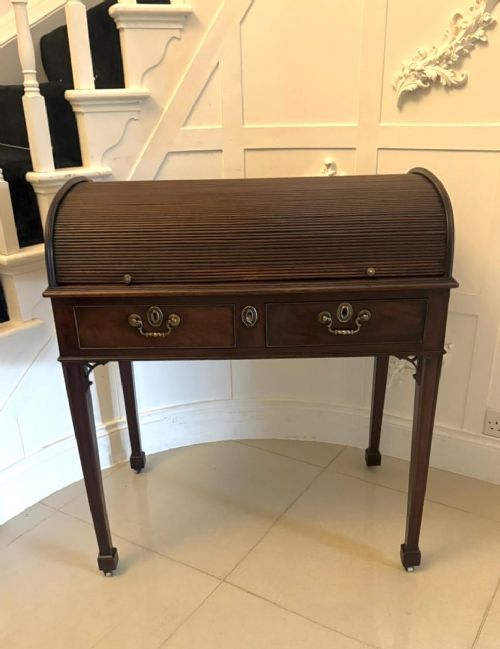
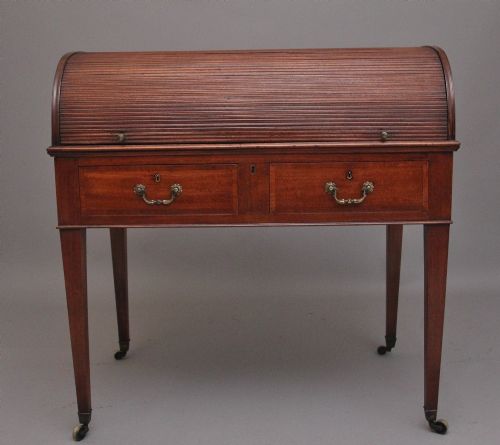

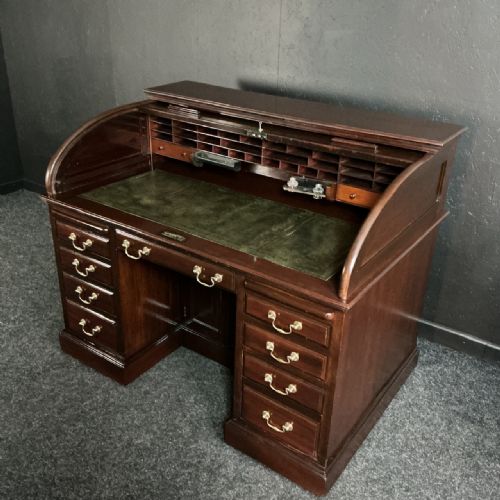


Antique Rolltop Writing Table
An antique rolltop writing table provides a private, secure workspace that conceals daily correspondence beneath a curved wooden tambour or cylinder.
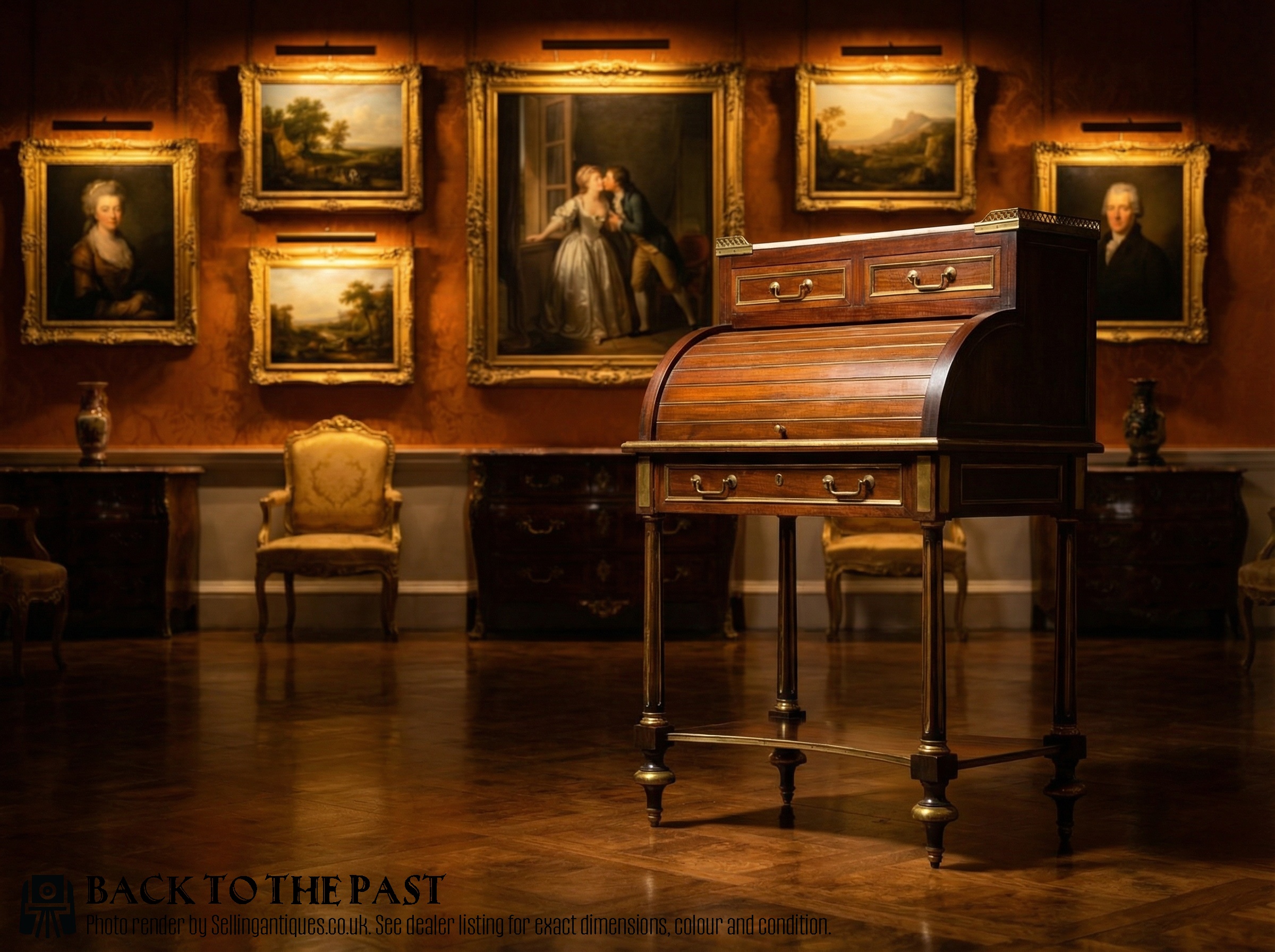
Antique Rolltop Writing Table
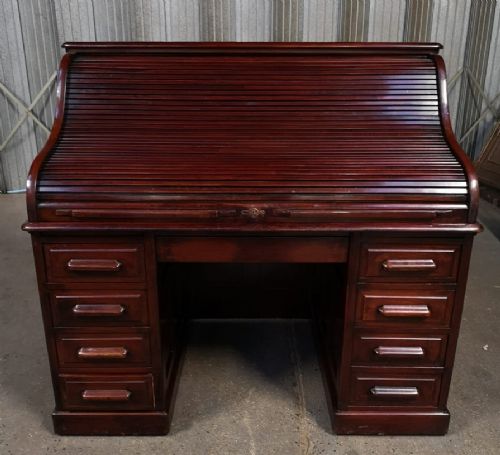
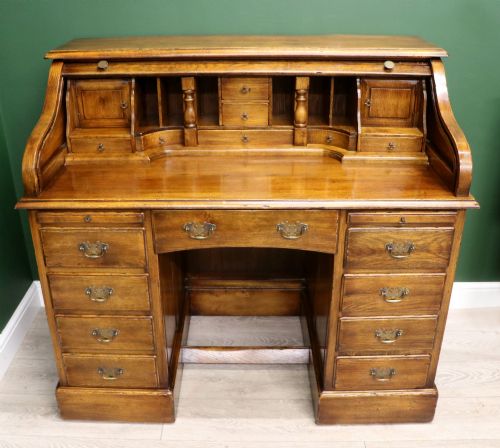
An antique rolltop writing table combines a traditional desk base with a sliding wooden cover that encloses the writing surface and internal pigeonholes. These pieces emerge across the Georgian, Victorian, and Edwardian periods in various forms designed for home and office use.
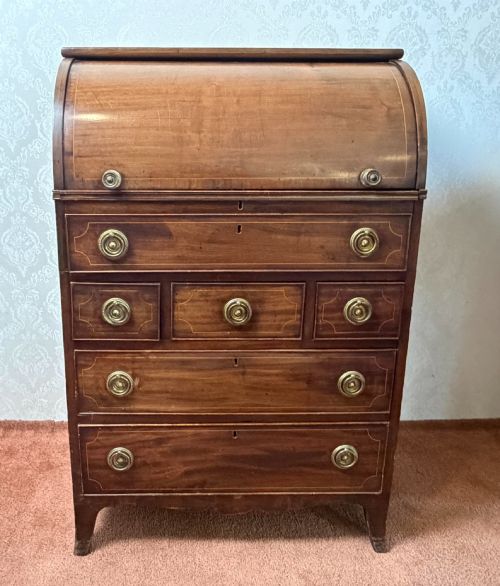
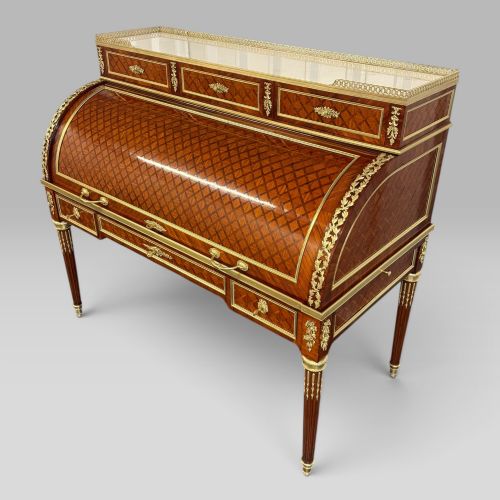
The selections span simple mahogany pedestals to ornate French revival styles featuring marquetry and ormolu mounts. Mahogany and oak dominate the surviving examples, often enriched with satinwood or walnut inlays.
Materials and construction
Cabinet makers constructed these desks using solid hardwoods like mahogany and oak, frequently applying finer veneers such as satinwood and kingwood for decorative surfaces. Tambour shutters use narrow vertical strips of wood glued to a fabric backing to allow the flexible movement around the curved track.
Brass fittings, leather writing inserts, and ormolu mounts complete the structural assembly, requiring precise joinery to ensure the rolling mechanism operates smoothly without binding.
Mahogany is the predominant timber across these listings, accompanied by oak, satinwood, kingwood, and walnut.
Assessing quality and craftsmanship
The smoothness of the mechanical rolltop action and the integrity of the internal pigeonholes and small drawers distinguish finer examples from standard utility desks. Superior pieces display meticulous parquetry, matched mahogany grain, and high-grade brass or ormolu hardware.
The choice of secondary timbers and the precision of the dovetail joints reveal the standard of workshop execution, whether originating from a provincial English maker or a specialised French cabinet maker.
The Antique Rolltop Writing Table Glossary
- Tambour
- A flexible shutter made from small wooden slats attached to canvas, allowing it to slide smoothly along a curved track to enclose the desk interior.
- Cylinder desk
- A writing table featuring a rigid, quarter-circle rotating wooden lid rather than slats, serving the same concealing function as a rolltop.
- Ormolu
- Gilded bronze mounts and decorative trimmings applied to furniture, particularly characteristic of French revival pieces from the nineteenth century.
- Marquetry
- Decorative patterns formed by fitting together contrasting veneers of wood, satinwood, and other materials onto the primary surface.
- Pedestal desk
- A heavy freestanding desk supported by two vertical banks of drawers, often found beneath the rolltop mechanism.
Antique Rolltop Writing Table: Frequently Asked Questions
What is the difference between a cylinder desk and a tambour desk?
A cylinder desk utilises a solid, rigid curved panel that rotates on a pivot into the body of the furniture.
In contrast, a tambour desk employs many small wooden slats glued to fabric, allowing the flexible cover to bend around tight internal tracks.
Where were these desks typically used?
These pieces served primarily in private libraries, studies, and substantial home offices where correspondence required secure containment.
Later Edwardian variants also accommodated typewriters and administrative tasks in professional environments.
How do I care for the leather writing surface?
Clean the leather insert periodically with a dry, soft cloth and avoid exposing the material to direct sunlight.
Treat the surface with appropriate leather dressings sparingly to prevent drying and cracking over time.