
Antique Rococo Table
An antique rococo table brings exuberant curves, asymmetrical scrollwork, and French eighteenth-century revival elegance into a room.
Antique Rococo Table
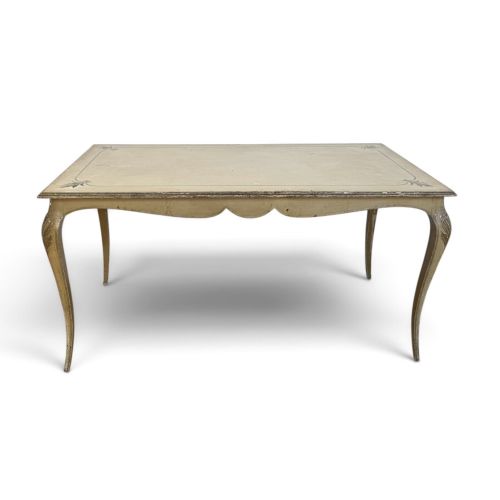
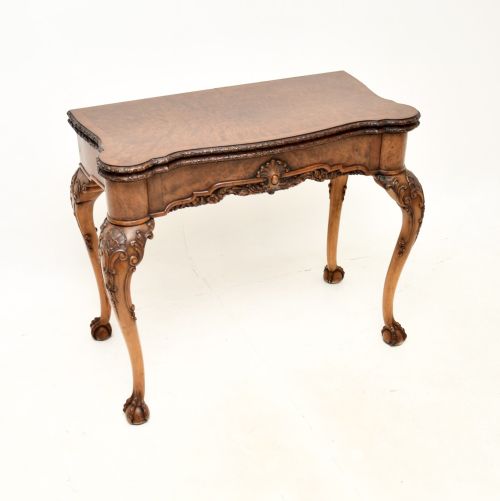
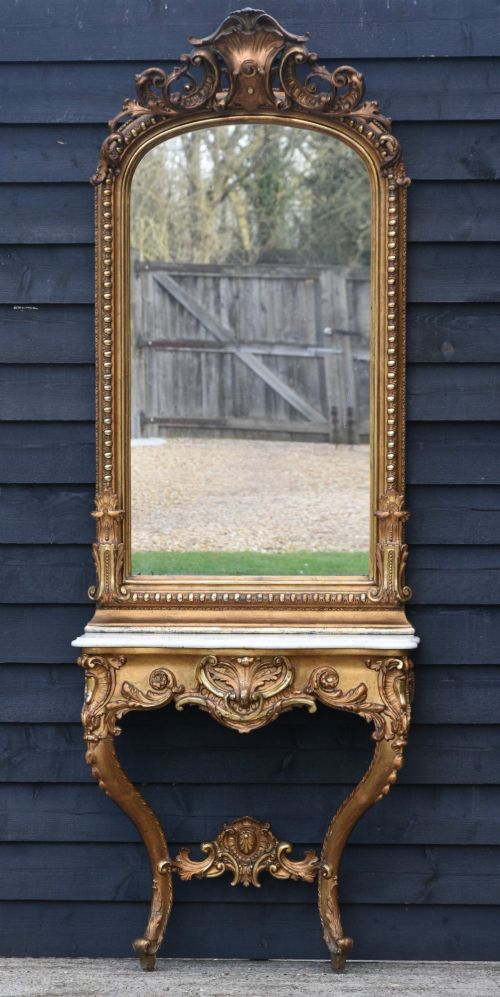
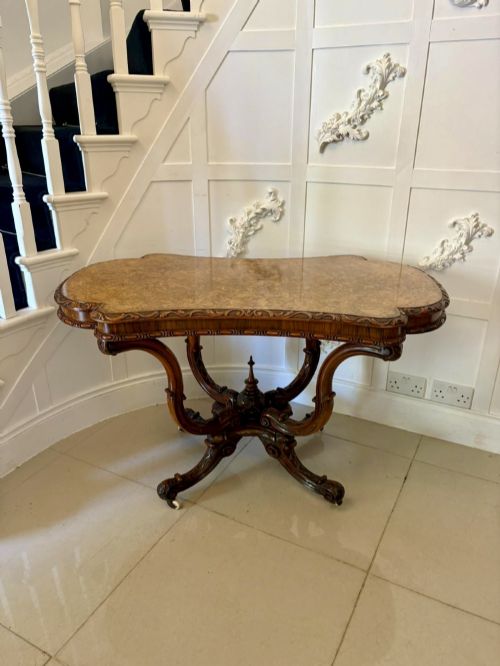
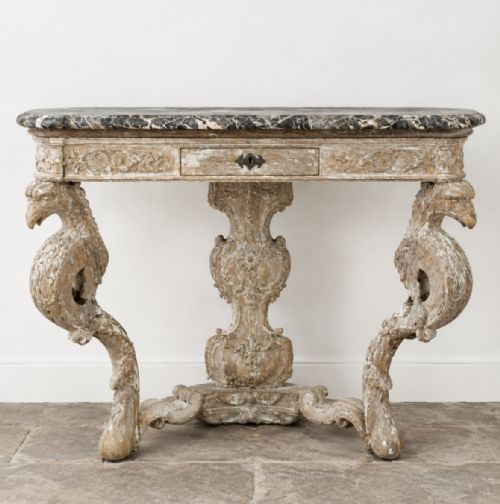
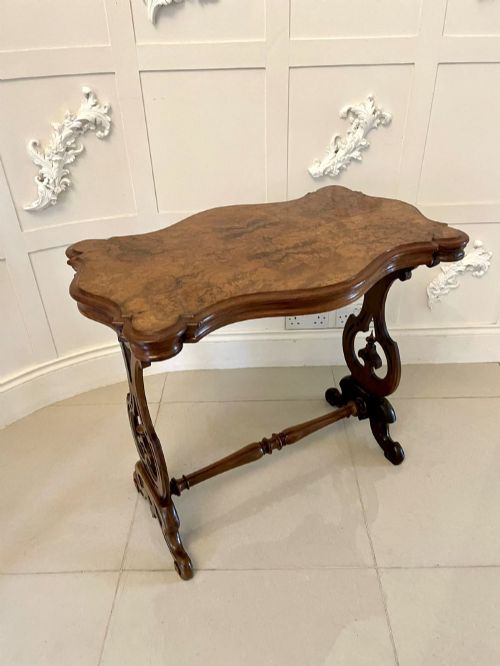
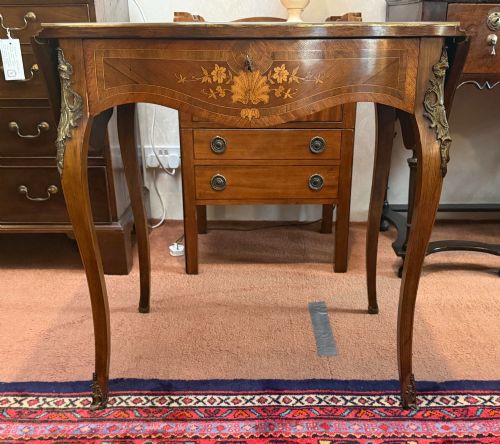
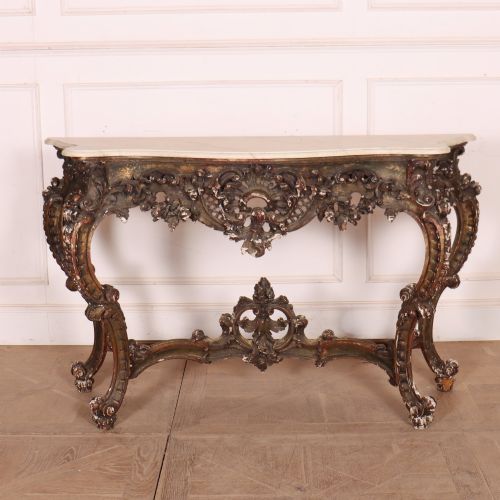
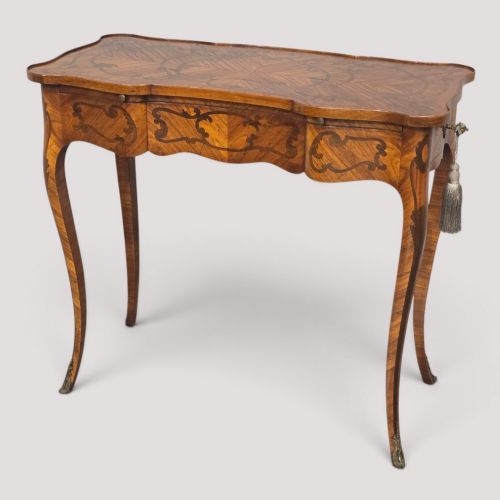
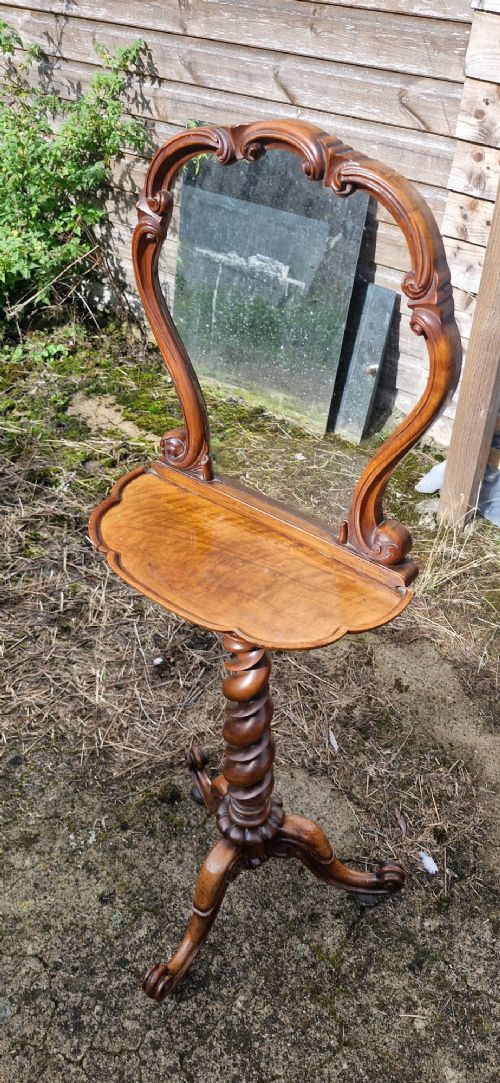
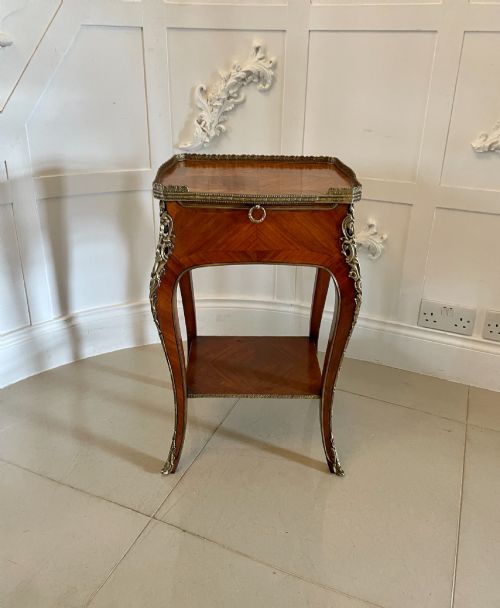
When searching for an antique rococo table, collectors encounter pieces shaped by nineteenth-century revivals, spanning console tables, centre tables, and side tables. These furnishings frequently draw upon French Louis XV designs, expressing the theatrical flair of the period.
The inventory reveals a strong presence of freestanding occasional tables, desks, and writing tables alongside fitted console tables. Walnut, kingwood, and gilt bronze dominate the structural forms found here.
Materials and construction
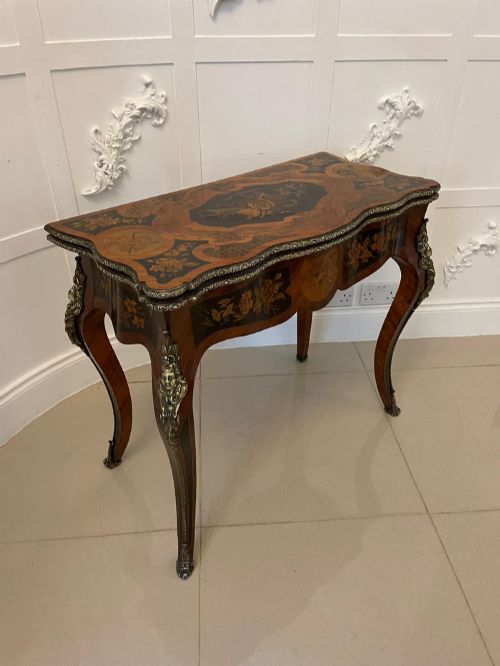
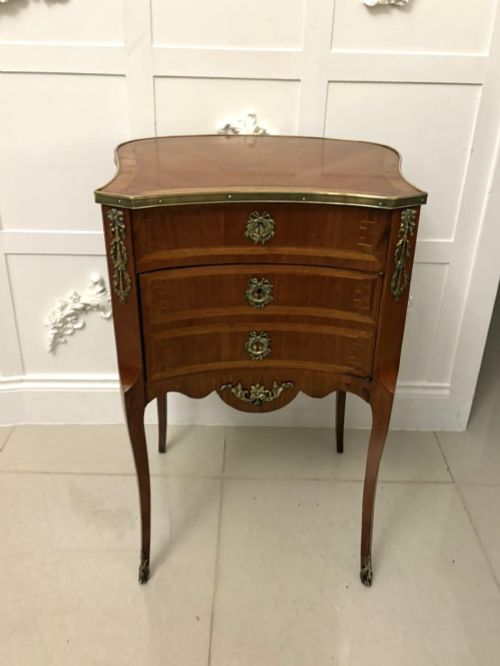
Cabinetmakers utilised dense timbers such as walnut and kingwood as foundations for intricate marquetry and parquetry veneers. Ormolu mounts and gilt bronze details provide the characteristic metallic contrast on many surviving examples.
Surface ornamentation relies on contrasting wood grains, delicate brass stringing, and cast mounts bolted through the timber carcass. Marble tops appear on console and occasional forms to provide a durable and weighty surface.
Listings demonstrate that walnut and kingwood are the preferred timbers for nineteenth-century revival tables.
Assessing the grade
Quality rests upon the crispness of the cast ormolu mounts and the precision of the timber inlay. Superior examples display fluid, hand-chiseled bronze details rather than soft, mass-produced metalwork.
The architecture of the piece defines its standing, where balanced proportions and sophisticated internal mechanisms distinguish workshop pieces from standard production items.
François Linke·Joseph Emmanuel Zwiener·Achille Brocot·Samuel Marti·Edwards and Roberts
The Antique Rococo Table Glossary
- Ormolu
- Gilded bronze used for decorative mounts and accents. This technique involves applying a mercury-gilt finish to cast bronze components.
- Marquetry
- The art of applying decorative veneer pieces in wood to form pictorial or geometric patterns. Craftsmen cut contrasting timbers together to ensure tight joints.
- Console table
- A table designed to stand against a wall, frequently secured with brackets. These often feature shaped marble tops and carved giltwood or walnut frames.
- Bureau plat
- A flat-topped freestanding writing desk, usually fitted with drawers. These typically showcase elaborate ormolu mounts and leather writing surfaces.
- Parquetry
- Geometric wood inlay forming patterned surfaces such as cubes or chequers. This technique highlights the natural variation of timber tones.
Antique Rococo Table: Frequently Asked Questions
Where should I place a console table?
Console tables suit entrance halls or living rooms, positioned flat against a wall beneath a mirror or painting.
Because many are narrow, they occupy minimal floor space while providing a surface for lamps or decorative objects.
How do I care for marquetry surfaces?
Keep wooden tables away from direct sunlight and heat sources to prevent the veneers from drying out or lifting.
Apply a microcrystalline wax periodically and buff gently with a soft cloth to protect the polished finish.
What is the difference between a centre table and a side table?
Centre tables are finished on all sides to stand freely in the middle of a room as a focal point.
Side tables feature a finished front and back, designed to sit neatly against a wall or beside seating.
How do I identify a revival piece?
Nineteenth-century revival furniture adapts eighteenth-century forms using contemporary joining techniques and machine-sawn veneers.
Examine the secondary timbers inside drawers and the casting quality of the ormolu to determine the era of production.