


Antique Rococo Seating
Antique rococo seating brings flamboyant curves and carved flourish into a room, offering functional pieces crafted with exuberant eighteenth-century French style.
Antique Rococo Seating
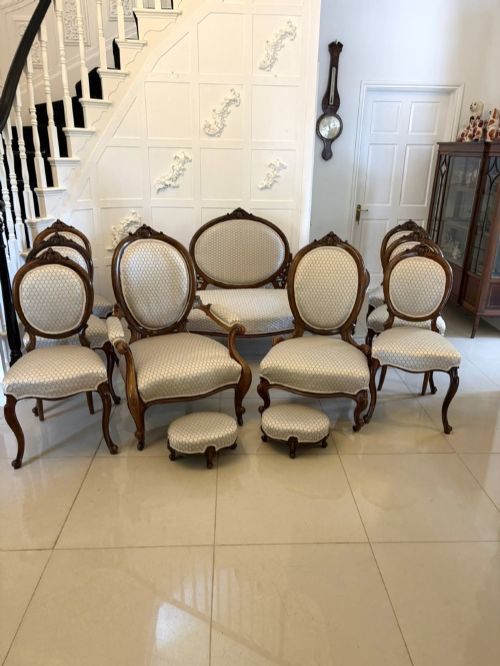
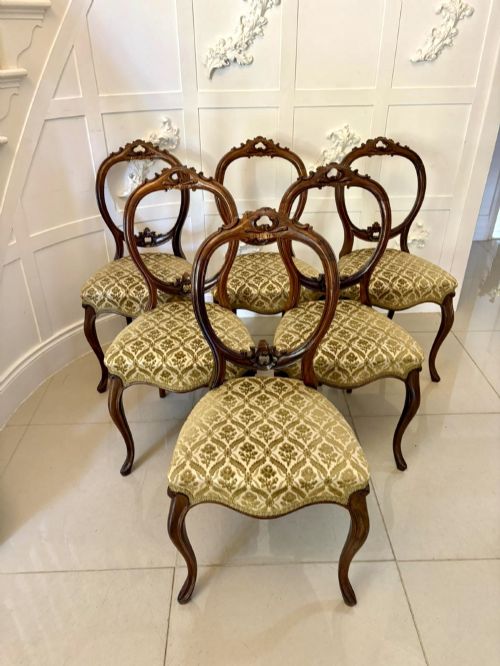
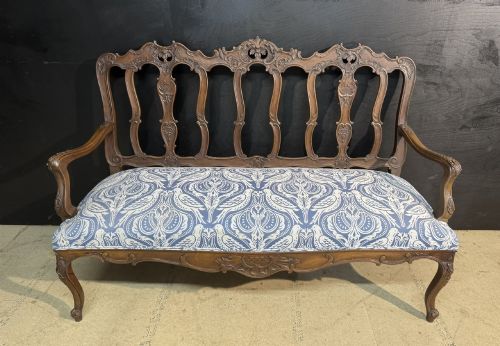
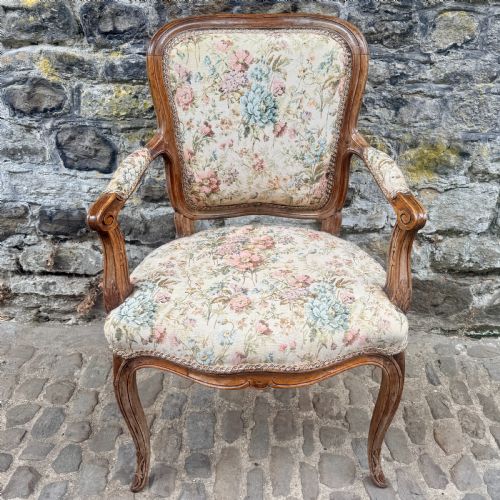
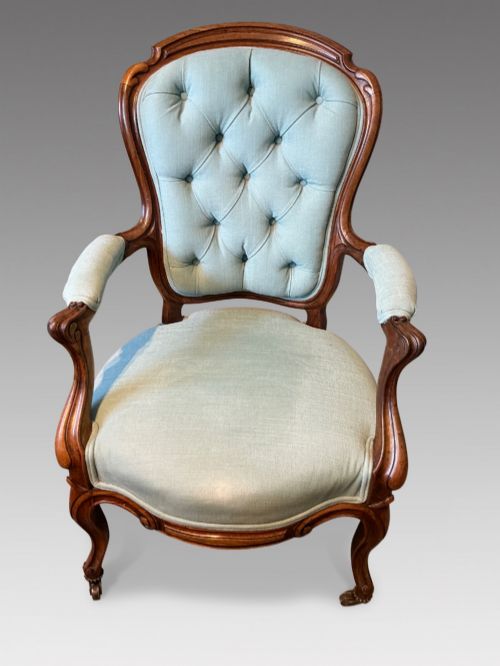
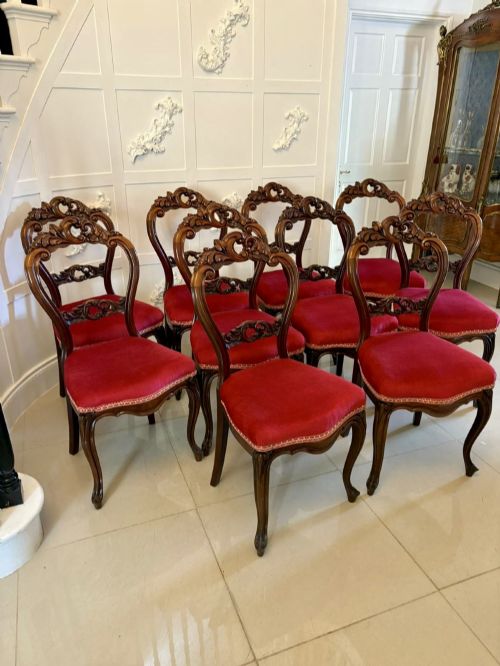
When buyers search for antique rococo seating, they encounter an assortment of heavily ornamented chairs, sofas, and stools spanning from the mid eighteenth century to later revival periods. The inventory on this page draws heavily from Victorian interpretations, French Louis XV styles, and Italian craftsmanship, ranging from single side chairs to complete salon suites.
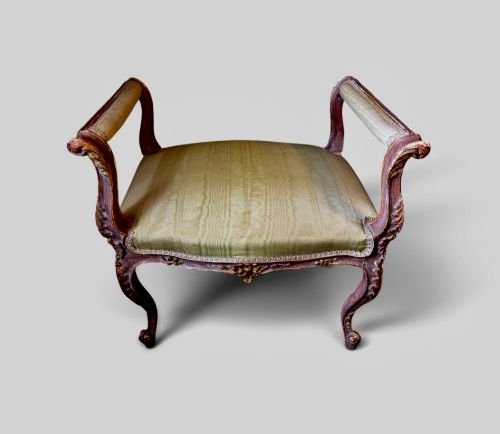
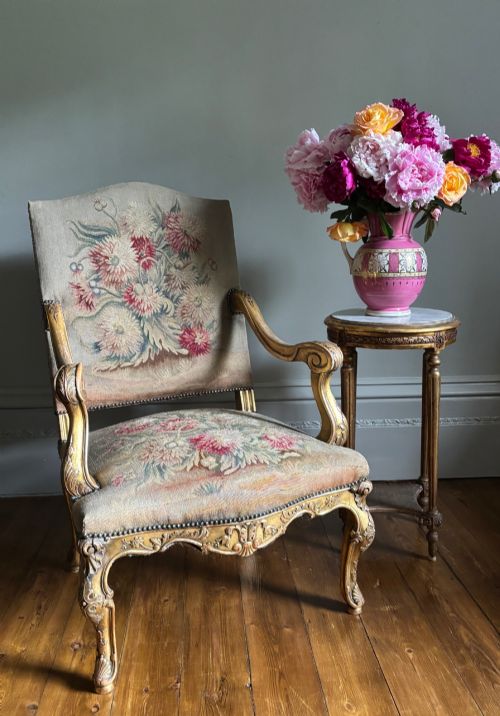
The forms vary from intimate dressing table stools and window seats to grand three-seater couches and giltwood settees. Walnut, mahogany, and giltwood provide the structural foundation for these ornate seating options, often paired with contemporary silk, linen, or patterned upholstery fabrics.
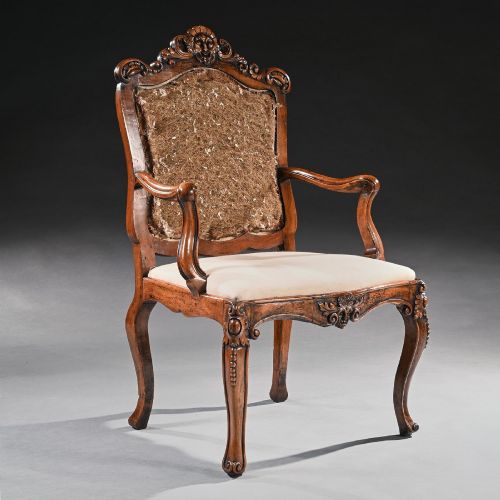
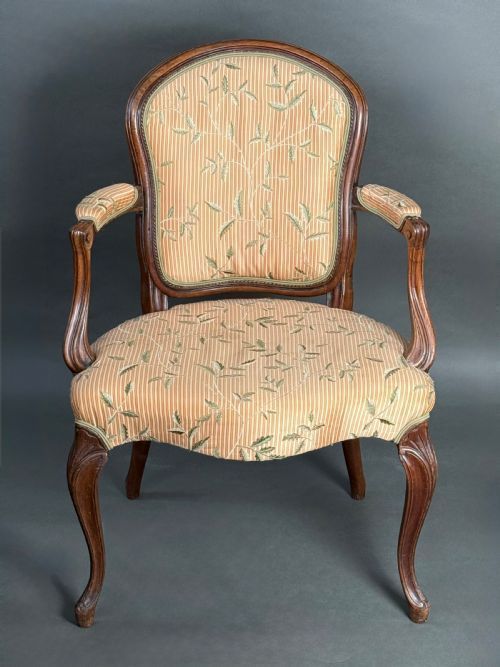
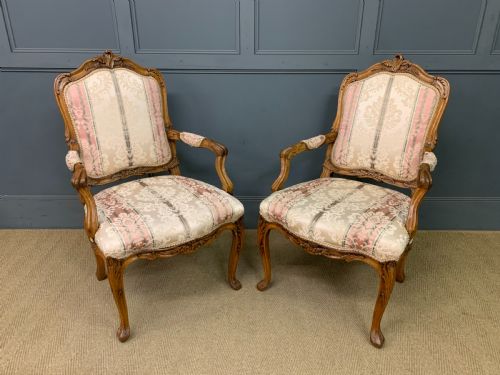
Pieces originating from continental workshops sit alongside English Victorian walnut and mahogany variations. Buyers will find armchairs featuring cabriole legs and carved head rails alongside pairs of decorative painted stools and large salon suites.
Materials and construction methods
Cabinetmakers shaped solid walnut, mahogany, and rosewood to form the curving frames essential to this style. Wood was frequently gilded, painted, or left with a polished finish to highlight the natural grain.
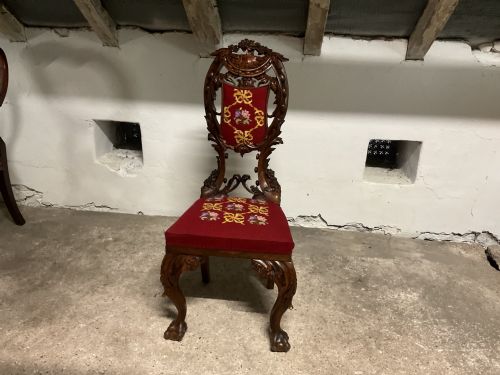
Carving defines the ornamentation, with artisans chiselling intricate floral motifs, scrolls, and asymmetrical shell patterns directly into the wooden framework. Ormolu mounts and parquetry occasionally accent more elaborate continental frames.
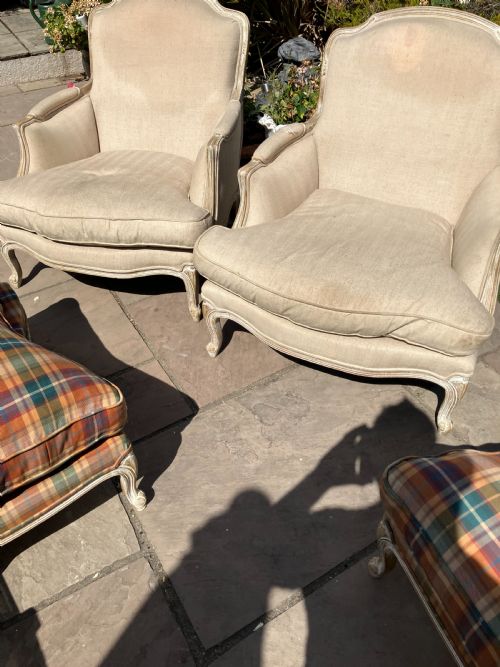
Upholstery completed the work, utilising textiles such as silk, damask, and linen stretched over supportive stuffing. Many frames survive today re-covered in modern fabrics while retaining their historic timber structures.
Some chairs sport so many exuberant carved scrolls they look ready to waltz out of the room.
Factors influencing quality
The depth and crispness of the wood carving separate superior items from simpler production pieces. Skilled artisans created sharp, fluid relief work along the cabriole legs and head rails, whereas lower tiers show softer, more mechanical detailing.
Timber selection and structural integrity also dictate standard. Dense walnut or mahogany with well-preserved joinery holds up better over centuries than softer woods that suffer from stress at the joints.
Proportion and decorative harmony distinguish the finer examples. The best pieces balance exuberant ornamentation with balanced lines, whereas lesser items can appear heavy or awkward in their scrollwork.
The Antique Rococo Seating Glossary
- Cabriole leg
- A furniture leg that bends outward in a convex curve and tapers inward in a concave curve, ending in a pad or scroll foot. This shape mimics the leaping legs of an animal and appears frequently on period seating.
- Giltwood
- Wood that has been coated with a thin layer of gold leaf or powder. It creates a luminous, reflective surface popular on formal eighteenth-century and revival frames.
- Salon suite
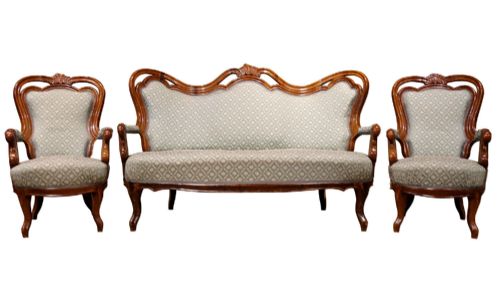
- A matching set of upholstered furniture designed for a formal drawing room, usually comprising a settee and several armchairs. These suites offer a unified decorative theme for a large interior space.
- Canape
- An ornamental French sofa featuring an upholstered back and seat within an exposed wooden frame. They typically showcase carved rails and cabriole supports.
- Ormolu
- Gilded bronze mounts applied to furniture for decorative effect. Found primarily on high-end continental pieces, these metallic accents highlight corners and aprons.
Antique Rococo Seating: Frequently Asked Questions
What periods do these chairs come from?
The pieces span from mid eighteenth-century European workshops through to nineteenth-century Victorian revivals. Later nineteenth-century interpretations sit alongside genuine earlier examples.
Buyers will also spot twentieth-century revival pieces mimicking the classic French aesthetic.
How do I identify a revival piece?
Nineteenth-century revival items often feature heavier walnut timbers and machine-assisted carving compared to eighteenth-century originals. Examining the construction joints and wear patterns reveals the true age of the timber.
Maker styles and regional traits also help distinguish between original periods and later copies.
Are these chairs suitable for daily use?
Many solid wood chairs and sofas remain structurally sound for everyday seating if the joints are secure. Upholstery condition varies, and modern reinforcement may be needed for regular sitting.
Softer giltwood frames require more careful placement to avoid accidental knocks.
What is the difference between a salon suite and a settee?
A salon suite comprises a matching set of multiple seating items, such as a small sofa paired with matching armchairs. A settee stands alone as a single long seat for two or more people.
Both serve similar decorative purposes in formal living spaces.