




Antique Riverbank Landscape
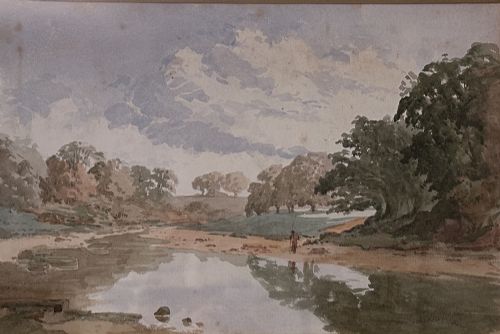
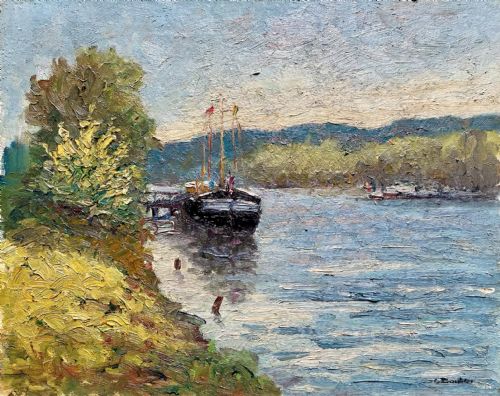
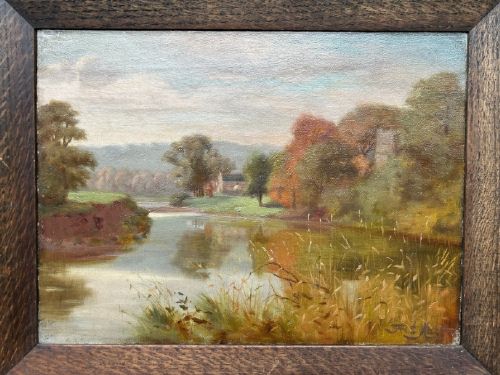
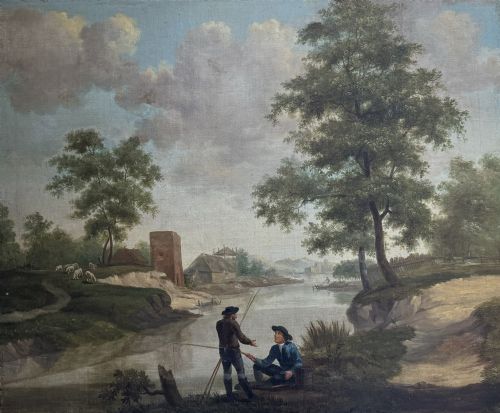
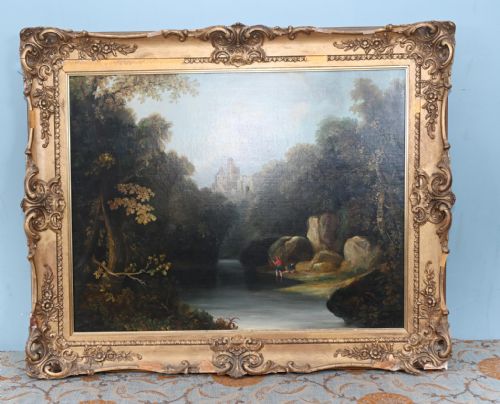
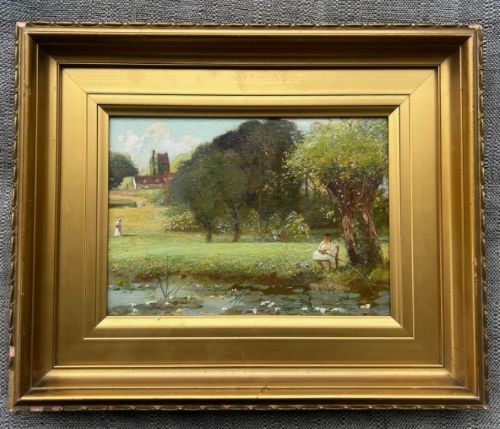
These antique riverbank landscape paintings capture tranquil pastoral scenes along rivers and streams, offering a serene view of historical countryside life.
Antique Riverbank Landscape
An antique riverbank landscape depicts bodies of water flowing through countryside settings, frequently populated by figures fishing, grazing livestock, or boats moored along the shore. These works span from the eighteenth century through the mid-twentieth century, capturing shifting artistic movements across Britain and France.
The versions most commonly met on this page are nineteenth-century oil paintings on canvas or wood panel, alongside watercolours on paper. Painters of these scenes often worked in Impressionist, Barbizon, or realist styles, balancing naturalistic light with rural atmosphere.
How They Were Made
Artists built these compositions primarily using oil paint applied to stretched canvas or prepared wood panels, though several examples utilise watercolour on paper. The application ranges from thin, translucent washes to thick impasto that builds texture in foliage and water.
Framing typically involved carved and gilded wooden frames that complemented the depth of the painted scenes. Panels and canvases relied on traditional joinery and priming techniques standard to British and continental studios of the period.
Antique Riverbank Landscape Retail Price Guide 2026
Typical asking prices for riverbank landscape among the pieces listed under this phrase on Sellingantiques today, from the lower quarter to the upper quarter. They describe what is for sale here now, not the wider market.
Listings feature works from the eighteenth, nineteenth, and twentieth centuries, executed in oil and watercolour on canvas, wood, and paper.
What Varies in Quality
Quality rests in the handling of light and atmospheric perspective, where superior works render moving water and reflections with confident brushwork rather than rigid formulas. The integration of human or animal figures into the broader natural setting dictates the artistic success of the piece.
The handling of the medium itself separates standard decorative works from accomplished studio output. Strong compositions demonstrate careful tonal balance across the riverbank, foliage, and sky.
Frederick Marriott·Honore Cavaroc·Archibald Kay·Sir David Murray·Frank Hyde·Walter Follen Bishop·William Manners·Phyllis Morgans·Pierre Emmanuel Eugene Damoye·Harry Pennell·Constant Ludovic Artz·Henry Cheadle·T.B. Garvie·Henry John Sylvester Stannard·Robert John Hammond·Augustus William Ennes·Sonia Mervyn·Thomas E Francis·George Neil·David Adolph Constant Artz·Joseph Thors·Richard Wilson
The Antique Riverbank Landscape Glossary
- Barbizon School
- A French movement dedicated to painting en plein air with an emphasis on realistic rustic scenery. These artists focused on natural light and unidealised rural topography.
- Impasto
- Paint laid thickly on a surface so that it stands out from the canvas. This technique adds tactile depth to elements such as water highlights and foliage.
- Wood Panel
- A rigid support base utilised by artists before canvas became universal. Panels provide a stable, smooth foundation for detailed oil painting.
- Watercolour
- A paint consisting of pigment suspended in a water-based solution applied to paper. It yields translucent washes well-suited to capturing light over rivers.
- Provenance
- The documented history of ownership tracing a work from its creation to the present day. Clear provenance helps verify the attribution and age of older paintings.
Antique Riverbank Landscape: Frequently Asked Questions
What periods do these river paintings come from?
The selection spans multiple centuries, with a strong representation of nineteenth-century British and French works.
Later pieces extend into the early and mid-twentieth century, showing evolving regional styles.
Are these paintings executed on canvas or wood?
Artists utilised several supports, most frequently oil on canvas or prepared wood panels.
Watercolour on paper also appears among the available works from this tradition.
Who painted these riverbank scenes?
The listings include signed works by documented British and continental artists working across various landscape traditions.
Unsigned examples attributed to specific regional schools also feature prominently.
How should I care for an antique oil painting?
Keep paintings away from direct sunlight and steady humidity levels to protect both the canvas and wooden frame.
Dust the surface gently with a soft, dry brush without applying liquid cleaners.