




Antique Ribbon Sconces
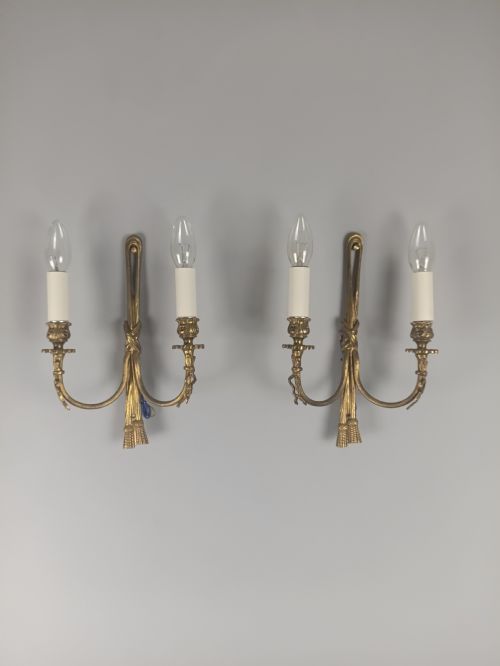
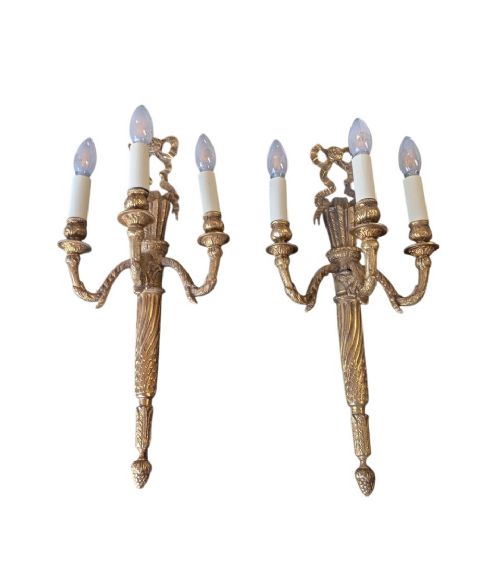
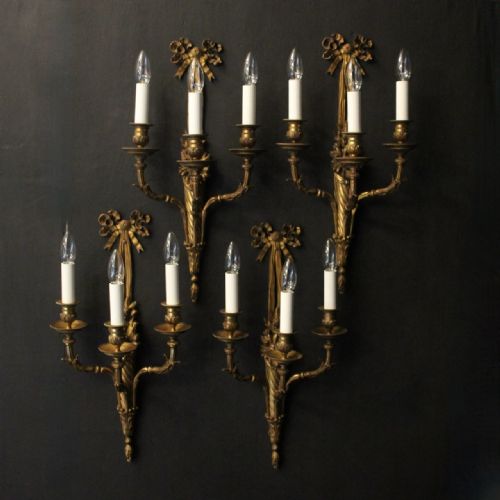
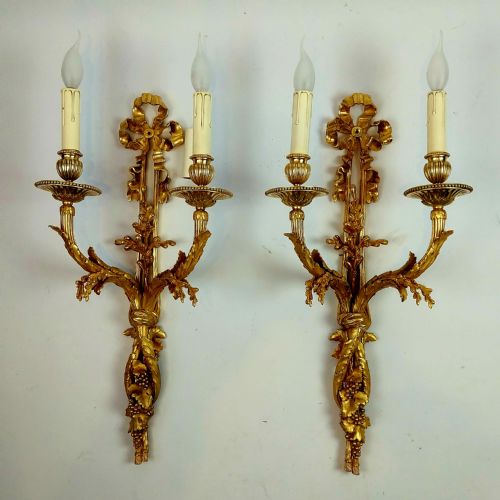
These antique ribbon sconces bring classical French design and warm candle or electric light to a drawing room wall.
Antique Ribbon Sconces
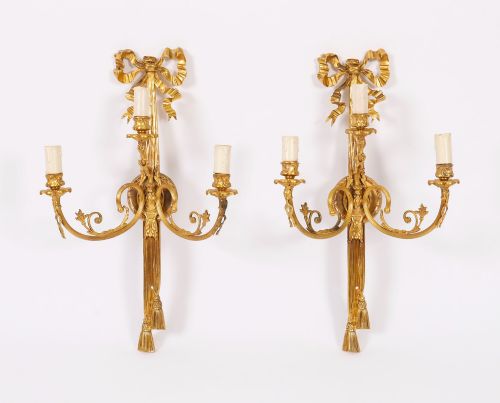
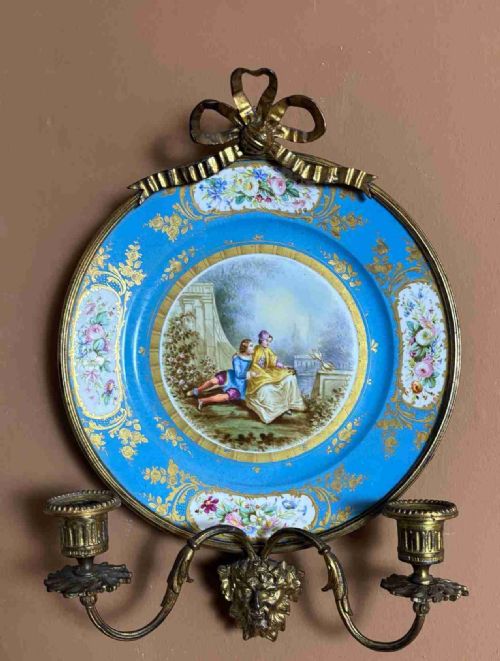
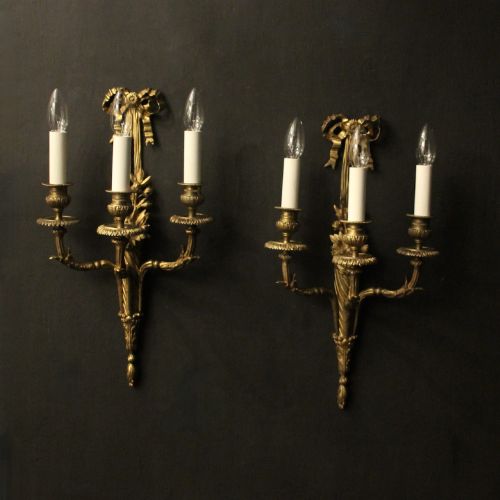
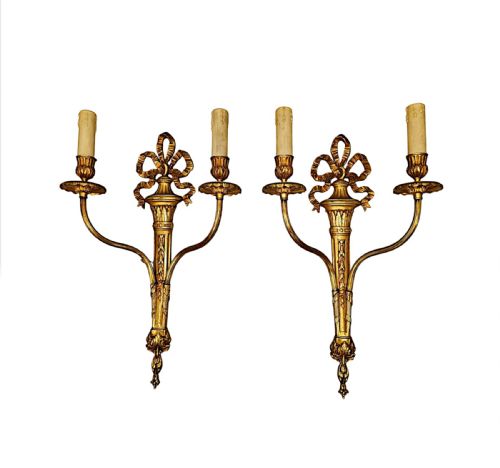
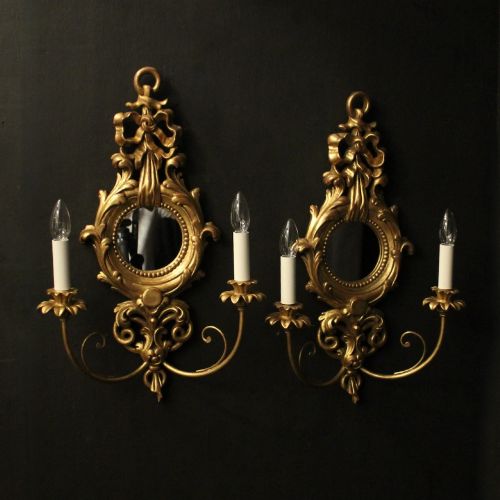
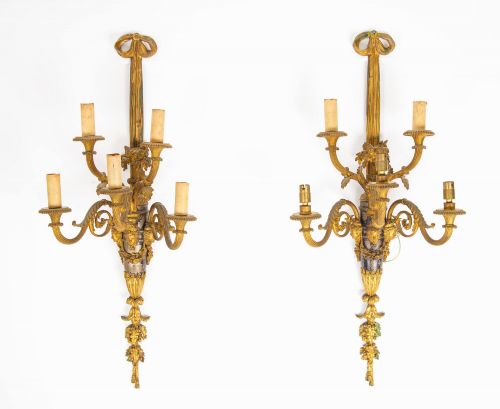
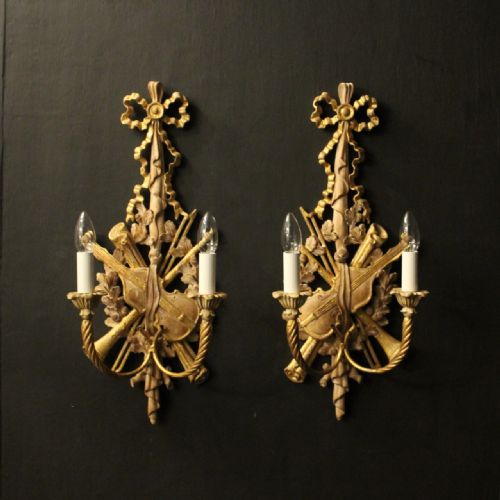
When you search for antique ribbon sconces, you encounter decorative wall lights and girandoles dominated by carved wood, cast brass, and gilded bronze forms. These fixtures frequently take French Neoclassical and Louis XVI styles, where a suspended ribbon or bow motif crowns the backplate.
The selections on this page span the Victorian and Edwardian eras alongside the 1920s and 1930s, often appearing as matched pairs designed to flank a mirror or mantelpiece. Most examples support two or three candle arms, though single-light appliques and larger multi-light configurations also emerge from French and Italian workshops.
How they were made
Foundries cast these fixtures in bronze, brass, and metal before applying gold leaf, silver gilding, or ormolu finishes to the metallic surfaces. Carved wooden pieces utilise giltwood and toleware, shaping timber and sheet metal into delicate bows, swags, and scroll arms.
Craftsmen chased the cast metal components by hand to sharpen the foliate and ribbon details before assembly. Glass elements and mirrored backplates integrate into specific girandole designs to reflect and amplify the illumination.
Antique Ribbon Sconces Retail Price Guide 2026
Typical asking prices for ribbon sconces among the pieces listed under this phrase on Sellingantiques today, from the lower quarter to the upper quarter. They describe what is for sale here now, not the wider market.
Materials across these listings span brass, gilt bronze, metal, giltwood, gold leaf, glass, gilt brass, and wood.
What varies in quality
The crispness of the casting and carving dictates the distinction between standard production and finer studio work. Crisp definition in the folds of a ribbon and deep relief in the surrounding acanthus leaves signal superior craftsmanship.
The depth and application of the gilding further separate the pieces, with genuine gold leaf and fire-gilded ormolu retaining a warmer lustre than later metallic paints. Heavier gauge brass and bronze provide structural rigidity to the multi-arm branches, preventing the sag seen in lighter alloys.
Henri Vian·Maison Baguès
The Antique Ribbon Sconces Glossary
- Girandole
- A branched wall light incorporating a mirrored glass backplate to reflect the candle flame. The reflective glass doubles the effective light in a dark chamber.
- Ormolu
- Finely chopped gold amalgamated with mercury and applied to bronze through heat gilding. This historic French technique produces a distinctive, enduring golden depth.
- Toleware
- Painted or lacquered sheet metal shaped into decorative floral and ribbon components. It permits intricate, lightweight ornamentation on wall sconces.
- Appliqué
- A decorative wall-mounted light fixture designed to sit flush against the panelling. The term often describes French candle brackets of the eighteenth-century revival periods.
- Louis XVI Revival
- A nineteenth-century design movement favouring straight architectural lines, symmetrical swags, and classical ribbon motifs. It draws directly from the reign of Louis XVI.
Antique Ribbon Sconces: Frequently Asked Questions
How do I hang antique sconces securely?
These fixtures require direct attachment to wall studs or appropriate cavity fixings due to the substantial weight of cast bronze and carved wood.
Heavier multi-arm examples demand load-bearing screws rather than standard picture hooks to support the bracket safely.
Were these sconces wired for electricity?
Original examples were designed exclusively for wax candles and retain their drip pans and candle nozzles. Many have subsequently been converted for modern electrical wiring by running cords through the backplates.
A qualified electrician can adapt most pairs safely without compromising the external metalwork or gilded surfaces.
How do I clean gilded bronze sconces?
Dust accumulation requires only a gentle pass with a soft, dry brush to protect the delicate gold leaf or ormolu surface.
Water and chemical cleaning agents strip historic finishes, so liquid cleaners must be avoided entirely on antique metalwork.
How do I distinguish Louis XVI style from Rococo?
Louis XVI pieces rely on strict symmetry, straight vertical lines, architectural urns, and formal ribbon bows. They present a restrained geometry compared to earlier designs.
Rococo revival works favour asymmetrical C-scrolls, fluid plant forms, and an absence of straight lines.