


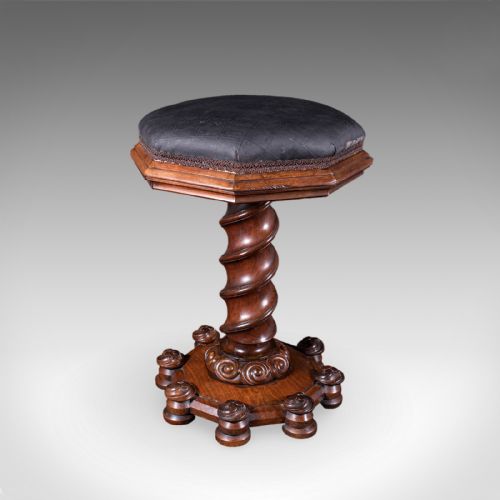
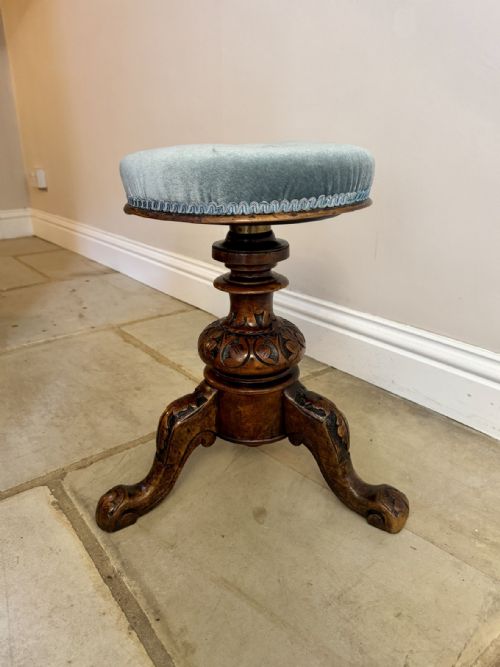


Antique Revolving Seat Stool
An antique revolving seat stool brings versatile mechanical ingenuity and rich timber to a room, offering height adjustment and spin for everyday use.
Antique Revolving Seat Stool
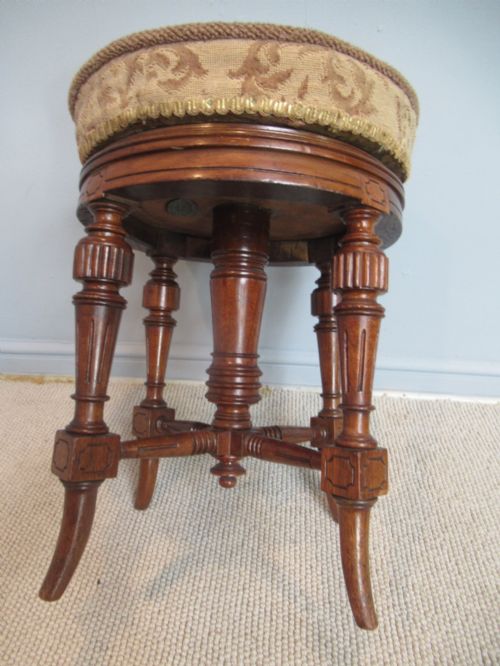
When you search for an antique revolving seat stool, you encounter a specialised seating form designed primarily for musicians, dressing tables, and studies. These pieces originate predominantly from the nineteenth century, spanning Regency, William IV, and Victorian periods.
Forms vary from simple round swivel tops to rise and fall mechanisms with carved walnut frames and upholstered seats. The overarching purpose remains functional seating that accommodates movement and height alteration.
Materials and construction methods
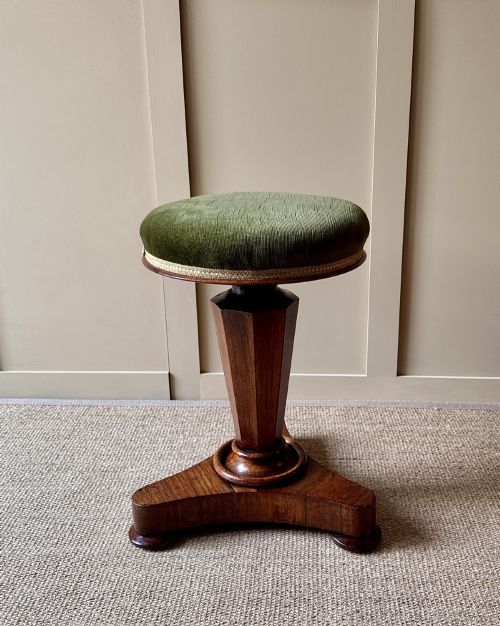
Cabinet makers utilised dense hardwoods such as mahogany, walnut, and rosewood to build the structural frames and swivel bases. Brass mechanisms and inlay work frequently provide the mechanical adjustment and decorative contrast.
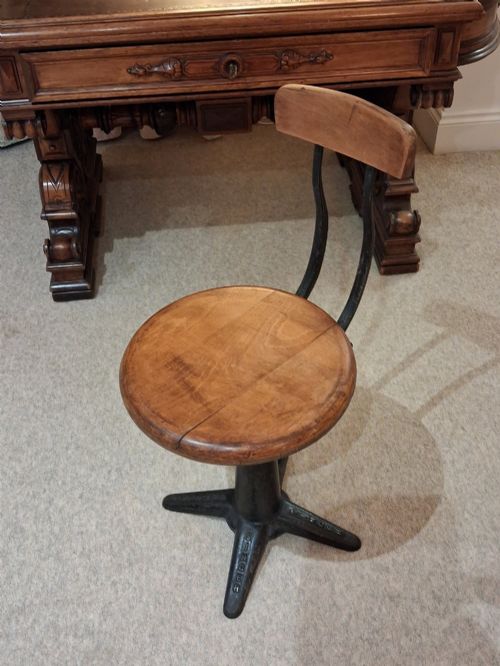
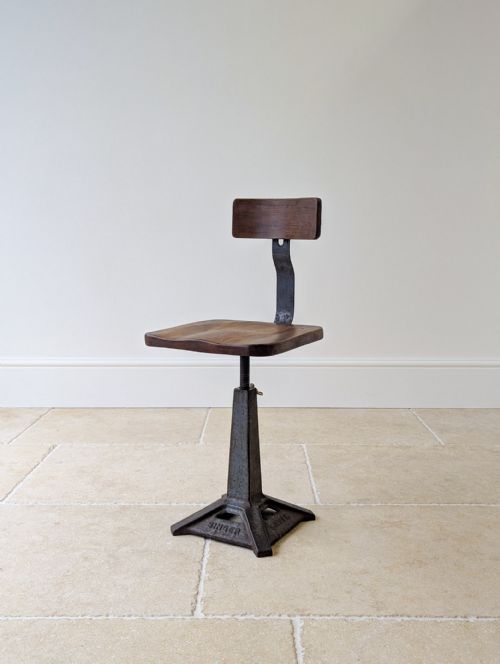
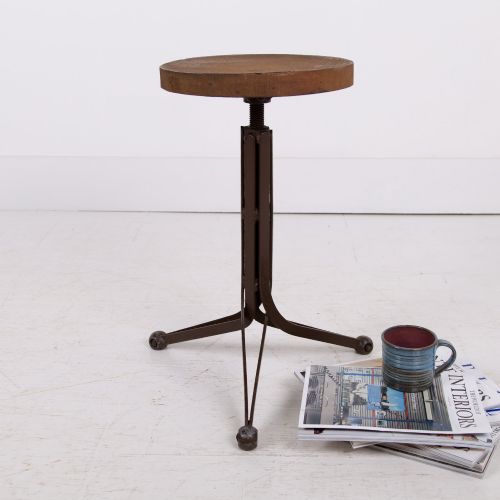
Seats feature varied upholstery including velvet, leather, and original fabrics supported by padding. Papier-mâché and cast iron also appear in specific Victorian interpretations, combining utility with distinct decorative finishes.
Antique Revolving Seat Stool Retail Price Guide 2026
Typical asking prices for revolving seat stool among the pieces listed under this phrase on Sellingantiques today, from the lower quarter to the upper quarter. They describe what is for sale here now, not the wider market.
Musicians evidently required rigorous spin, as nineteenth century makers patented dozens of intricate concealed screws just so pianists could twirl.
Distinctions in craftsmanship
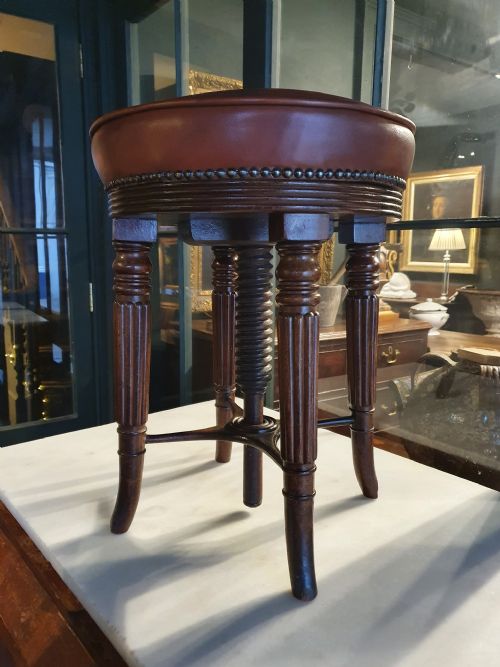
Quality reveals itself in the precision of the revolving mechanism and the stability of the central screw thread or rise and fall action. Superior examples maintain smooth movement without wobble in the pillar.
Carving depth and timber figure elevate certain pieces, distinguishing standard utility seating from high workshop production. The integration of brass inlay and secondary woods further indicates the standard of manufacture.
Jennens and Bettridge·Gillows·James Shoolbred
The Antique Revolving Seat Stool Glossary
- Revolving seat
- A seat top engineered to turn full circle on a central pivot or threaded spindle. This mechanism allowed musicians and clerks to shift position easily.
- Rise and fall
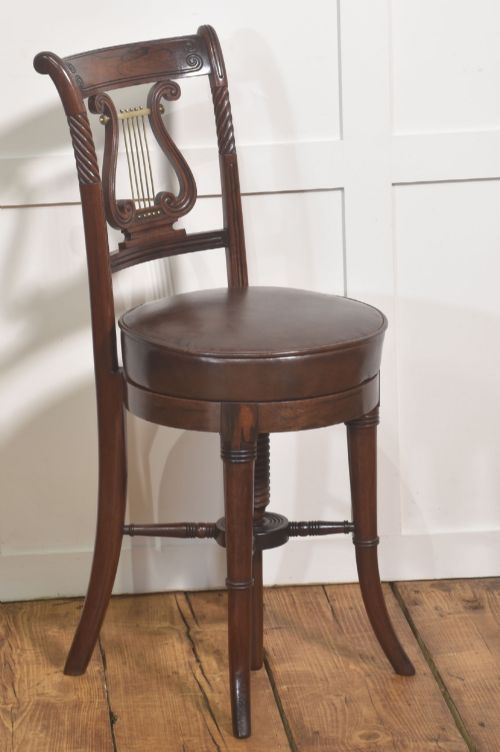
- A mechanical system utilising a threaded screw column to raise or lower the seat height when rotated. It is commonly found on nineteenth century music stools.
- Lyre back
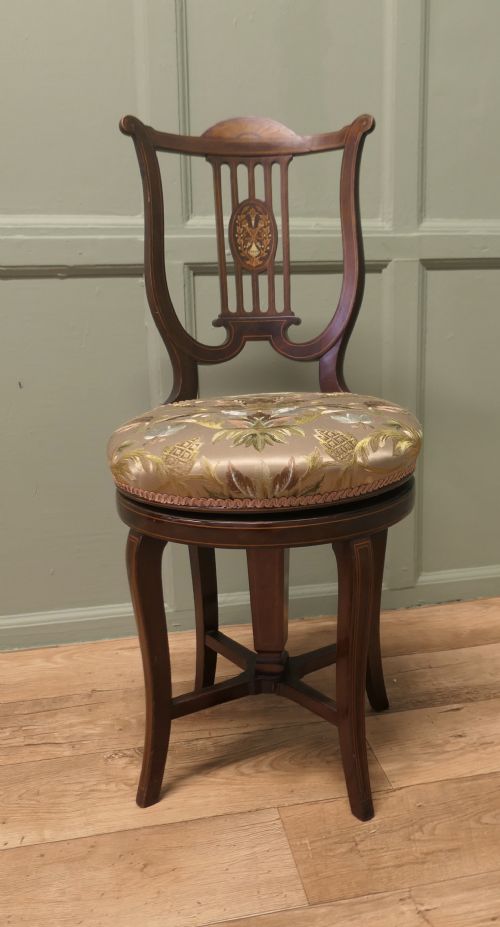
- A chair backrest shaped in the symmetrical outline of an ancient stringed instrument. This motif is frequently seen on Regency and Victorian music seating.
- Papier-mâché
- A composite material formed from paper pulp mixed with glue and resin, pressed into moulds and lacquered. Jennens and Bettridge excelled in producing decorated pieces using this medium.
- Ebonised
- Timber treated with a dark stain or finish to imitate ebony. This treatment provides a formal, high contrast appearance popular during the Victorian era.
Antique Revolving Seat Stool: Frequently Asked Questions
Were these designed exclusively for pianos?
While the majority served keyboard players, many were built for harpists, cellists, organists, and dressing tables. Specialised harpist chairs often feature distinctive asymmetric or supportive backrests.
Clerks and architects also utilised tall revolving seats for desk work. The core mechanics remained similar across different domestic and professional settings.
How do I date a Victorian revolving stool?
Examine the timber choice, secondary woods, and the complexity of the turnings or carving. Earlier nineteenth century pieces often favour rosewood or figured mahogany with delicate brass mounts.
Later Victorian and 1890s examples frequently showcase heavier walnut frames and simpler cast iron components. Maker stamps and patent marks can also narrow down the production decade.
Can I use these at a modern desk?
These stools integrate well into contemporary spaces as dressing table seats, piano benches, or occasional chairs. Their compact footprint makes them practical for smaller rooms.
Ensure the maximum and minimum height settings suit your modern desk or table before regular use. Periodic checking of the swivel mechanism keeps the movement smooth.