
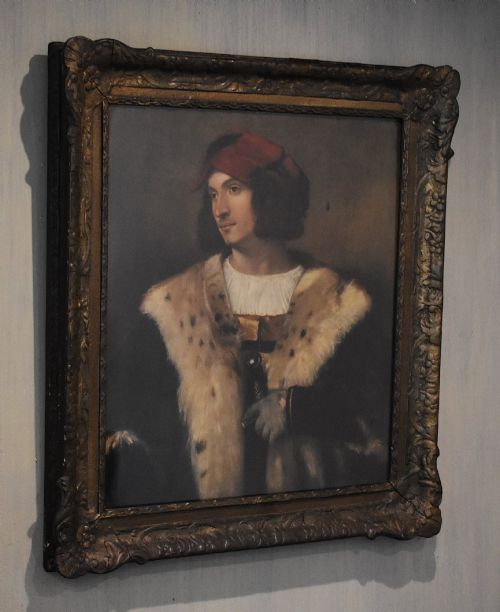


Antique Renaissance Print
An antique renaissance print brings the grand visual language of the fifteenth and sixteenth centuries directly into a modern interior.
Antique Renaissance Print
An antique renaissance print covers framed works on paper, architectural drawings, and engravings that capture historic religious and secular imagery. When searching for an antique renaissance print, buyers encounter items ranging from pre-sixteenth century maps to nineteenth-century revival interpretations of old masters like Titian, Michelangelo, and Raphael.
The selections span distinct stylistic revivals including Dutch Renaissance, Italian Renaissance, and Neoclassical designs. These pieces often arrive framed in wood, glass, gilded wood, or gilt wood, ready for display as wall art.
Most examples found here combine traditional printing methods with historical subject matter, reflecting centuries of appreciation for classical compositions. They offer a direct link to the artistic workshops of Europe through detailed engravings, chromolithographs, and watercolours.
How they were made
The construction of these works relies fundamentally on paper, ink, and occasionally watercolour applied by hand. Master printmakers utilised copper plates and metal blocks to pull detailed line engravings that rendered complex figures and architectural facades with immense precision.
Many sheets incorporate hand colouring, using watercolour or gold leaf highlights to enhance the visual depth of the printed composition. Chromolithography later enabled multi-coloured reproductions of famous works by artists like Botticelli, bringing rich palettes to the printed medium.
Framing materials traditionally involved wood, often treated with gold leaf or gilt wood finishes to complement the classical subject matter. Protective glass typically guards the delicate paper surfaces from environmental damage while maintaining visibility.
Adam and Eve ponder forbidden fruit while Renaissance masters watch quietly from behind glass.
What varies in quality
Quality in these works rests upon the clarity of the impression and the fidelity of the line work. Early pulls from engraved plates exhibit sharp, crisp details where finer cross-hatching remains distinct, whereas worn plates yield softer, muddier imagery.
The nuance of hand colouring and the presence of genuine gold leaf create significant distinctions between standard reproductions and superior interpretations. Superior sheets display careful attention to tonal gradation and pigment preservation across the paper substrate.
The integrity of the paper itself and the craftsmanship of the period frame contribute heavily to the overall character. Original framing materials that complement the era of the print hold greater aesthetic coherence than modern replacements.
Braun and Hogenberg·Antonio Capellan·Andrea Mantegna·Ottaviani
The Antique Renaissance Print Glossary
- Engraving
- A printmaking technique where an artist cuts lines directly into a metal plate using a sharp tool called a burin. The resulting grooves hold the ink that transfers to paper under pressure.
- Chromolithography
- A planographic colour printing process that uses multiple limestone blocks, one for each ink colour, to build up a vibrant image. This method was widely used for reproducing master paintings in the nineteenth century.
- Old Master
- A term describing a European artist of high skill working before the nineteenth century, or a print produced by such an artist. These works form the visual backbone of classical print collections.
- Renaissance Revival
- An architectural and decorative art style from the nineteenth century that drew inspiration from fifteenth and sixteenth-century Italian and Northern European designs. Items from this period often reinterpret classical motifs with contemporary manufacturing techniques.
- Watercolour
- An aqueous painting medium utilising pigments suspended in a water-soluble binder, frequently applied to enhance monochrome prints. It adds subtle tonal variation and colour to engraved lines.
Antique Renaissance Print: Frequently Asked Questions
How do I care for antique prints?
Keep works on paper away from direct sunlight to prevent fading and discolouration of the ink and paper fibres. Maintain stable indoor humidity levels to avoid warping the paper or damaging the surrounding wooden frame.
Ensure that framing utilises acid-free backing materials to protect the historic paper from chemical degradation over time. Professional framing with UV-protective glass offers an additional safeguard against environmental light exposure.
Are these prints original period pieces?
The selection includes items produced across several centuries, ranging from early sixteenth-century maps to nineteenth-century revival prints. Each listing specifies the period of creation, distinguishing between contemporary impressions and later interpretations.
Revival pieces from the nineteenth century often capture the aesthetic of earlier eras while utilising techniques developed during their own time. Checking the specified date helps clarify whether a print is an early impression or a later commemorative edition.
What subjects are most common?
Religious iconography and classical mythology dominate the visual themes, reflecting the core interests of the Renaissance period. Famous compositions by artists like Raphael and Michelangelo frequently appear in engraved form.
Architectural drawings and historical maps also feature prominently, documenting European cities and buildings from past centuries. These subjects provide insight into both artistic traditions and historical geography.
How are these pieces usually framed?
Many examples are presented in traditional wood frames, occasionally enhanced with gold leaf or gilt wood finishes. These materials complement the classical nature of the artwork and provide structural protection.
Glazing with glass helps shield the delicate paper and ink from dust and physical contact. The combination of period framing styles enhances the visual presentation of the print within a modern setting.