


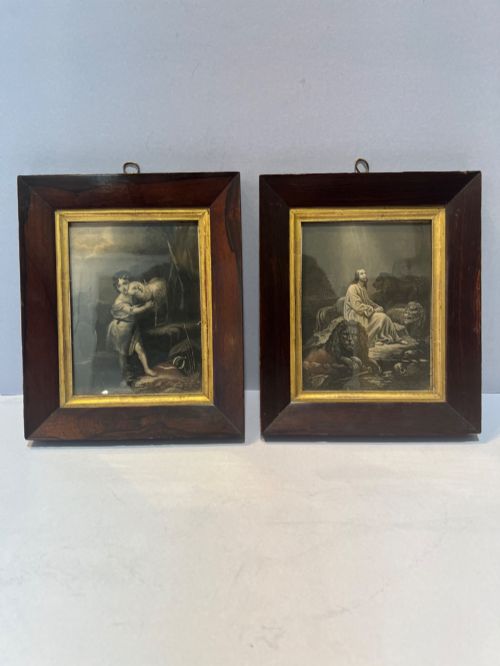


Antique Religious Engraving
These antique religious engraving pieces bring centuries of sacred imagery and fine printmaking into domestic spaces.
Antique Religious Engraving
When you search for an antique religious engraving, you are looking at works on paper originating from periods such as the eighteenth and nineteenth centuries. These printed sheets depict biblical narratives, saints, and allegorical scenes, often produced after master painters.
The versions most likely to meet you on this page include framed prints and wall art alongside book plates and devotional sheets. They range from small devotional plates to large folio prints issued in limited editions.
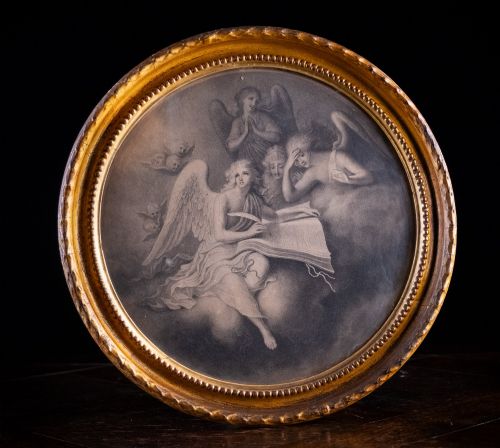
Some examples utilise reverse glass mezzotint techniques with hand colouring, capturing rich tones that set them apart from standard monochrome print runs. Each piece bears the distinct plate mark and paper texture of its specific era.
How they were made
Makers produced these works by incising lines into copper or other metal plates using sharp burins or chemical acid baths. The inked plate transferred its design onto damp paper under high press roller weight.
Publishers often applied hand watercolour pigments to the printed surfaces after the ink dried, enriching garments and backgrounds. Framed examples utilised protective glass and timber mouldings to secure the delicate paper sheets.
The inventory records pieces from the eighteenth and nineteenth centuries, including Victorian and Georgian examples.
What varies in quality
The clarity of the impression dictates the primary visual merit, as worn metal plates yield blurred lines and weak contrasts. Crisp, deep ink lines show the initial strikes of the press before plate degradation occurred.
Paper selection and conservation dictate long term survival, with rag content sheets holding tone better than wood pulp alternatives. Contemporary framing methods and original margins further distinguish the finest collector specimens from trimmed examples.
The Antique Religious Engraving Glossary
- Mezzotint
- A printmaking process where the copper plate is roughened uniformly to produce rich dark tones and subtle tonal gradations. This technique allows for velvety shadows and smooth highlights.
- Plate mark
- The indentation left in the paper by the outer edges of the printing plate under pressure. Its presence confirms an authentic hand pulled impression.
- Engraving
- A print produced by cutting lines directly into a metal plate with a steel tool called a burin. The resulting lines hold ink securely for transfer.
- Etching
- A method where acid bites lines into a metal plate through a protective wax ground. Artists draw through the wax to expose the metal for the acid.
- Reverse glass
- A technique where the image is painted or printed directly onto the rear surface of a glass panel. This method imparts a glossy sheen and protects the pigments from atmospheric decay.
Antique Religious Engraving: Frequently Asked Questions
How do I care for antique prints?
Keep framed pieces away from direct sunlight to prevent the ink and paper from fading over time.
Maintain stable indoor humidity levels to protect the paper fibres from moisture damage and foxing spots.
Are these prints original period pieces?
The works listed originate from the eighteenth and nineteenth centuries, printed from hand worked metal plates of those eras.
Examine the paper texture, plate marks, and ink deposition to verify the historical production period.
How are subjects identified?
Many sheets feature inscribed text along the lower margin naming the artist, engraver, and specific biblical scene.
Catalogues raisonnés and art historical indexes help match the depicted iconography to known master paintings.
Why do some prints have colour?
Publishers employed skilled colourists to apply watercolour paints by hand directly onto the dried ink impression.
This added cost made the finished works more desirable for domestic devotional display and private collections.