
Antique Reeded Table
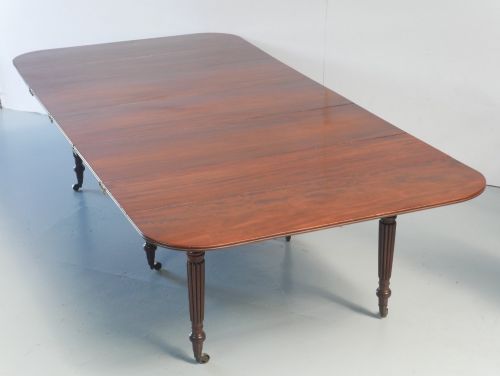
An antique reeded table brings linear carved moulding to dining rooms and libraries, offering substantial timber construction from Georgian, Regency and Victorian periods.
Antique Reeded Table
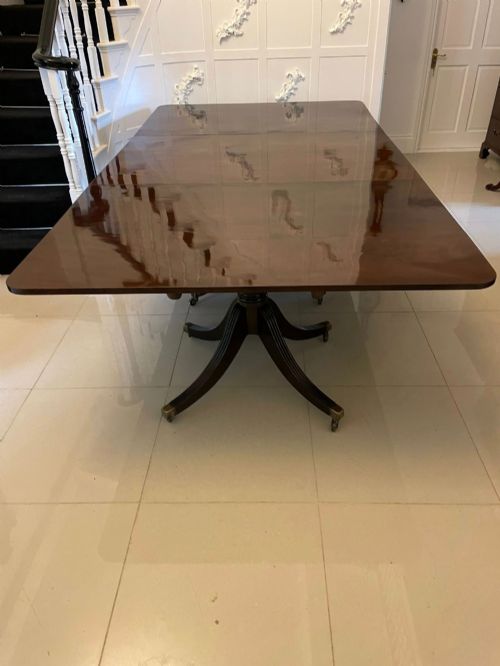
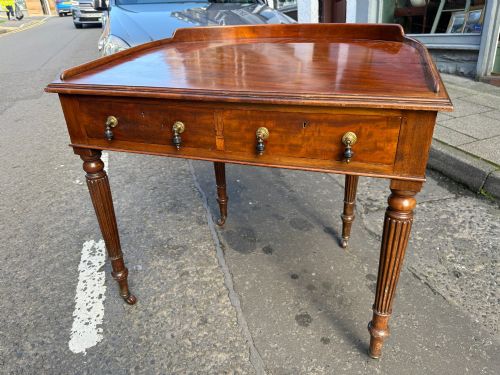
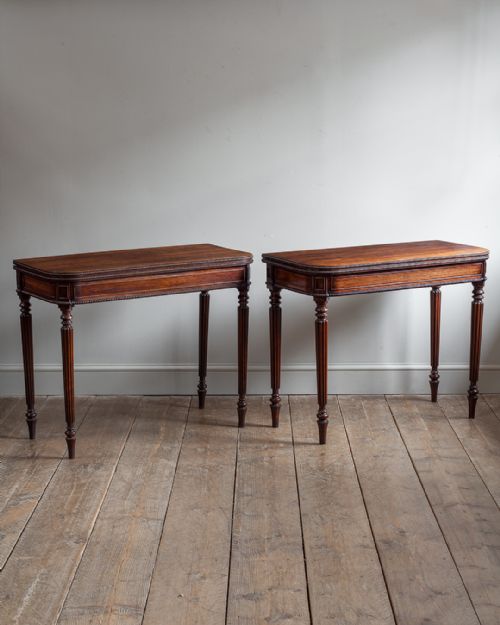
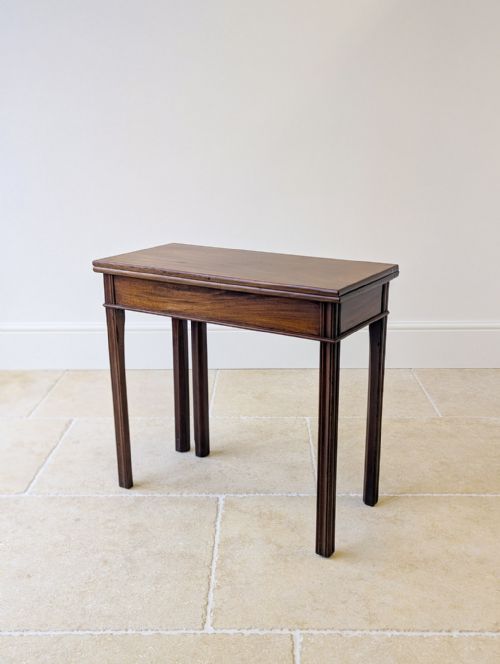
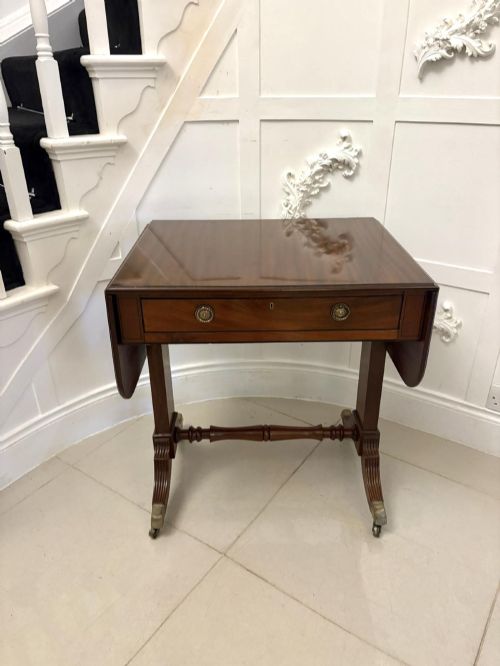
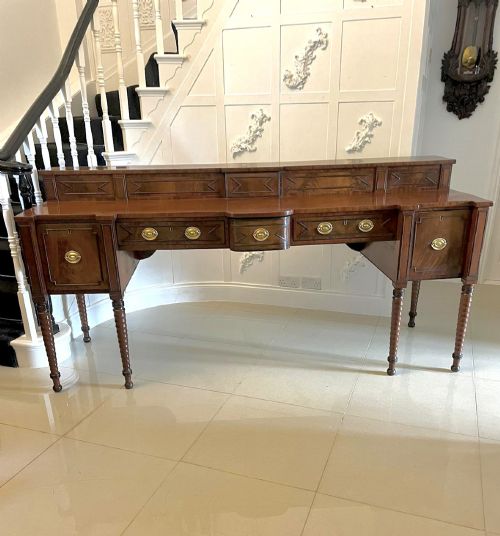
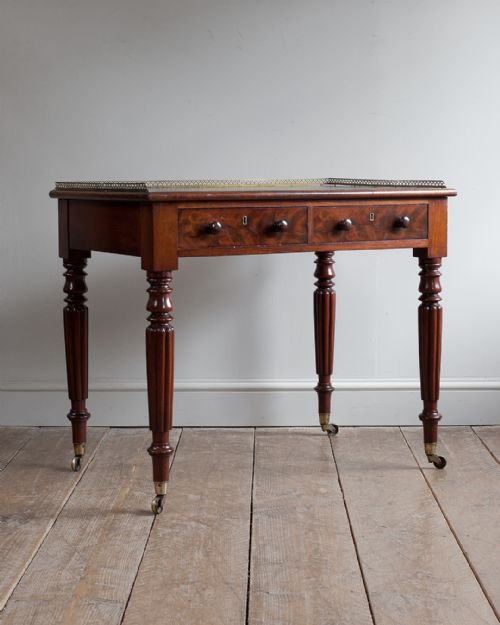
An antique reeded table encompasses several domestic forms, most commonly dining tables, writing desks, tea tables and sofa tables. The examples found here span from the late Georgian and Regency eras through to the Victorian and Edwardian periods.
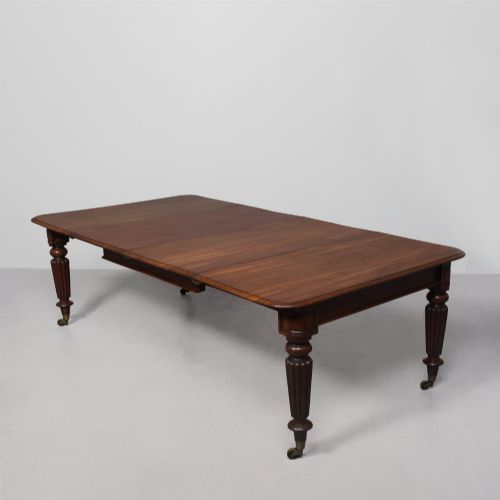
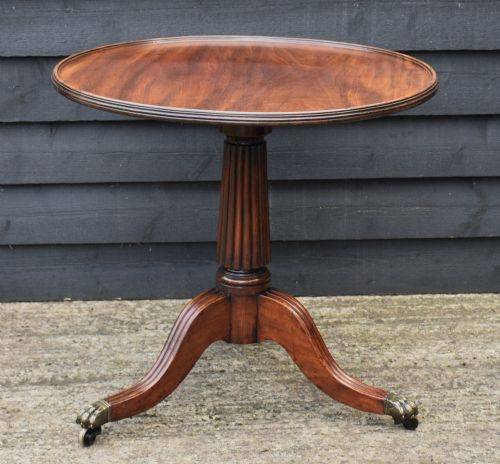
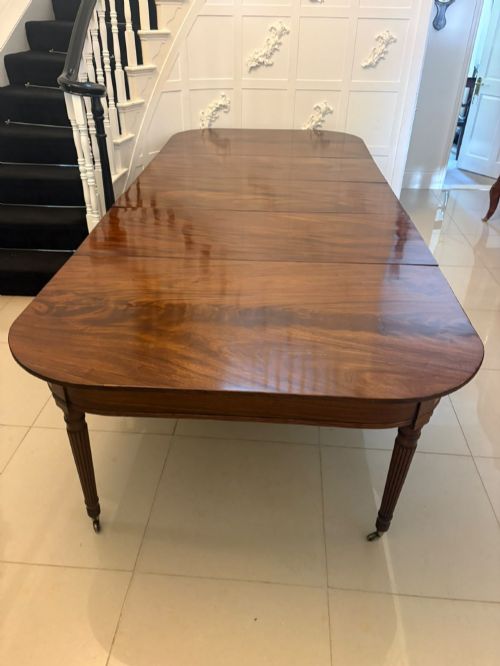
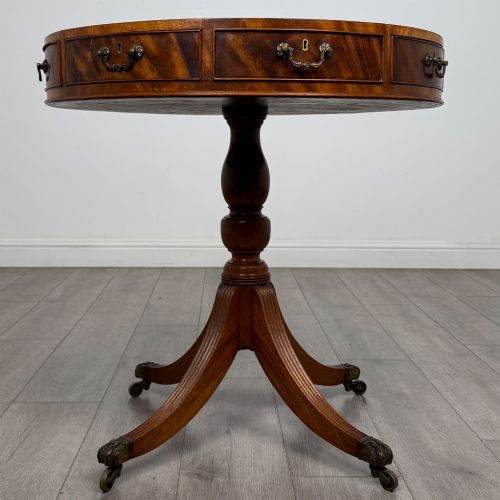
Dining tables dominate the larger formats, often featuring multi-pedestal configurations and extending mechanisms with original leaves. Smaller occasional pieces, card tables and drum tables display similar linear carved detail along their edges or legs.
The aesthetic bridges formal classical revival designs and practical domestic furniture. Pieces range from grand fourteen-seater dining tables to compact writing desks suitable for a home office.
Materials and construction
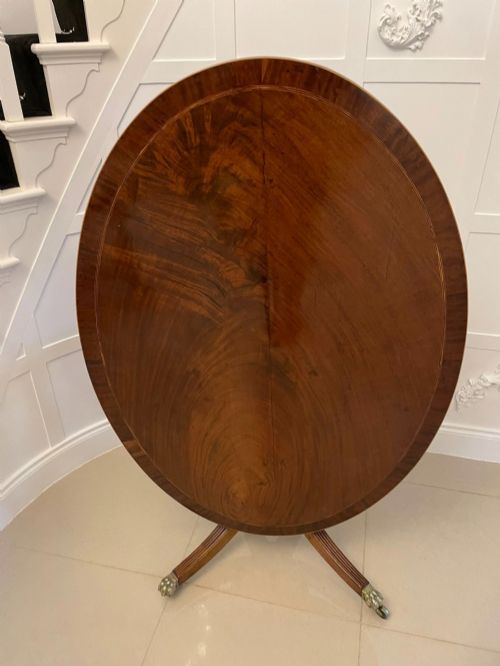
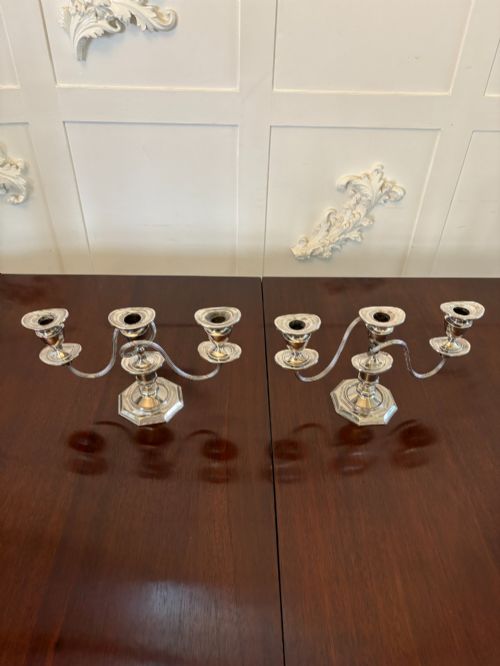
Makers relied primarily on mahogany, including figured mahogany and flame mahogany veneer, supplemented by rosewood and oak for specific forms. Brass inlay, leather writing surfaces and silver plated elements appear on desks, sofa tables and lighting.
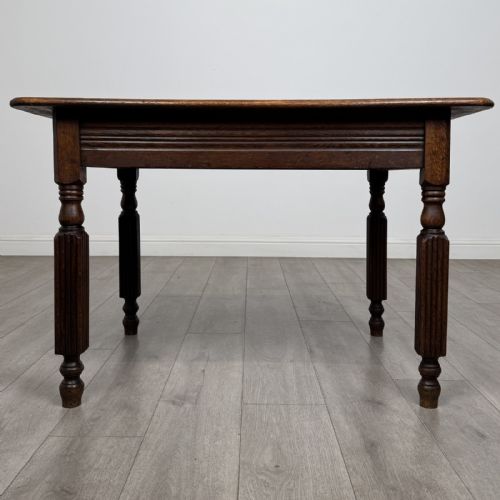
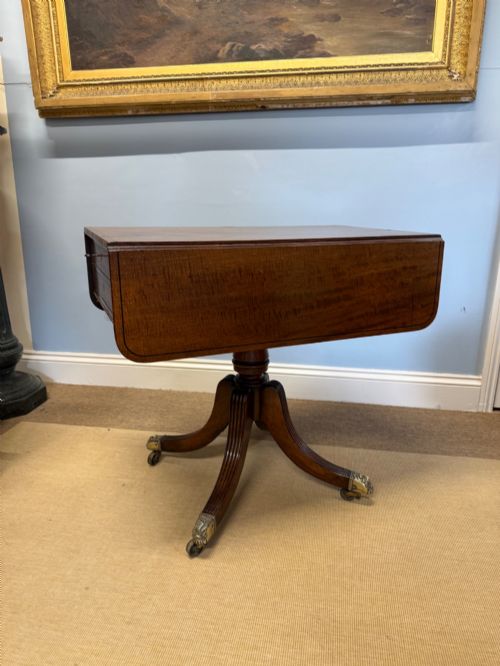
The defining characteristic involves the application of reeding, which comprises parallel convex mouldings carved directly into the solid timber of legs, friezes or edge banding. Structural stability is achieved through multi-pillar supports, tripod bases and drop-leaf mechanisms.
Listings feature mahogany predominantly, alongside rosewood and oak, spanning George III, Regency, Victorian and Edwardian periods.
Markers of excellence
Superior examples distinguish themselves through the crispness and depth of the hand-carved reeding, where linear precision remains uniform across complex curves and elongated legs. Timber selection equally dictates standard, with heavily figured mahogany and matched veneer showing superior grain patterning.
Attribution to known workshops or documented cabinet makers elevates provenance, alongside original mechanical elements such as extending leaf actions, revolving tops and functional brass hardware.
W Walker and Sons London·Gillows of Lancaster·Gillows Oxford Street Workshop·P and MA Nicholson
The Antique Reeded Table Glossary
- Reeding
- A decorative moulding consisting of parallel convex strips resembling bundled plant stems. It provides textural contrast on table legs and friezes.
- Pedestal base
- A central column support resting on splayed legs, frequently utilised on dining tables to allow maximum seating clearance. Multiple pillars support larger extending formats.
- Flame mahogany
- Timber cut from the fork of the mahogany tree, displaying a distinctive flamed or fire-like grain pattern. It was favoured for high-status table tops and drawer fronts.
- Frieze
- The horizontal band running directly beneath the table top. On these pieces, the frieze often carries the carved reeded detail.
Antique Reeded Table: Frequently Asked Questions
How do I identify a reeded table?
Look closely at the legs, edge of the top, or frieze for parallel convex mouldings that project outward.
These carved lines distinguish the style from fluted decoration, which sinks inward into the wood.
Are extending dining tables practical for daily use?
Many period examples include removable leaves and mechanical runner systems designed for versatile seating arrangements.
They adjust easily to accommodate small family meals or larger gatherings.
What is the difference between a sofa table and a side table?
Sofa tables traditionally feature drop leaves on either side and were designed to stand directly behind a sofa.
Side tables remain fixed in size and serve against walls or in hallways.
How should I care for a mahogany table surface?
Maintain the polished timber by dusting regularly with a dry cloth and avoiding placement near direct heat sources.
Apply quality beeswax periodically to nourish the grain without building up heavy residues.